
Tuesday, November 10, 2026Nov 10

Rubio willing to defy European allies on possible Iran deal

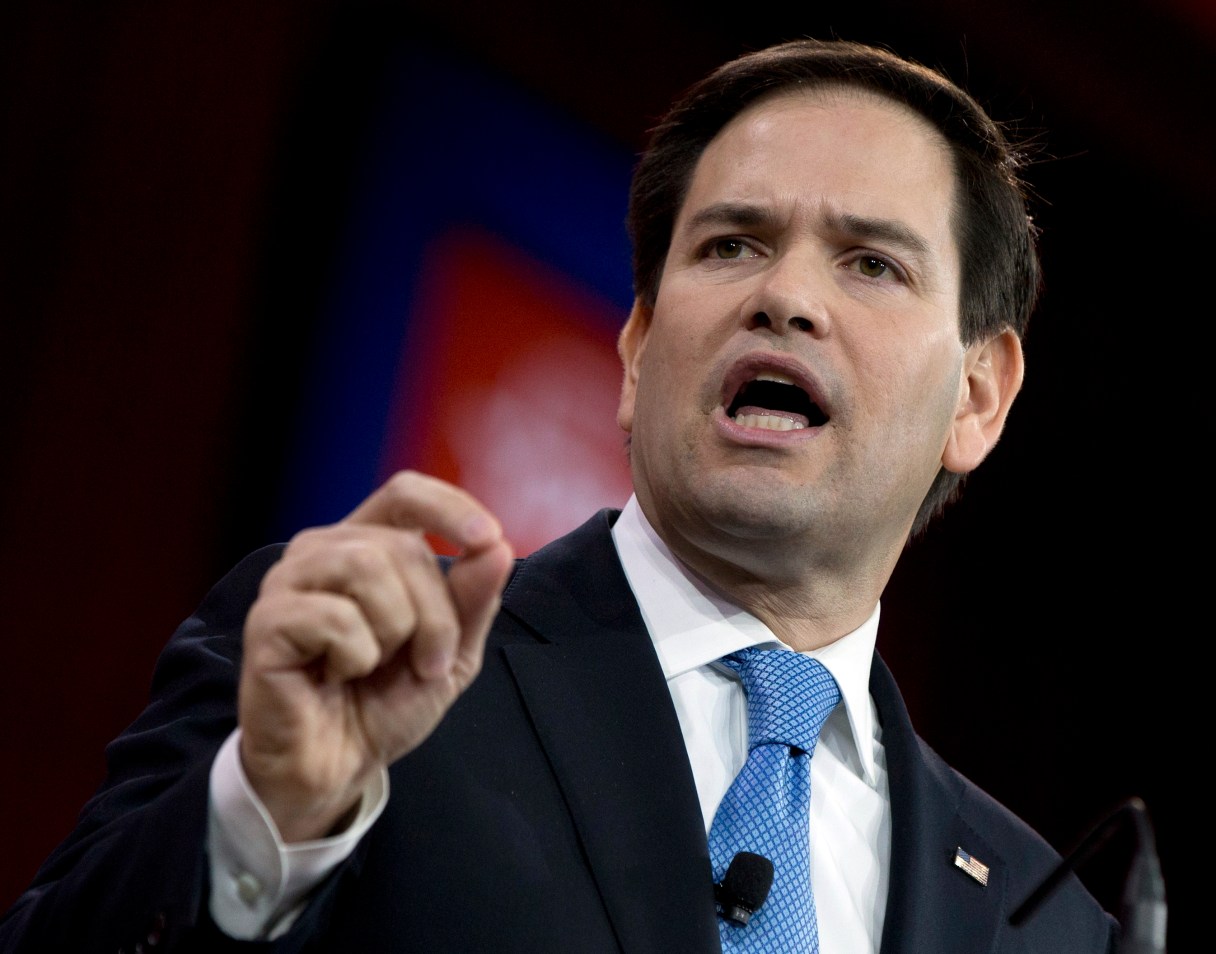
FILE - In this Feb. 27, 2015 file photo, Sen. Marco Rubio, R-Fla. speaks in National Harbor, Md. Eying the Republican presidential nomination, Rubio said March 17 he would "absolutely" defy stalwart European allies if necessary to revoke any Iranian nuclear deal he might inherit from President Barack Obama. In an interview with The Associated Press, Rubio said the next U.S. president "should not be bound" by a potential Obama administration agreement, even if European negotiating partners stand behind the deal.(AP Photo/Carolyn Kaster, File)
FILE - In this Feb. 27, 2015 file photo, Sen. Marco Rubio, R-Fla. speaks in National Harbor, Md. Eying the Republican presidential nomination, Rubio said March 17 he would "absolutely" defy stalwart European allies if necessary to revoke any Iranian nuclear deal he might inherit from President Barack Obama. In an interview with The Associated Press, Rubio said the next U.S. president "should not be bound" by a potential Obama administration agreement, even if European negotiating partners stand behind the deal.(AP Photo/Carolyn Kaster, File) FILE - In this Feb. 27, 2015 file photo, Sen. Marco Rubio, R-Fla. speaks in National Harbor, Md. Eying the Republican presidential nomination, Rubio said March 17 he would "absolutely" defy stalwart European allies if necessary to revoke any Iranian nuclear deal he might inherit from President Barack Obama. In an interview with The Associated Press, Rubio said the next U.S. president "should not be bound" by a potential Obama administration agreement, even if European negotiating partners stand behind the deal.(AP Photo/Carolyn Kaster, File)

WASHINGTON (AP) – Florida Sen. Marco Rubio says that if elected president, he would “absolutely” defy stalwart European allies if necessary in order to revoke an Iranian nuclear deal he might inherit from President Barack Obama.

Rubio, who is on the cusp of announcing a run for the Republican presidential nomination, says the next commander in chief “should not be bound” by Obama’s potential agreement, even if European negotiating partners stand behind the deal.

“The United States, although it’s less than ideal, could unilaterally re-impose more crushing and additional sanctions,” Rubio said in an interview with The Associated Press Tuesday. He said he would also “use the standing of the United States on the global stage to try to encourage other nations to do so.”

The U.S. is negotiating the high-stakes nuclear deal with Iran alongside three European allies: Britain, France and Germany. Russia and China are also part of the U.S.-led negotiating team.

If the U.S. were to break with the international coalition, it would put Washington at odds with European countries that are strong partners on a vast array of international issues, including Russia’s aggression in Ukraine and the campaign against Islamic State militants in Iraq and Syria. It could also leave Russia and China in a stronger position to take advantage of economic opportunities in Iran.