
OCEAN CITY, Maryland — For millions of Americans living in the hurricane zones on the Gulf and East coasts, recent decades have been quiet — maybe too quiet.
Cities like Tampa, Houston, Jacksonville and Daytona Beach historically get hit with major hurricanes every 20 to 40 years, according to meteorologists. But those same places have now gone at least 70 years — sometimes more than a century — without getting smacked by those monster storms, according to data analyses by an MIT hurricane professor and The Associated Press.
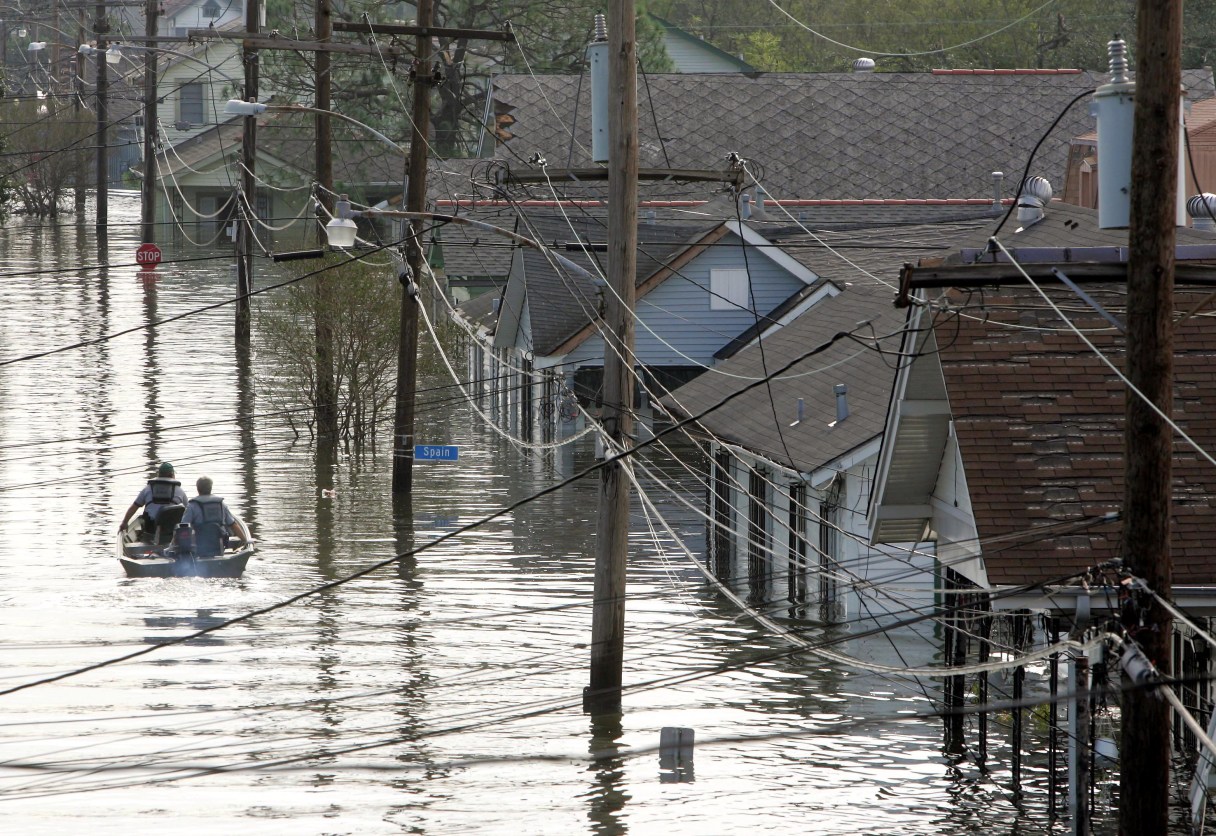
These are places where people may think they know what to expect from a major hurricane –with more than 110 mph winds, such as Katrina or Andrew — but they really don’t. They are cities where building construction has boomed but haven’t been tested by nature at its strongest. In the Tampa region, an Andrew-sized storm could cause more than $200 billion in damage, according to a local government study in 2010.
Few of Tampa’s current residents witnessed the last major hurricane that hit there in October 1921. Movies were silent, booze was illegal and Warren Harding was president. For northeast Florida and southern Georgia, the last major hurricane was sometime in the 19th century.
“We’ve been kind of lucky,” said MIT meteorology professor Kerry Emanuel, who along with the AP crunched numbers on how often hurricanes have hit metro regions and compared them to when the last time they were hit. “It’s ripe for disaster. … Everyone’s forgotten what it’s like.”