
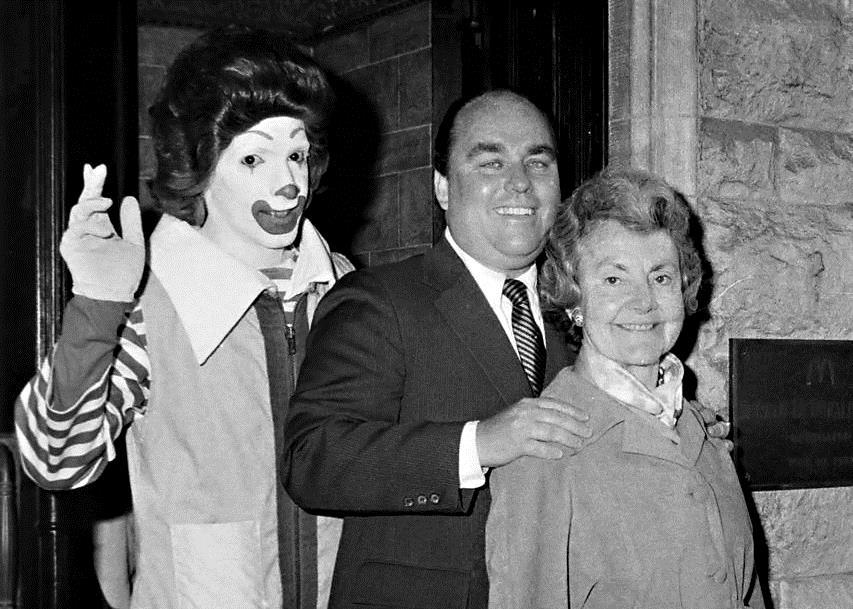
To share a joy is to make it double; to share a sorrow is half the trouble thats it for me. Jimmy Murray, former Philadelphia Eagles general manager and co
Anniversary Weekend Schedule
Saturday, Nov. 14What: Red Hot Red Striped Gala.Where: Chattanooga Convention Center, 1100 Carter St.When: 6 p.m. VIP cocktail reception, 7 p.m. dinner.Featuring: Black-tie-optional dinner with guest speaker Jimmy Murray, dancing to music of The Malemen Show Band.Tickets: $125; reservation deadline Friday.Sunday, Nov. 15What: Birthday Party and Mortgage Burning for Ronald McDonald House.Where: Ronald McDonald House, 200 Central Ave.When: Noon-4 p.m.Featuring: Barbecue, hot dogs, cake and ice cream at casual party open to the public.Admission: Free; reservation deadline Friday.Information: 778-4300.
By the Numbers
* 1.3 million: Cost of building the Chattanooga Ronald McDonald House in 1990.* 3.4 million: Cost of an addition in 2000.* 26: Rooms in the local house.* 550-600: Families served by the Chattanooga house each of the last five years* 35: Number of months one family from Honduras stayed while their son was treated for leukemia. It is the longest stay of any family to reside at the Chattanooga house.* 10,000: Number of families who have stayed in the Chattanooga houseSource: Jane Kaylor, executive director of Ronald McDonald House.
Jimmy Murray, former general manager of the NFL’s Philadelphia Eagles, has a list of prestigious awards to his name as long as any Eagles’ roster, all recognizing him for civic leadership and philanthropic work, particularly his role in co-founding the first Ronald McDonald House.
Murray was the 1987 recipient of President Ronald Reagan’s Medal for Volunteers in America. He’s been named Citizen of the Year by the American Medical Association. He’s even one of only 12 Philadelphians ever honored for their humanitarian work in the history of the City of Brotherly Love – joining Benjamin Franklin in that elite dozen.
But the personable Irishman chuckles when he says he found true validation while watching “Jeopardy” recently. When host Alex Trebek gave the answer “The first fundraiser for Ronald McDonald Houses,” a contestant correctly rang in with “Shamrock Shakes.”
“I teared up and thought, ‘We’ve made it,'” Murray jokes.
Shamrock Shakes, the annual St. Patrick’s Day green milk-shake promotion at McDonald’s restaurants, were the brainchild of Murray to help fund the first Ronald McDonald House, which opened in Philadelphia in 1974 and has led to a worldwide chain of 350 homes in 52 countries.
“I call it The McMiracle,” Murray says during a recent phone interview.
Ronald McDonald Houses provide lodging for parents while their seriously ill children are being treated in nearby hospitals. Nicknamed “The House that Love Built,” a McDonald House offers bed and board for little – or no – cost to the parents.
When he visits Chattanooga on the weekend of Nov. 14-15, Murray will share how he began with a product nobody had ever heard of and, within seven months, had the house open. He will be the featured speaker at the 25th anniversary celebration and mortgage burning of the Chattanooga Ronald McDonald House in a gala celebration at the Chattanooga Convention Center and a community birthday party at the house.
“He has so many wonderful stories of how this charity happened; how God’s hand was in how things happened,” says Jane Kaylor, executive director of Ronald McDonald House Charities of Greater Chattanooga. “I have heard him speak almost every year at conventions and I don’t think I’ve ever heard him say the same thing twice.”
Murray is now president of Jim Murray Ltd., a sports promotion and marketing firm, but he’s remained active in the Ronald McDonald Houses for 41 years. He estimates he has helped open as many as 70 percent of the new houses, traveling to Australia, France, Ireland and other locations around the world to do so. But he always returns to the Philadelphia house on Oct. 15, he says, to say a prayer for the house and its occupants.
He is currently writing a book about his life, career and love for Ronald McDonald Houses. His recollection of the founding of the Philadelphia house is a preview of that autobiography.
THE FIRST HOUSE
The story of Ronald McDonald Houses actually begins with former Philadelphia Eagles tight end Fred Hill.
In 1974, Fred and Fran Hill’s 3-year-old daughter, Kim, was diagnosed with leukemia. While she was being treated at St. Christopher’s Hospital for Children in Philadelphia, the Hills slept in waiting-room chairs and ate meals from vending machines – too often the plight of parents who don’t want to leave their ill child’s bedsides for even a minute.
While bonding with other parents in the waiting room, the Hills heard stories from families who didn’t have the funds to afford hotel rooms or meals out, even if they had wanted to leave their children. Knowing there had to be a better solution, the Hills rallied the support of the Eagles to raise money to help the families. They called it Eagles Fly for Leukemia.
Simultaneously, Dr. Audrey Evans, head of the pediatric oncology unit at Children’s Hospital of Philadelphia, was talking up the need for families to have a supportive place to stay while their children were in treatment.
Enter Jimmy Murray.
At that time, Murray had just been named general manager of the Eagles after five years on the Eagles’ public relations staff. When the Eagles began fundraising plans, team owner Leonard Tose called Murray and suggested he check it out.
“I prayed about it. I went to St. Christopher’s and looked for a chapel,” Murray recalls. “I remember looking up at the ceiling and saying, ‘All right God, I have no idea what I’m doing here. I can’t even spell this disease.'”
Deciding his first course of action should be to “find out where the money’s going,” Murray says he contacted Dr. Lawrence Naiman of St. Christopher’s and asked what he needed.
“He said, ‘This place is 100 years old. We need everything. But there is someone with a greater need.'”
He referred Murray to Dr. Evans. Murray introduced himself to her, saying he represented the Eagles.
“She asked, ‘Who are they?’ She knew nothing about them! She didn’t even have a TV,” he laughs. “But when I said, ‘We have money,’ that got her attention right away.”
In her first meeting with Tose, Evans expressed a desire to build two rooms for kids undergoing chemotherapy – an estimated $50,000 for two positive pressure rooms, which are designed so that air flows out of the room instead of in, keeping away germs that might infect children with compromised immune systems.
“Leonard said, ‘The Eagles pledge it and Jimmy will raise it.’ Now I’m looking for my rosary!” laughs Murray.
Two radiothons raised $125,000 to build the rooms. Evans then confided that she had a dream of buying a YMCA where parents could sleep and talk to other parents of sick children, finding support and encouragement.
“I told her ‘Doc, you need a house.’ She said, ‘OK, I need a house’ – and I went back to my rosary,” Murray says.
He contacted Don Tuckerman of Elkman Advertising, which had the McDonald’s account in Philadelphia. The company’s next promotion coming up was St. Patrick’s Day green shakes. Murray asked Tuckerman if a quarter from the sale of each shake could be allotted for purchase of a house.
“The head of McDonald’s called me and asked ‘How about if I give you all the money, would you call it the Ronald McDonald House?’ It was divine intervention,” says Murray.
SELLING AN UNKNOWN PRODUCT
Now Murray was tasked with promoting and fundraising for an unknown entity.
“The Eagles had a movie-star-quality player, quarterback Roman Gabriel. He was the ‘Angel’ Gabriel to me. I remember sneaking him out of practice with a police escort to Children’s Hospital to shoot a promotion. Roman was there with kids on his lap, promoting Shamrock Shakes when nobody had ever heard of a Ronald McDonald House,” says Murray.
With the success of the Shamrock Shake sale in March, Murray and Evans found a fraternity house for sale on the campus of the University of Pennsylvania.
“It had seven bedrooms. We asked the dad of a patient if he could fix it up within three weeks. When we had the opening, Ray Kroc (founder of McDonald’s) came in, Leonard Tose and all the Eagles players were on the porch,” Murray says.
Word of mouth spread news of the home away from home. Ten more Ronald McDonald Houses opened within five years and, by 1984, there were 60 houses in the country.
“One of the good ideas we had was that each house reflect its own neighborhood,” Murray says. “That has seemed to work in a beautiful, mysterious way; people want to be part of it because it’s in their neighborhood.
“People volunteer to cook meals and that is so important to families who have been at a hospital all day. They are wiped out when they walk through those doors because they are being challenged to save their child’s life,” he describes.
“To share a joy is to make it double; to share a sorrow is half the trouble – that’s it for me.”
Contact Susan Pierce at spierce@timesfreepress.com or 423-757-6284.
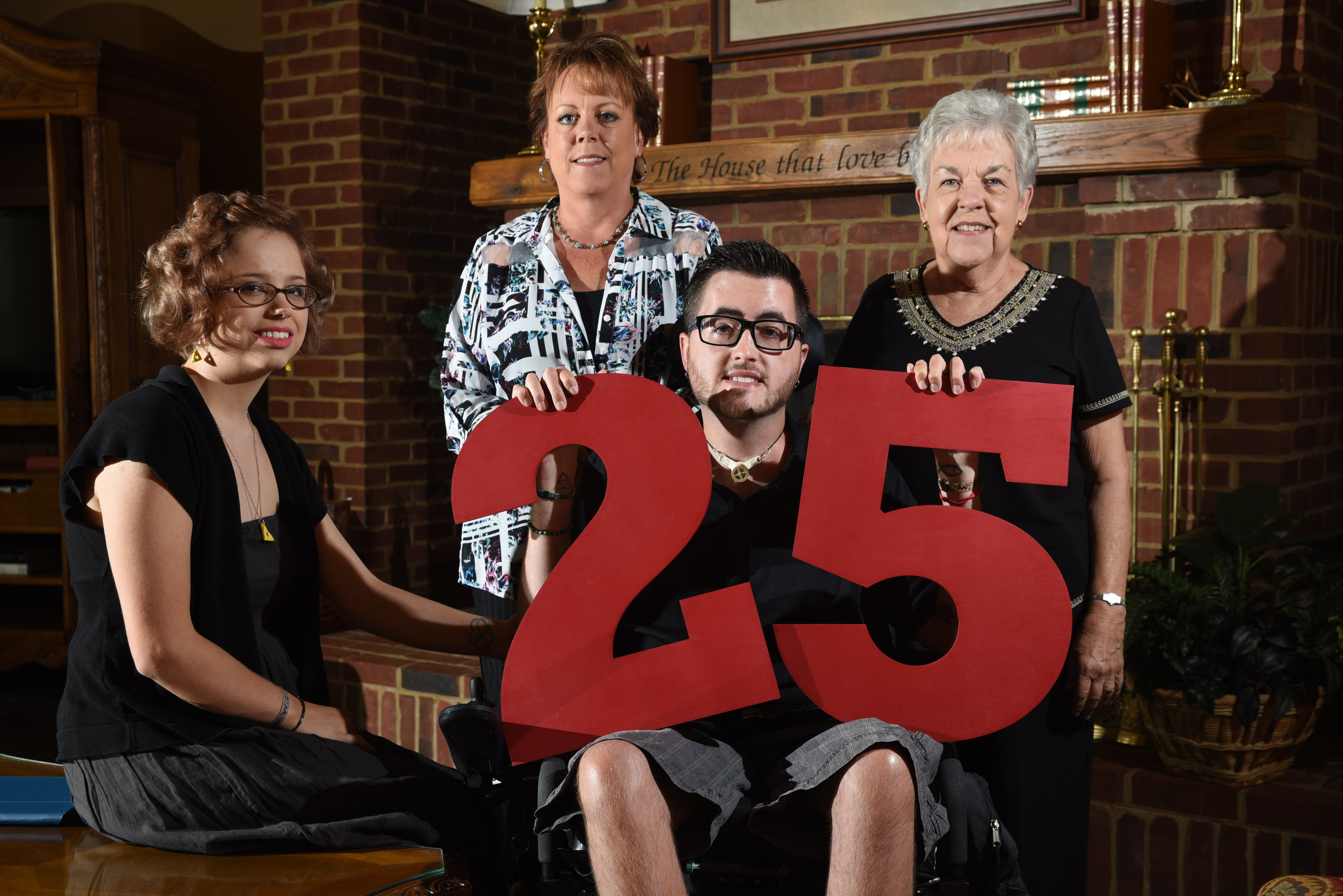 Daniel Bailer, center, and his family members were the first occupants of the Chattanooga Ronald McDonald House, which opened in 1990. Clockwise, from center are Mary Rice, Renee Bailer and Marie Economy.