
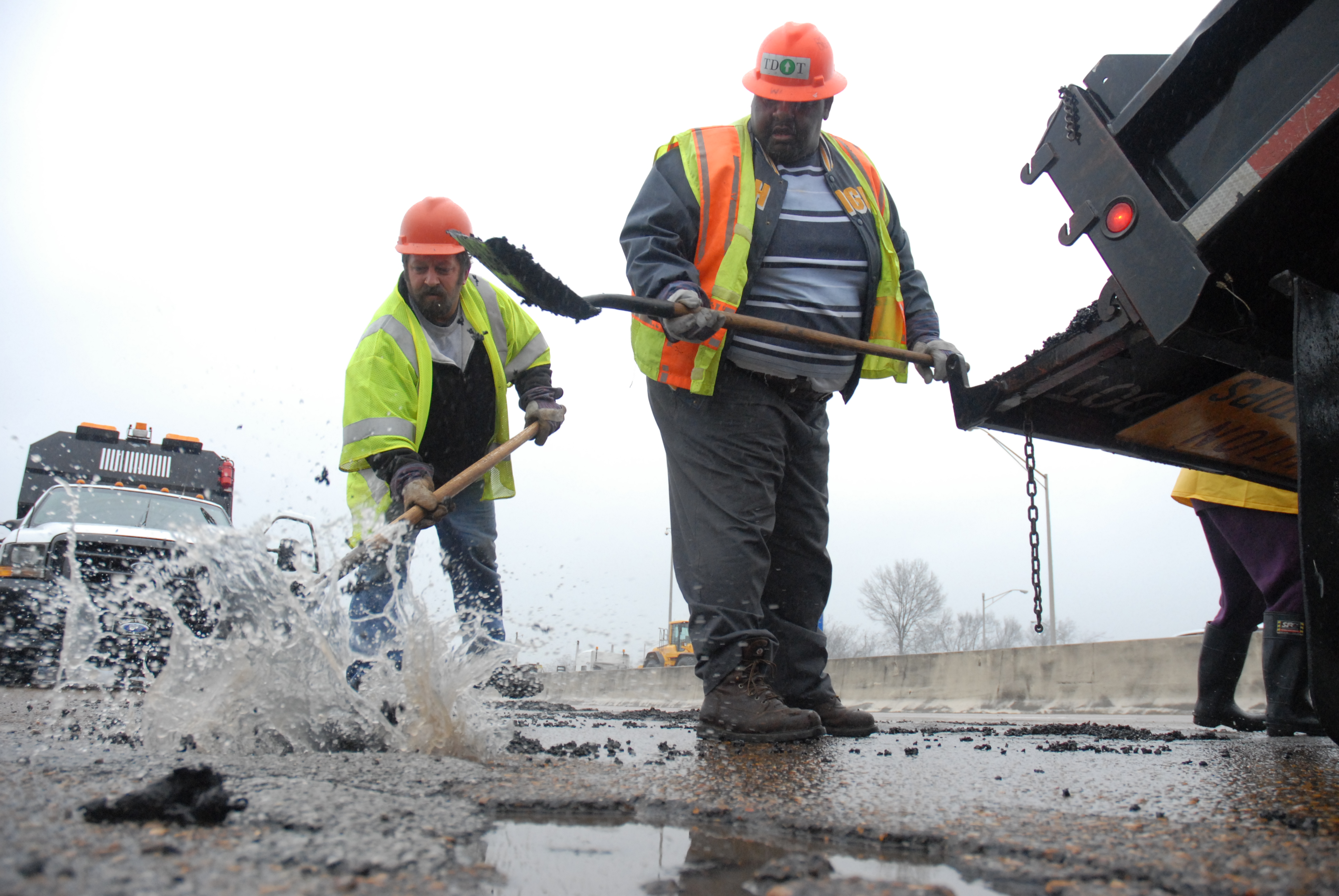
 Jeff Moore, left, and Willy Moore, with Tennessee Department of Transportation, fill a pothole near the Rossville Avenue exits downtown along Highway 24 going eastbound.
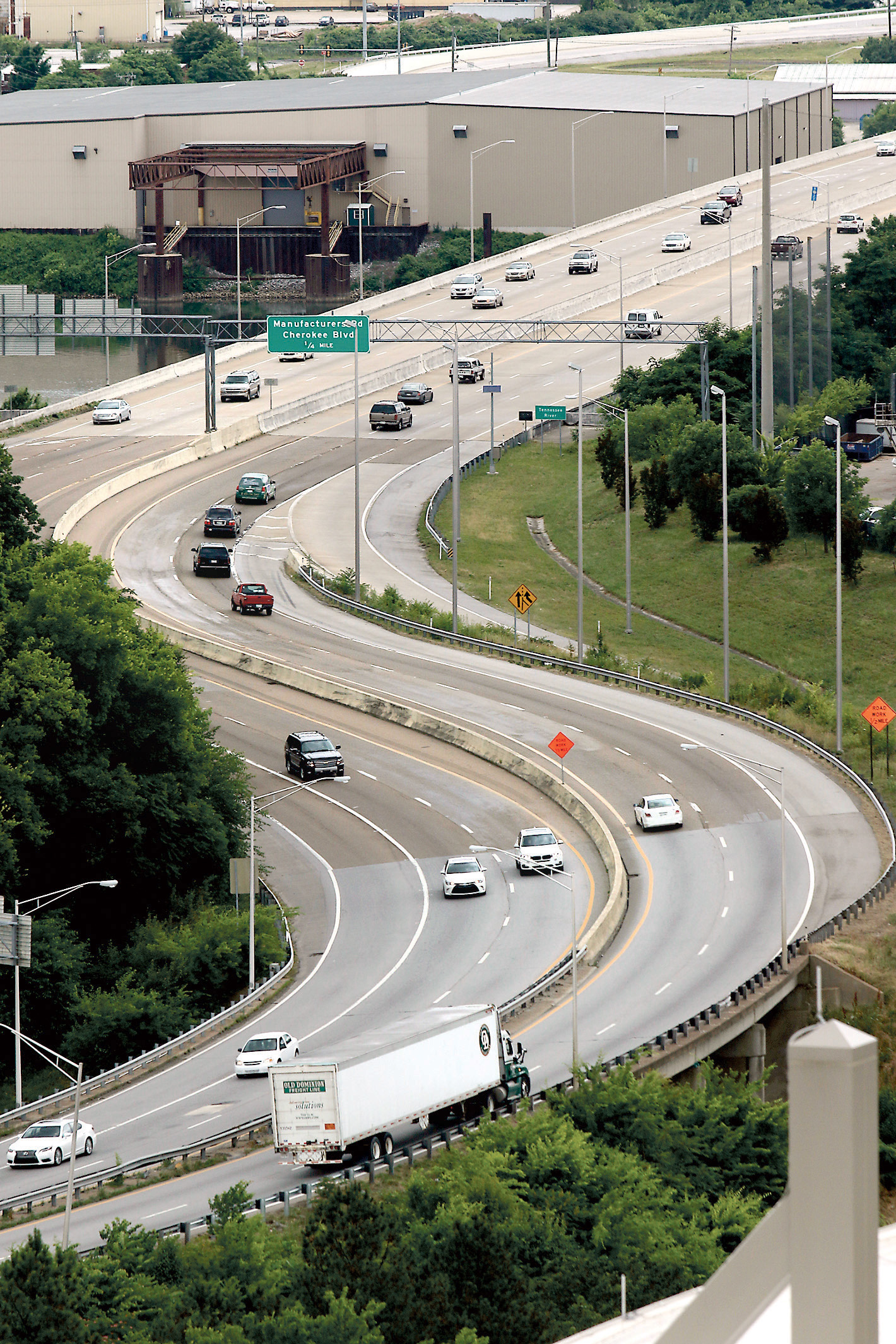 The downtown curves of U.S. Highway 27 are seen from the Republic Centre building Thursday. Gov. Bill Haslam says the state is facing a $6 billion backlog of state road projects.
WASHINGTON (AP) – The House voted Thursday to continue transportation programs for six years with no significant increase in spending, despite warnings from the White House and statehouses across the country that the nation’s roads, bridges and transit systems are falling apart.
The bill, approved 363-64 with wide bipartisan support, authorizes $325 billion in spending through the 2021 federal budget year. But the bill provides only enough money to pay for the first three years because lawmakers were unable to settle on a politically acceptable way to pay for it all. The bill would continue current rates of spending adjusted for inflation.
At least $400 billion over six years is needed to prevent traffic congestion from getting worse, Transportation Secretary Anthony Foxx has said.
Most lawmakers lauded the bill as a major accomplishment because it would assure states and local communities that they can count on federal highway and transit aid for at least three years. State officials say they find it increasingly difficult to plan major construction projects because they can’t always be sure federal aid will be available.
Since 2008, Congress has kept the federal Highway Trust Fund teetering on the edge of bankruptcy, unwilling to raise the federal 18.4 cents-a-gallon gasoline and 24.4-cent diesel taxes. The fuel taxes, the trust fund’s main source of revenue, were last raised in 1993. Transportation aid has continued through dozens of short-term extensions and transfers of money from the general treasury to make up the gap between revenues and spending.