
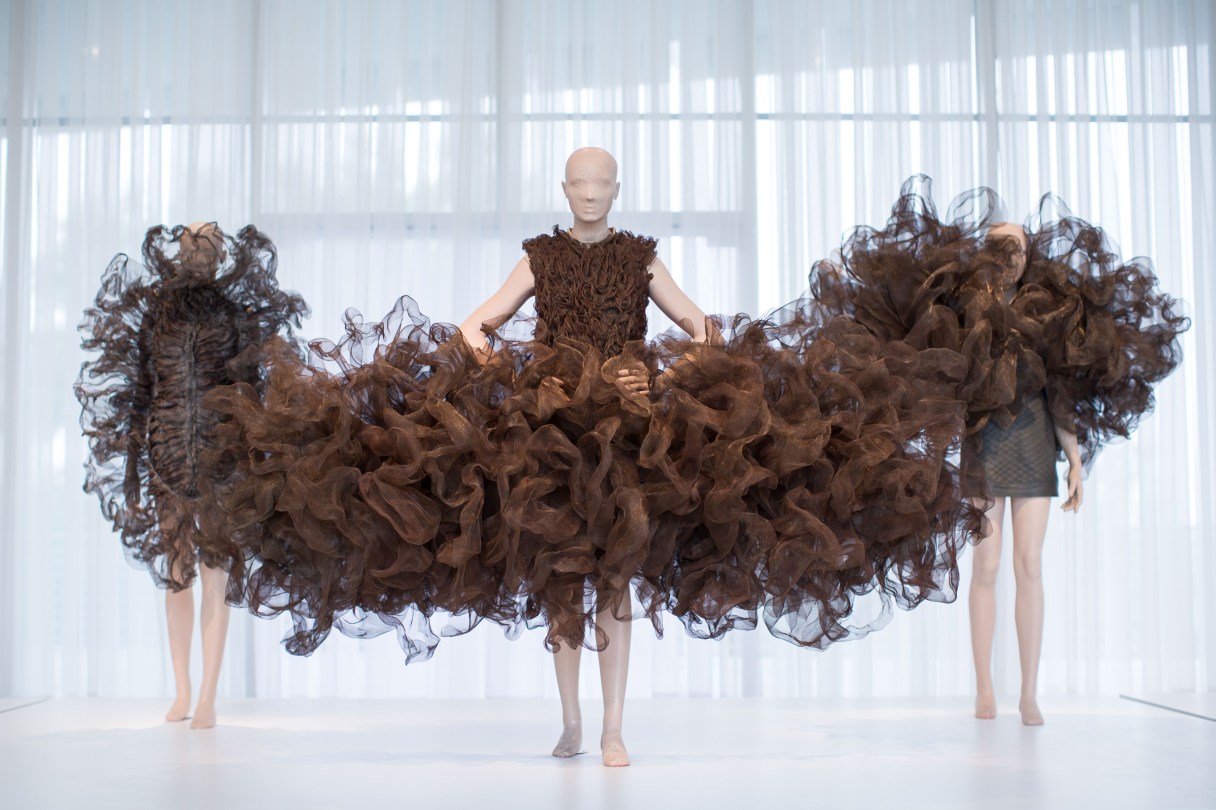
ATLANTA (AP) – Drawing inspiration from sources including art, architecture, the movement of the human body and science, Iris van Herpen creates cutting-edge fashion using a combination of traditional craftsmanship and innovative technology.
And though van Herpen’s name may not be well-known to the average fashion-loving consumer, fashion-forward singers like Lady Gaga, Bjork and Beyonce have all worn her creations.
“Iris van Herpen: Transforming Fashion,” a new exhibition opening Saturday at Atlanta’s High Museum of Art, features 45 pieces pulled from 15 of the Dutch artist’s collections designed between 2008 and this year. Organized chronologically, it gives visitors insight into the evolution of the young designer’s career.
Many of the couture pieces look like costumes from a futuristic science fiction movie, with dramatic flourishes created from unexpected materials and contrasting textures.
The pieces are displayed on custom mannequins in such a way that visitors can walk around and see them from every angle because they are as much sculpture as clothing, said High curator of decorative arts and design Sarah Schleuning.