
CIUDADELA, Argentina (AP) – Yanina Mendoza doesn’t seem a natural voter for opposition leader Mauricio Macri, a member of one of Argentina’s richest families who is running for president on pro-market credentials.
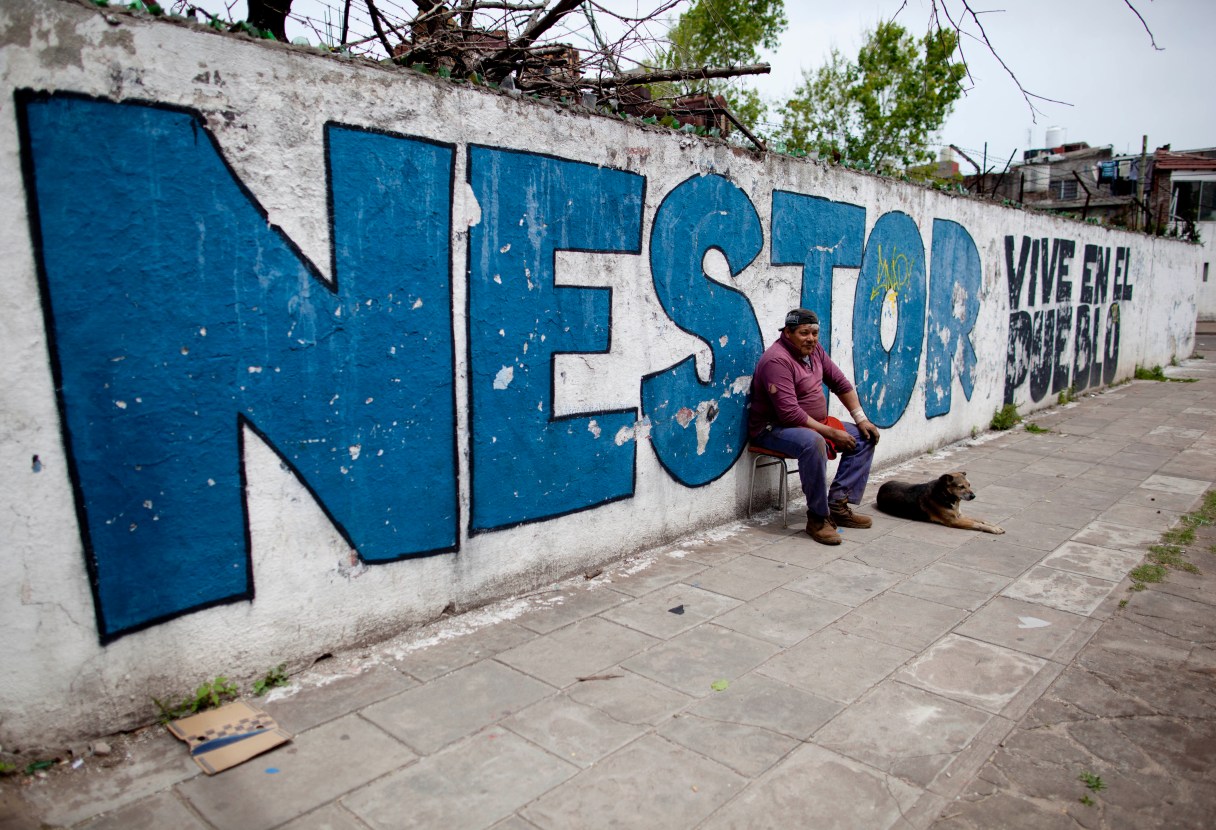
The 24-year-old single mother makes about $1,200 a month as a maid and lives in a rough area of Ciudadela, a city about 12 miles (20 kilometers) west of Buenos Aires. Since the country’s return to democracy in 1983, her Tres de Febrero neighborhood has traditionally backed leaders from within Peronism, a working class movement founded by three-time President Juan Peron.
That changed Oct. 25, when millions like Mendoza in the vast Buenos Aires province shook up the political landscape by voting for Macri and forcing a Nov. 22 runoff against Daniel Scioli, the governing party candidate. Scioli has been governor of the province for eight years and is the chosen successor of outgoing President Cristina Fernandez, the current standard-bearer of Peronism.
“I hope Macri can be a real change,” Mendoza said, emerging with her 1-year-old daughter from an apartment building with bars on the windows. “Every day there is more crime, and we need more police.”
Macri’s surprisingly strong first-round finish was based largely on his robust showing in Buenos Aires province, whose 15 million residents make up 40 percent of the country’s population and is larger geographically than Italy or the U.S. state of Arizona. The province includes coastline, farmland and a seemingly endless sprawl of densely populated urban centers around the city of Buenos Aires, which is part of the province.