
As anyone who grew up on the food can attest, life without a little South in your mouth at least once in a while is a bland and dreary prospect.
Sections in the book
› Party Bites & Appetizers› Chicken› Pork, Beef & Lamb› Fish & Shellfish› Game› Vegetables & Sides› Baked Goods & Desserts› Condiments, Sauces & Spreads› Cocktails
The stereotypes are hardwired into many minds: Down here in the South, if we can’t fry the sucker, it ain’t worth eatin’.
“That is the stereotype, that everything is fried. I call it the county-fair mentality,” says David DiBenedetto, editor of Garden & Gun magazine. “But we know that’s not how Southerners eat on a daily basis.”
Still, the stereotypes go further than frying. Southerners also are accused of smothering food in enough gravy to turn arteries into sausage tubes, of dropping a salt lick or chunk of lard into every pot and boiling food until it’s flavorless mush. It all adds up to a diet designed for death.
“I would argue that most of us Southerners don’t eat an unhealthy diet,” says DiBenedetto, who grew up in Savannah, Ga. “Yes, we love our fried chicken, but that’s not an every-night dinner. The vegetable is at the heart of great dishes; sides are just as important as the main dish.”
Attempting not only to dispel the notion that we would fry a brick or coat it in lard, but to actually prove that we don’t, Garden & Gun has partnered with HarperCollins publishers to release “The Southerner’s Cookbook: Recipes, Wisdom, and Stories,” a coffee-table sized tome that features such non-fried, non-lard-laden dishes as Frogmore Stew, Cast-Iron Charred Corn, Mardi Gras Moon Pies and Sweet Tea-Brined Country Ham.
“I don’t know that we’ll change anyone’s mind, but we will introduce them to wonderfully good food,” DiBenedetto says. “We’re casting a pretty wide net to get the true bounty of the South.”
Among that bounty are five different types of barbecue sauce (Memphis, Texas, North Carolina, South Carolina and Alabama), a recipe and history on Sweet Potato Sonkers, a dish from Surry County, N.C., and even lessons on how to whip up Southern cocktails.
“As Southern Episcopalians often joke, wherever four of us shall gather, there will always be a fifth,” Kathleen Purvis, food editor at the Charlotte Observer, writes in the book.
And at the end is a glossary to help you speak (and understand what you’re saying) like a true Southerner.
The book, which covers recipes from Oklahoma to Maryland, from Florida to Kentucky, is mostly newly written essays and recipes, DiBenedetto says, but about 30 percent is from pieces that have run in Garden & Gun since the Charleston, S.C.-based magazine started publishing in 2007. Writers such as Rick Bragg, Roy Blount Jr. and Allison Glock contribute essays.
“We have such great food down here and it’s prepared in such differing ways, we didn’t want to do a book just about he classics,” DiBenedetto says. “Sure, we’ve gotta do fried chicken and biscuits and pimento cheese, but we also wanted to capture some of what we call the global South.”
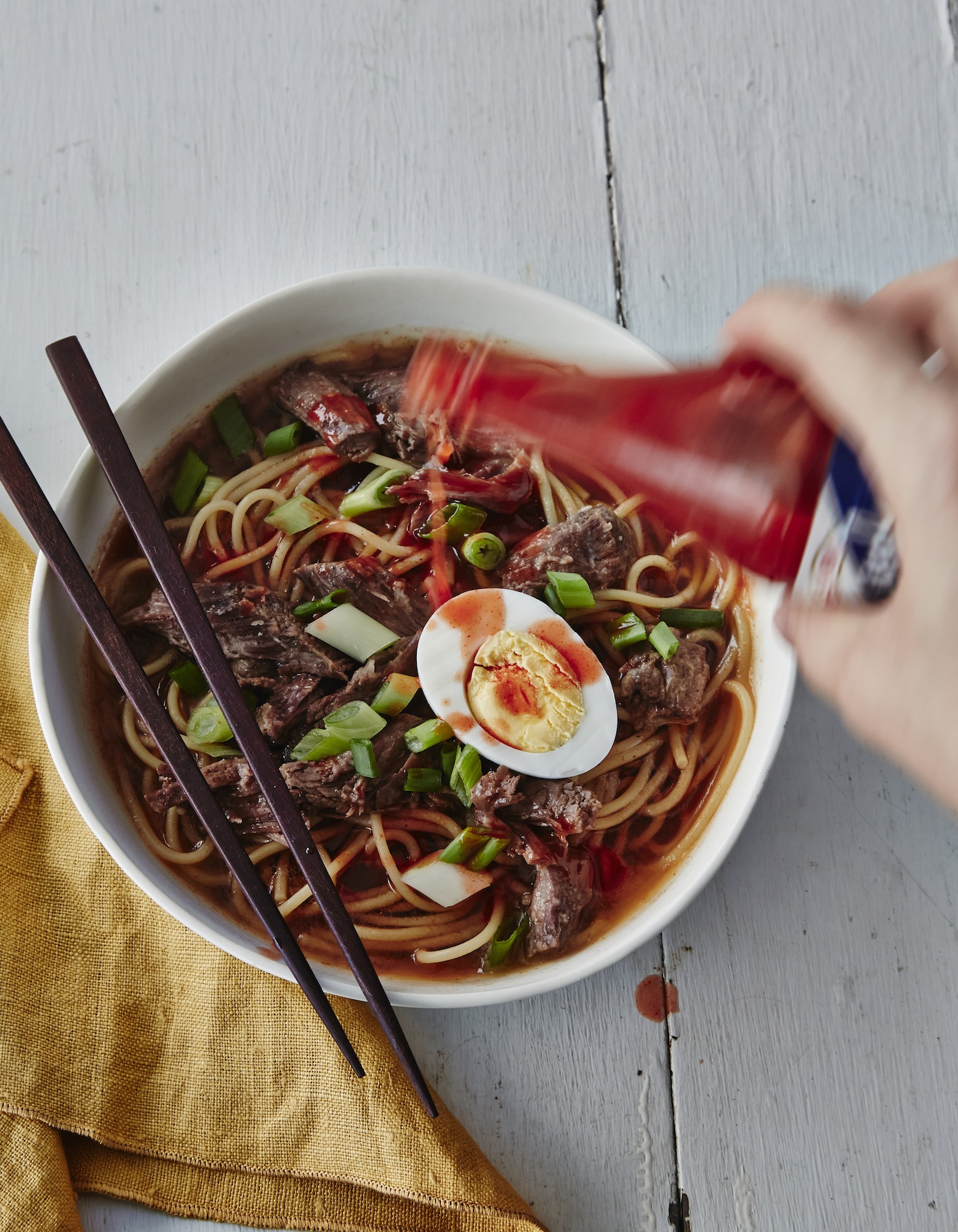
Among the global recipes in the book are Yakamein, a hangover cure brought to New Orleans by Chinese immigrants in the 19th century; Muscadine Mostarda, an Italian sauce made with fruit, vinegar, sugar, mustard, cayenne pepper and other spices; and Pickapeppa Hot Sauce from Jamaica.
That global reach comes from Southern chefs who travel around the world, bringing back ideas and dishes from different cultures then tweaking them.
“It’s a very inclusive food scene,” DiBenedetto says. “Chefs are taking some of the classics inspired by different culture and twisting them. They’re traveling everywhere and picking up everything.”
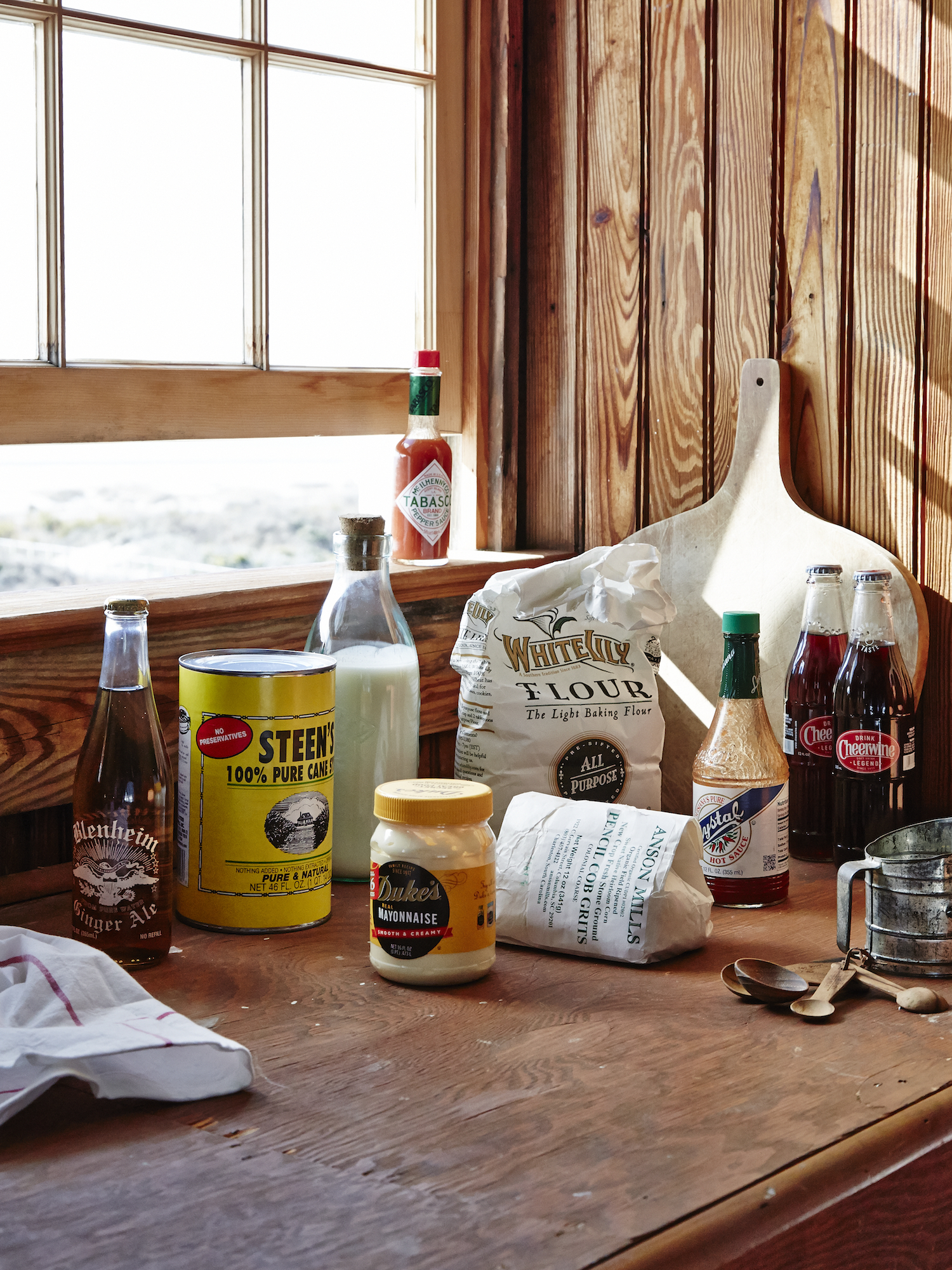
But the underlying current that flows through Southern cooking, DiBenedetto says, is “an appreciation of ingredients.”
“It always comes back to fresh ingredients,” he says. “Farm-to-table is a popular phrase now, but we’ve been doing that for hundreds of years; it’s nothing new to us.”
Contact Shawn Ryan at sryan@timesfreepress.com or 423-757-6327.
Recipes
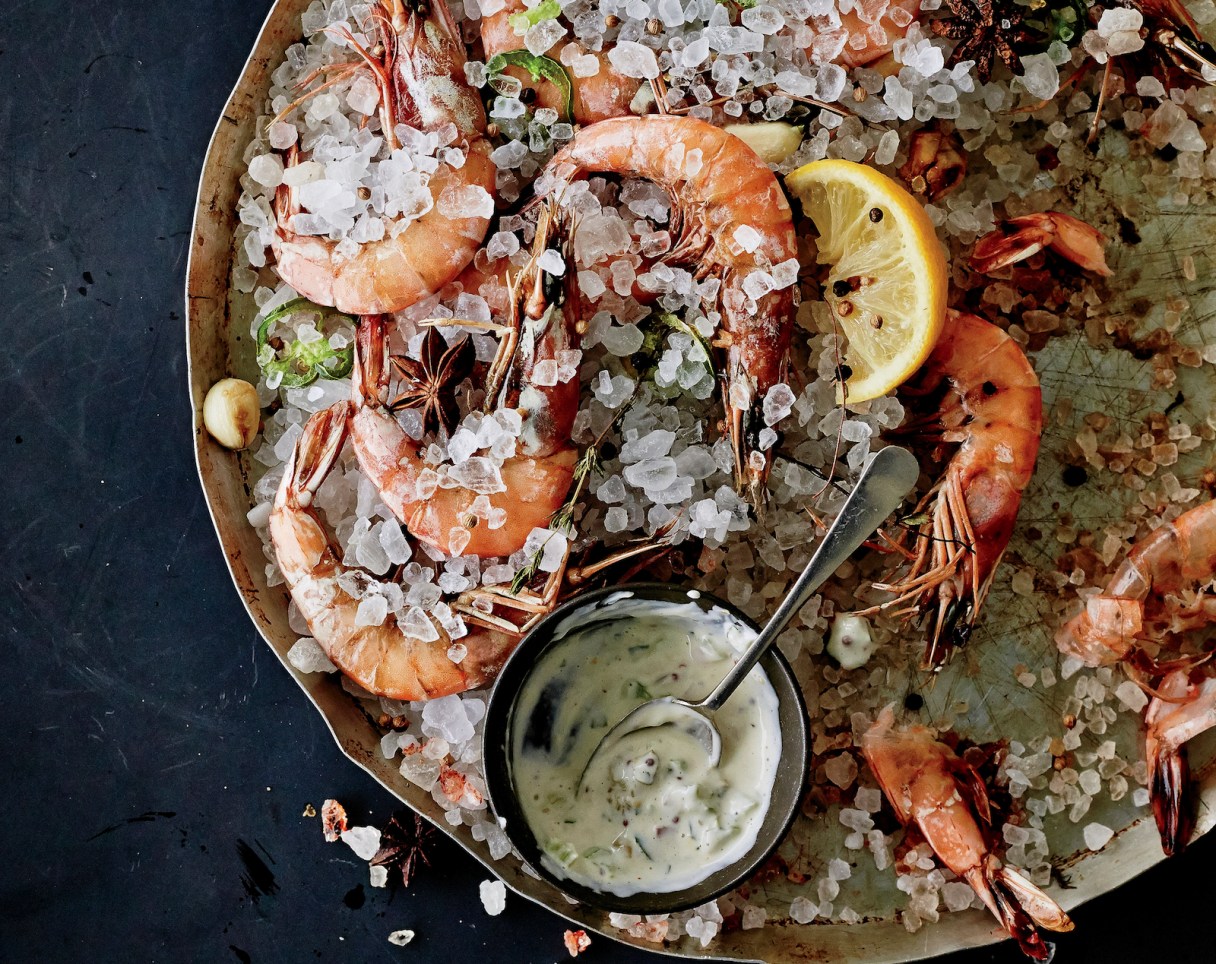
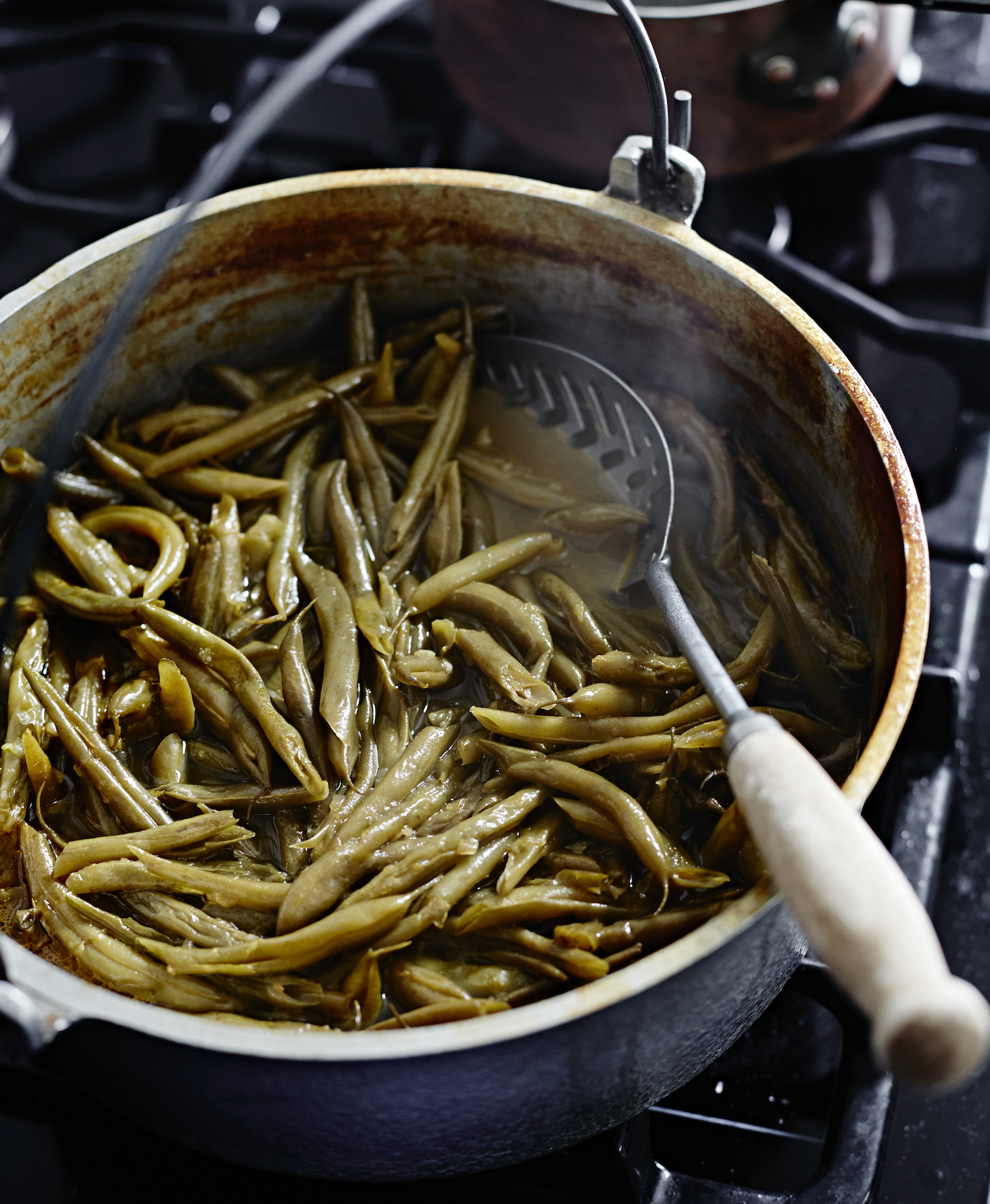
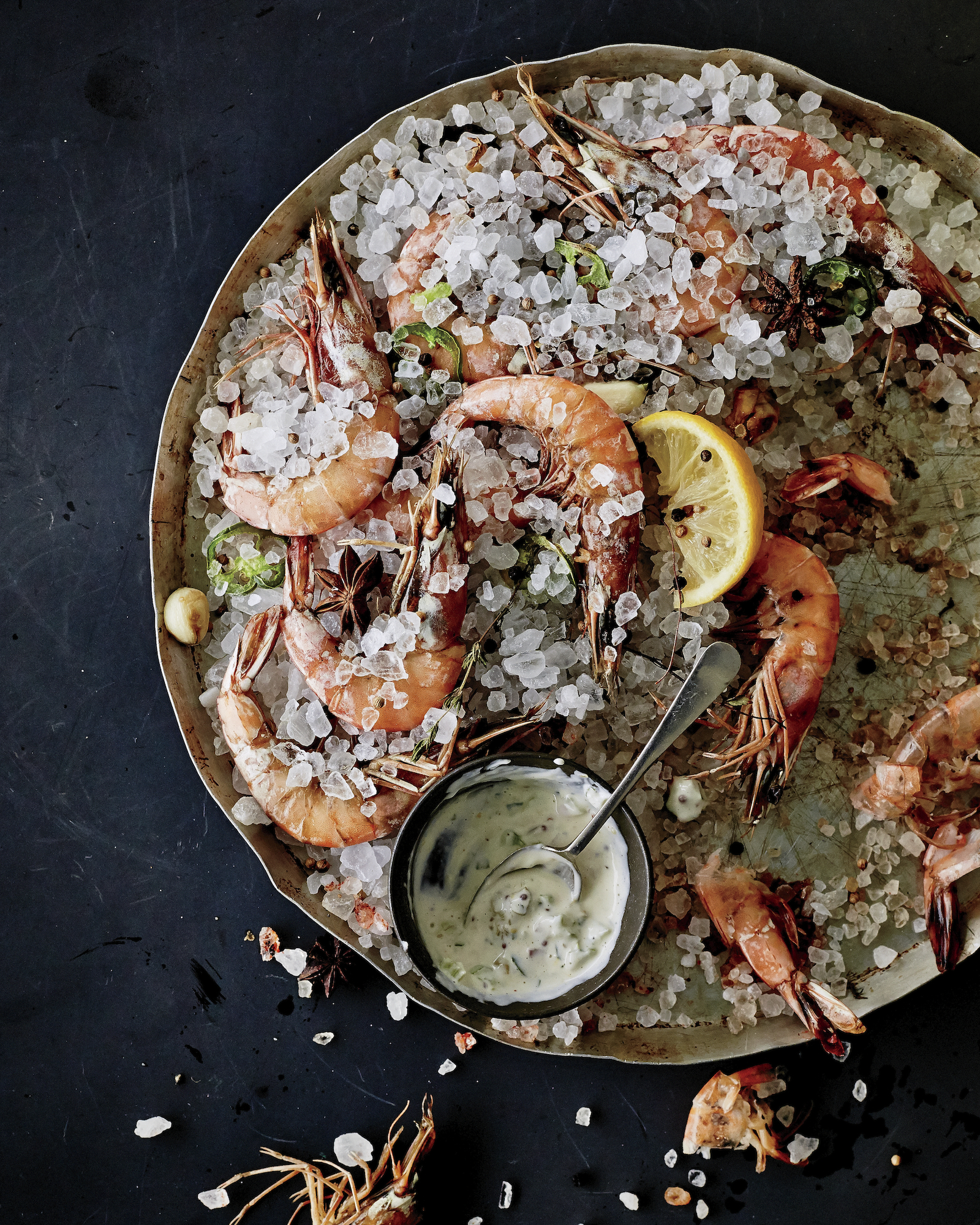
Salt-Baked Shrimp 3 pounds rock salt 1 tablespoon coriander seeds 2 tablespoons black peppercorns 4 bay leaves 3 star anise 10 sprigs fresh thyme 1 head garlic, cloves smashed and skins removed 1 jalapeno, sliced, with seeds 2 lemon wedges 2 pounds head-on shrimp, 20-25 count Heat oven to 475 degrees. Combine the rock salt, coriander, peppercorns, bay leaves, star anise, thyme, garlic, jalapeno and lemon wedges in large bowl and mix well. Pour half the salt-spice mixture into a large, oven-safe baking dish (or two smaller dishes) and place in the oven for 10-12 minutes, until the salt becomes hot. Remove from oven, lay the shrimp in the salt and add the remaining salt to cover. Return pan to oven and bake for an additional 8-12 minutes, until the shrimp are just cooked through. Using tongs, remove the shrimp from the salt and transfer to a plate. – Chef Adam Evans, The Optimist, Atlanta Yakamein 1 (2 1/2 to 3 pound) boneless chuck or eye of round roast 8-9 cups of water 2 teaspoons Creole seasoning 1/2 to 2/3 cup soy sauce, more to taste 1 tablespoon ketchup, and for topping 1 tablespoon Worcestershire sauce 1 1/2 tablespoons hot sauce, more to taste 1 (1-pound) package spaghetti, cooked to directions 1 bunch scallions, trimmed and sliced 5 hardboiled eggs, cut in half Place the beef roast in a large stockpot. Cover with water, then add the Creole seasoning. Place over medium-high heat, bring to a simmer, then reduce heat to low and simmer for 3 to 4 hours, until beef is tender. Remove the beef to a large bowl and allow to cool for 20 to 30 minutes. Shred or chop cooled beef, removing and discarding any large chunks of fat. Skim the fat from the top of the stock. Add the soy sauce, ketchup, Worcestershire sauce and hot sauce to the stock, tasting as you go and adjusting seasonings as needed. Cook spaghetti according to package directions. When ready to serve, reheat the skimmed stock on medium heat until simmering. To serve, divide the spaghetti and meat among 10 bowls. Top each with scallions and half an egg and ladle some stock over the top. Serve with hot sauce or ketchup. – Linda Green, “The Ya-Ka-Mein Lady,” New Orleans Not-Quite-So-Cooked-To-Death Green Beans 1 1/2 pounds green beans, trimmed 2 tablespoons unsalted butter 3 thick-cut hickory-smoked bacon slices, cooked and crumbled (1 tablespoon rendered bacon fat reserved) 1 medium white onion, thinly sliced Kosher salt Freshly ground black pepper Chopped, toasted salt-roasted peanuts Bring a large stockpot of salted water to a boil over high heat. In a separate bowl, prepare an ice bath. Blanch the beans in boiling water for 5 minutes, or until just tender. Drain and shock the beans in the ice bath. Drain again and blot excess moisture. Transfer to a large bowl and set aside. In a large cast-iron skillet, melt 1 tablespoon butter with the reserved bacon fat over medium heat. When it becomes foamy in 2 to 3 minutes, reduce heat to medium-low and stir in the onion. Cook for 10 to 15 minutes without browning the onion, stirring occasionally, until tender, then increase the heat to medium and cook, stirring often, until the onions are soft and brown, 10 to 15 minutes. Add the remaining tablespoon butter to the pan and, when foamy, toss in the green beans and salt and pepper to taste. Heat until warm. Serve garnished with the bacon and peanuts. Alabama-Style White Barbecue Sauce 1 (15-ounce) jar mayonnaise (about 1 1/2 cups) 1/4 cup distilled white vinegar 1 tablespoon apple juice Juice of 1/2 lemon 2 teaspoons freshly ground black pepper 2 teaspoons prepared horseradish 1/4 teaspoon kosher salt 1/4 teaspoon cayenne pepper Combine all the ingredients in a bowl and whisk well to combine, then serve. Store any remaining sauce in an airtight container, refrigerated, for up to 1 week. Stir before serving. – Big Bob Gibson, Decatur, Ala.