
Tuesday, November 10, 2026Nov 10

Missouri would likely be alone with 10 percent black faculty

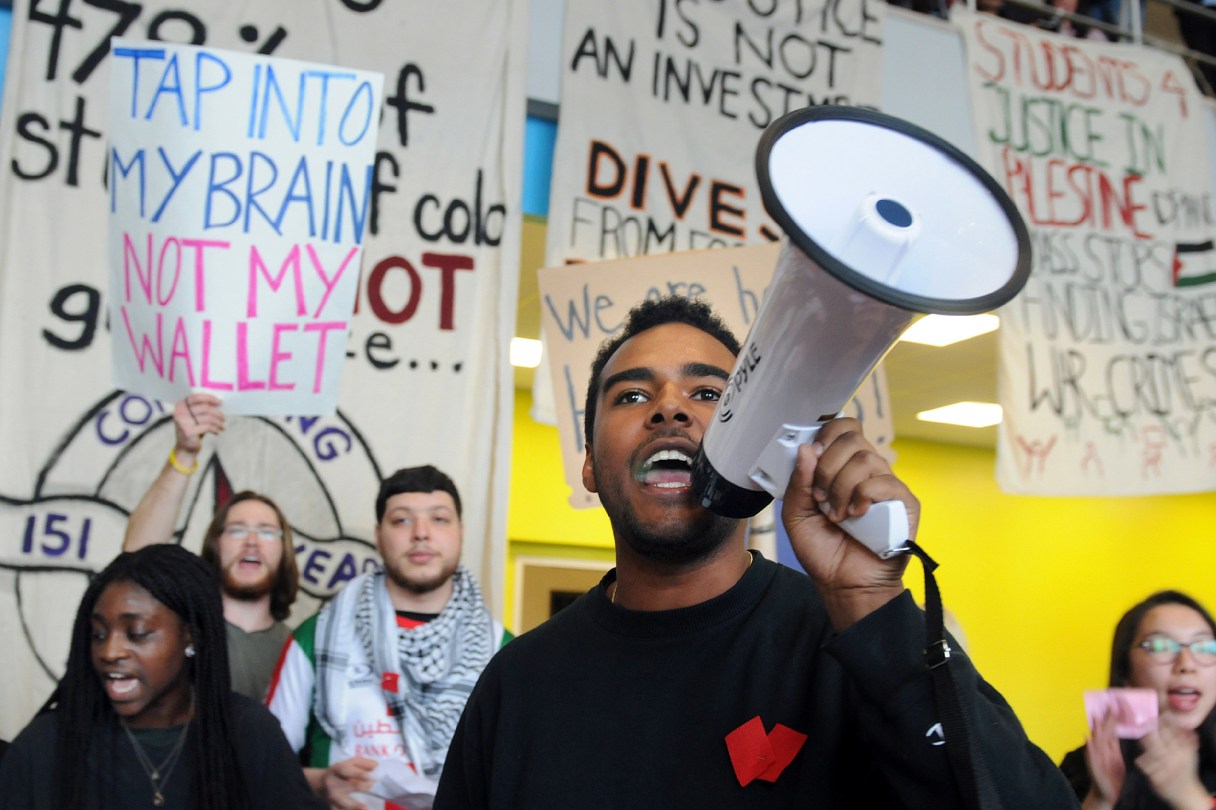
In this Thursday, Nov. 12, 2015, photo, University of Massachusetts Amherst student Evandro Tavares speaks to students gathered to highlight issues from racial inclusion to student debt, during a march at the Student Union on the UMass campus in Amherst, Mass. UMass administrators held a "listening session" the following day where students expressed their need to see more faculty of color in the classroom, those who are more familiar with their experiences as students of color. (Carol Lollis/Daily Hampshire Gazette via AP) MANDATORY CREDIT
In this Thursday, Nov. 12, 2015, photo, University of Massachusetts Amherst student Evandro Tavares speaks to students gathered to highlight issues from racial inclusion to student debt, during a march at the Student Union on the UMass campus in Amherst, Mass. UMass administrators held a "listening session" the following day where students expressed their need to see more faculty of color in the classroom, those who are more familiar with their experiences as students of color. (Carol Lollis/Daily Hampshire Gazette via AP) MANDATORY CREDIT In this Thursday, Nov. 12, 2015, photo, University of Massachusetts Amherst student Evandro Tavares speaks to students gathered to highlight issues from racial inclusion to student debt, during a march at the Student Union on the UMass campus in Amherst, Mass. UMass administrators held a "listening session" the following day where students expressed their need to see more faculty of color in the classroom, those who are more familiar with their experiences as students of color. (Carol Lollis/Daily Hampshire Gazette via AP) MANDATORY CREDIT

BUFFALO, N.Y. (AP) – If the University of Missouri succeeds in meeting a student demand for a faculty that’s 10 percent black in two years, it will likely be alone among its peers.

No state’s “flagship” public university campus had a black faculty population approaching that level, and only a handful topped even the 5 percent mark, an Associated Press analysis of 2013 federal data found.

The norm on most of the main campuses was a faculty that was between 2 percent and 4 percent black, the data showed.

Universities are well aware that staff and student bodies often don’t match, administrators and experts say, and demonstrations and discussions around the country in recent days have driven home the point.

Fresh from a two-hour “listening session” Friday, University of Massachusetts Senior Vice Provost John McCarthy said students made clear the need for change.