
Tuesday, November 10, 2026Nov 10

GLANCE: Tunisia, Nobel winner, shines as Arab Spring success

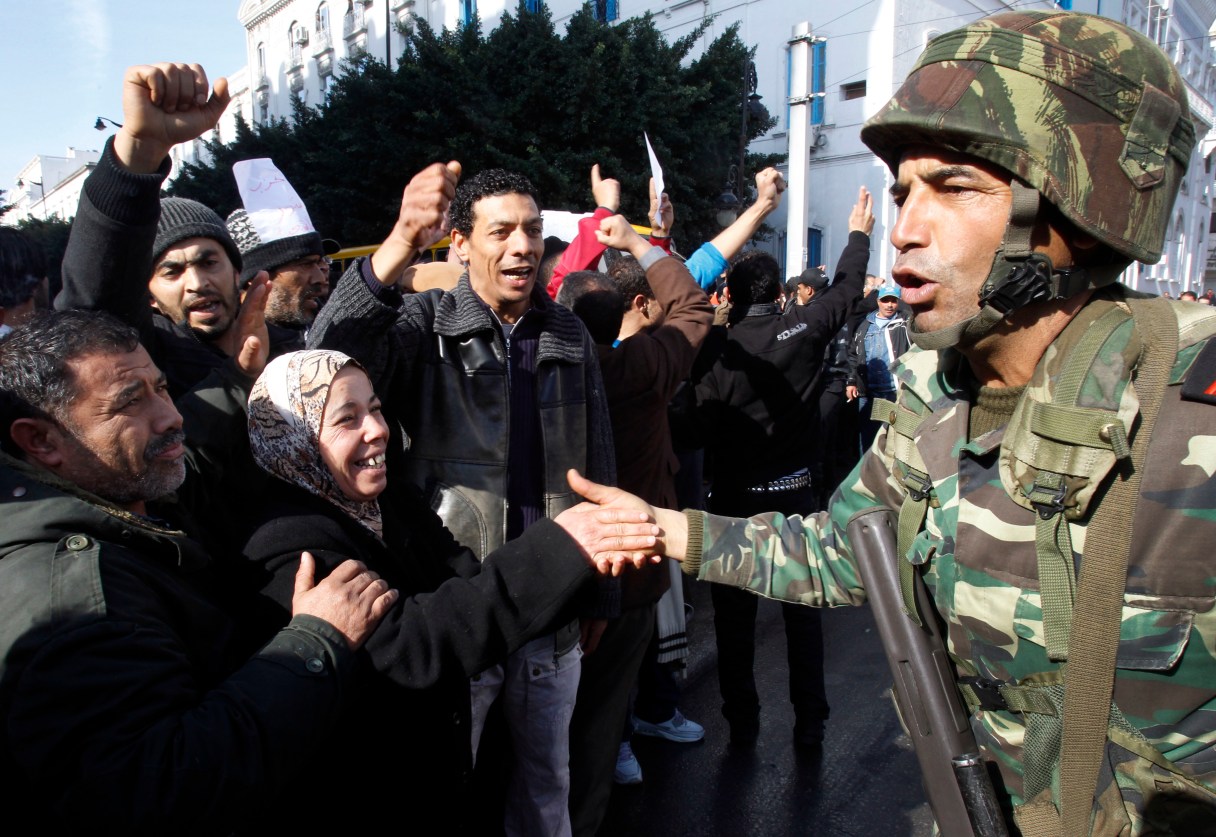
FILE -  In this Monday, Jan. 17. 2011 file photo protestors greet soldiers during a demonstration against former Tunisian President Zine El Abidine Ben Ali in the center of Tunis. A Tunisian democracy group won the Nobel Peace Prize on Friday Oct. 9, 2015 for its contributions to the first and most successful Arab Spring movement. The Norwegian Nobel Committee cited the Tunisian National Dialogue Quartet "for its decisive contribution to the building of a pluralistic democracy" in the North African country following its 2011 revolution.   (AP Photo/Christophe Ena, File)
FILE - In this Monday, Jan. 17. 2011 file photo protestors greet soldiers during a demonstration against former Tunisian President Zine El Abidine Ben Ali in the center of Tunis. A Tunisian democracy group won the Nobel Peace Prize on Friday Oct. 9, 2015 for its contributions to the first and most successful Arab Spring movement. The Norwegian Nobel Committee cited the Tunisian National Dialogue Quartet "for its decisive contribution to the building of a pluralistic democracy" in the North African country following its 2011 revolution. (AP Photo/Christophe Ena, File) FILE - In this Monday, Jan. 17. 2011 file photo protestors greet soldiers during a demonstration against former Tunisian President Zine El Abidine Ben Ali in the center of Tunis. A Tunisian democracy group won the Nobel Peace Prize on Friday Oct. 9, 2015 for its contributions to the first and most successful Arab Spring movement. The Norwegian Nobel Committee cited the Tunisian National Dialogue Quartet "for its decisive contribution to the building of a pluralistic democracy" in the North African country following its 2011 revolution. (AP Photo/Christophe Ena, File)

The Nobel Peace Prize announced Friday pointed to the relative success of Tunisia in building toward democracy after a 2011 uprising ousted a longtime dictator. That makes it a resounding exception among the nations of the Arab Spring revolts.

The award went to four civil society organizations that make up the Tunisian National Dialogue Quartet, which helped guide the North African nation through some its direst moments by bringing Islamists and their opponents into negotiations. Tunisia’s transition to democracy has been battered by a weak economy, terrorist attacks and bickering politicians, but it was able to avert the violent civil breakdown that many had feared.

Here is a glance at the other major Arab uprisings of 2011 and where they stand today:

EGYPT

Inspired by the events in Tunisia, Egyptians were next to take to the streets, with millions participating in protests that led to the Feb. 11, 2011 removal of Hosni Mubarak, the U.S. ally who had ruled Egypt for 29 years with an authoritarian grip.