
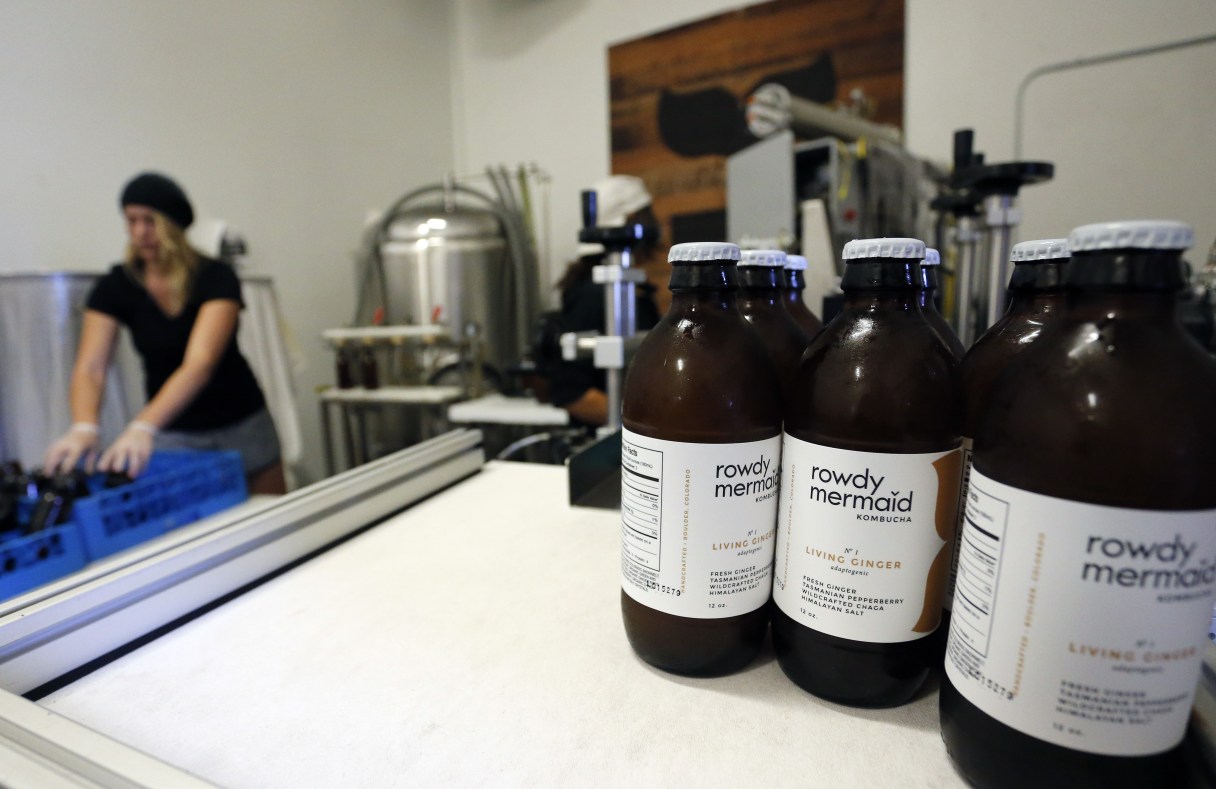
DENVER (AP) – A tangy fermented tea called kombucha has moved from the natural foods aisle to the mainstream. But it’s also moved into the hot seat amid renewed concerns that it can contain low levels of alcohol.
Five years after alcohol levels detected in kombucha prompted nationwide recalls, federal authorities again are warning producers to relabel their products to indicate alcohol content or face fines. But this time around dozens of producers are resisting, and have asked for new federal tests to help them avoid running afoul of alcohol laws.
Kombucha is a tea that has been fermented with bacteria and yeast, giving it a tart, vinegar-like zip and high levels of bacteria that some believe impart health benefits. And it’s hugely popular. Sales of kombucha jumped nearly five times between 2013 and 2015, to about $600 million a year, according to retail analysts at Markets and Markets.
The tea’s fermentation process dates back centuries, but its popularity in recent years has landed kombucha in the sights of the U.S. Alcohol and Tobacco Tax and Trade Bureau. That’s because the fermentation process can give the drink too much alcohol for it to be legally sold as a non-alcoholic beverage.
Kombucha makers complain that the alcohol threshold that triggers the law – 0.5 percent – is too low to intoxicate people, pointing out that many fruits naturally ferment on shelves to about the same level. But federal authorities over the years have sent kombucha makers letters threatening fines when tests indicate that kombucha on store shelves is too alcoholic.