
Monday, November 2, 2026Nov 2

This story is free to read.

Pope at synod’s end: ‘Today is a time of mercy’

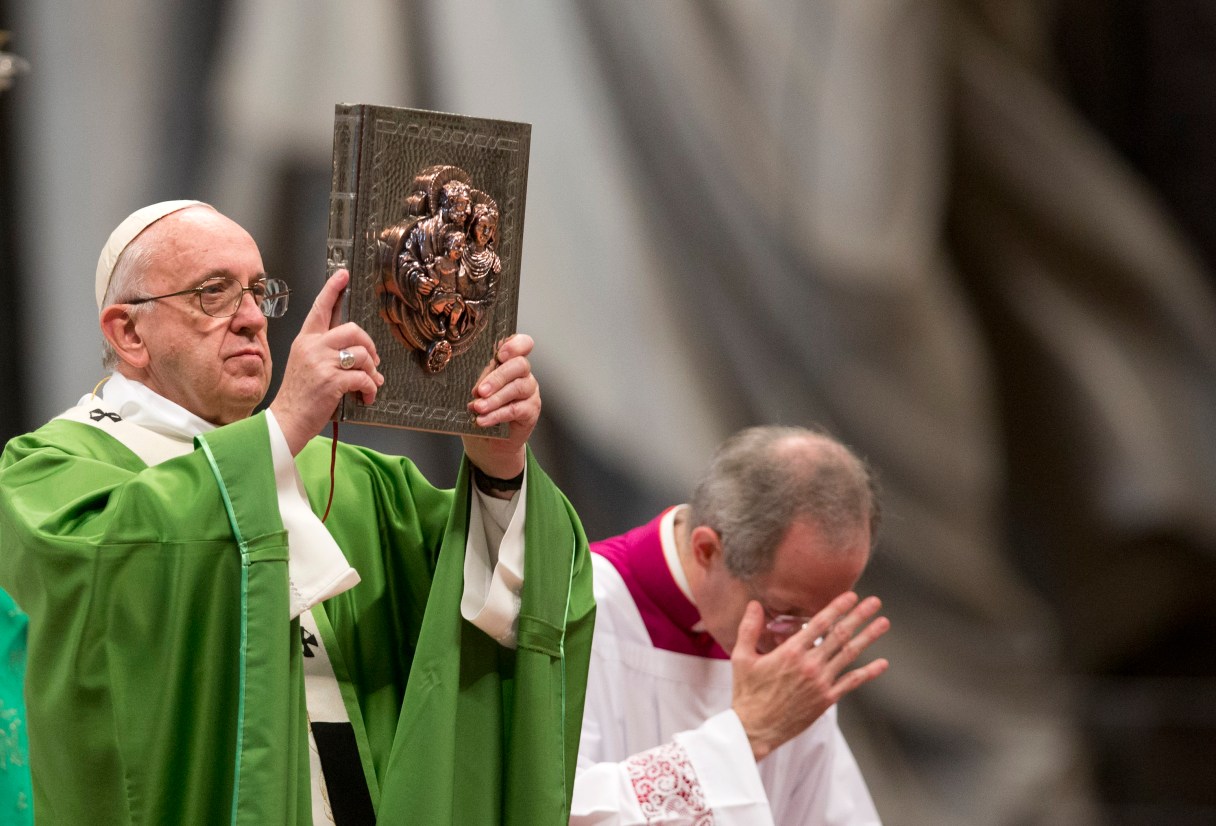
Pope Francis holds the Gospel Book as he celebrates a Mass to mark the end of the Synod of bishops, in St.Peter's Basilica at the Vatican, Sunday, Oct. 25, 2015. Catholic bishops called Saturday for a more welcoming church for cohabitating couples, gays and Catholics who have divorced and civilly remarried, endorsing Pope Francis' call for a more merciful and less judgmental church. (AP Photo/Alessandra Tarantino)
Pope Francis holds the Gospel Book as he celebrates a Mass to mark the end of the Synod of bishops, in St.Peter's Basilica at the Vatican, Sunday, Oct. 25, 2015. Catholic bishops called Saturday for a more welcoming church for cohabitating couples, gays and Catholics who have divorced and civilly remarried, endorsing Pope Francis' call for a more merciful and less judgmental church. (AP Photo/Alessandra Tarantino) Pope Francis holds the Gospel Book as he celebrates a Mass to mark the end of the Synod of bishops, in St.Peter's Basilica at the Vatican, Sunday, Oct. 25, 2015. Catholic bishops called Saturday for a more welcoming church for cohabitating couples, gays and Catholics who have divorced and civilly remarried, endorsing Pope Francis' call for a more merciful and less judgmental church. (AP Photo/Alessandra Tarantino)

VATICAN CITY (AP) – Pope Francis is celebrating a final Mass to close out a historic meeting of bishops that, by a single vote, approved an important new direction in welcoming divorced and civilly remarried Catholics into the church.

In his homily Sunday in St. Peter’s Basilica, Francis declared “Today is a time of mercy!”

Without changing church doctrine, the 275 synod “fathers” on Saturday approved a 94-point final document endorsing Francis’ call for a more merciful and less judgmental church. The most disputed section of the document concerned whether remarried Catholics can receive Communion.

While the document doesn’t chart any specific path to receiving the sacraments as originally sought by liberal prelates, it opens the door to case-by-case exceptions by citing the role of discernment and individual conscience in spiritual direction.