
Within 10 years, many Americans will have sensors implanted in their bodies to collect health data in real time and allow doctors to provide customized treatment for their illnesses, one technology expert says.
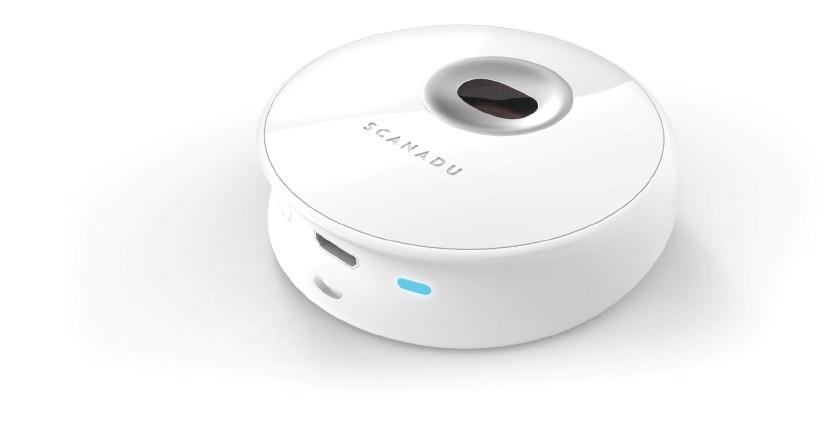
And even sooner than that, we’ll add devices to our bathrooms that will turn them into a home laboratory, according to Amanda Mork, communications manager for Scanadu, a Silicon Valley startup that sells handheld devices to measure blood pressure, heart rate and body temperature.
Mork’s presentation last week at the Lamp Post Group was part of Startup Week in Chattanooga, a gathering of entrepreneurs and venture capitalists.
Mork, who is a co-founder of Healthtech Women, a nonprofit group that encourages women to get involved in the medical technical field, stressed three trends she believes will transform health care.
First, health care will become much more customized; what Mork called “one size fits none,” with doctors able to craft treatments based on a patient’s individual characteristics. That will be driven by improved data collection, allowing doctors to have a much better view of a patient’s bodily functions and genetic makeup.
While we are already seeing some of the early developments in data collection, such as wristbands that collect the wearer’s pulse or activity rate, we will soon see patches attached to the body to provide more direct measurements and, eventually, some people will have sensors implanted to allow real-time monitoring of their bodies, Mork said.
At the same time, she foresees more sensors attached to toilets, lavoratories and even toothbrushes to measure urine or saliva levels, turning our bathrooms into laboratories to collect health data.
That data collection will change the doctor-patient relationship, she argued, in that doctors will spend much less time performing tests or examining the patient, and much more time interpreting the data, often remotely.
Driven by that collection of data, Mork’s second trend is that medicine will become more real-time. Currently, getting health care often means making an appointment several weeks in advance or receiving medical records when a doctor’s staffer returns from vacation. But if a doctor can immediately examine data showing a patient’s vital signs remotely, from his or her office, while the patient remains at home, then the speed of care increases dramatically.
Her third trend was the increased focus on what she called the “fountain of youth,” efforts to extend life spans far beyond their current level.
“That’s not a new trend,” she said, “in that it is why medicine was invented in the first place, we don’t want to die.” Some researchers are trying to figure out why there appears to be a limit on how many times a cell divides, a key component of aging.
Most children born today will live to be 100, an increased lifespan that will have a profound impact on society, Mork said. The situation will offer many opportunities for start ups in the health care field to develop devices to make life easier for a much larger senior population.
Contact staff reporter Steve Johnson at sjohnson@timesfreepress.com, 423-757-6673, @stevejohnsontfp on Twitter and stevejohnsonTFP on Facebook.