
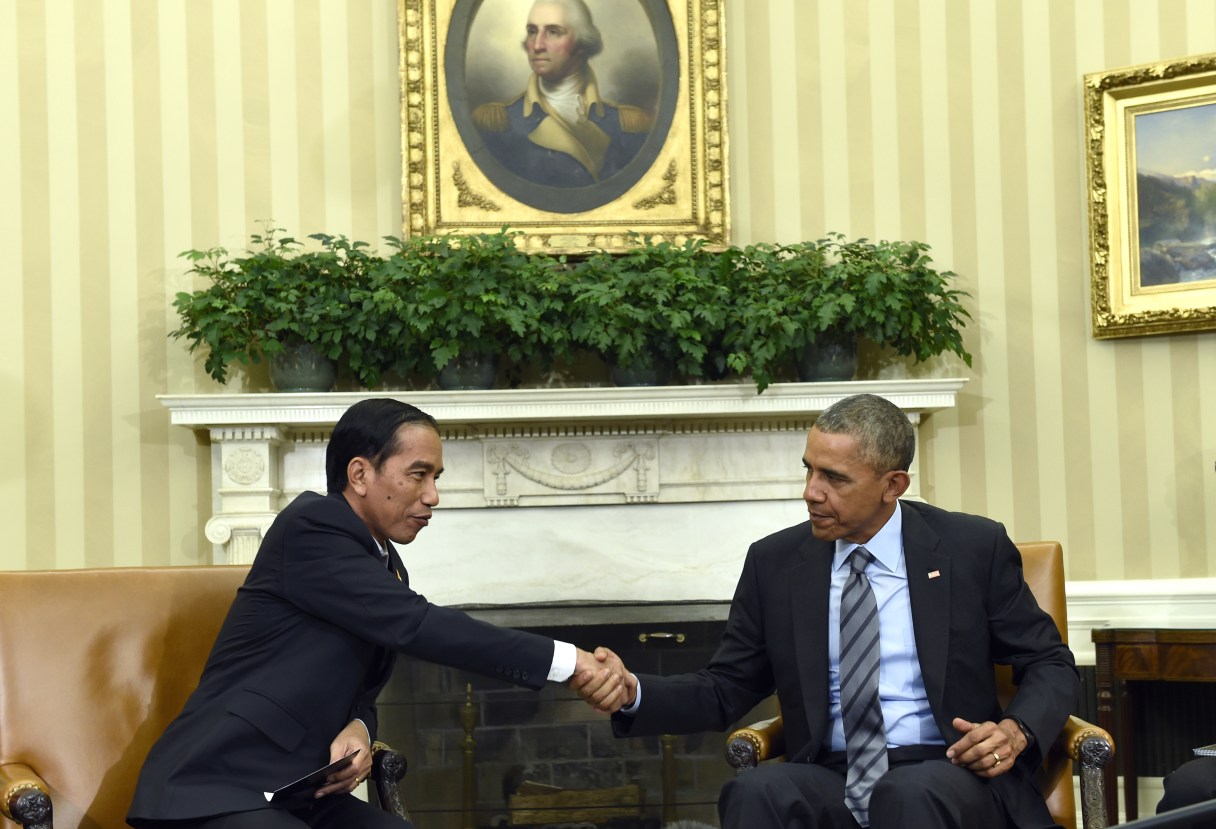
WASHINGTON (AP) – Indonesia’s president called Tuesday for all parties in the disputed South China Sea to exercise restraint and for China and Southeast Asia’s regional bloc to start discussions on the substance of a code of conduct to manage tensions there.
President Joko Widodo was speaking in Washington, hours after a U.S. Navy warship sailed past one of China’s artificial islands in the Spratly Islands archipelago in a challenge to Chinese sovereignty claims, drawing an angry protest from Beijing.
Widodo, who met President Barack Obama on Monday, did not directly refer to the U.S. action. He said Indonesia supports freedom of navigation but also underlined his nation’s neutrality.
Indonesia has islands that may fall within China’s expansive maritime claims in the South China Sea, but doesn’t count itself as one of the claimants to the disputed islands and reefs.
“Indonesia is not a party to the dispute but we have a legitimate interest in peace and stability there. We call on all parties to exercise restraint and refrain from taking actions that could undermine trust and confidence and put at risk the peace and stability of the region,” he told the Brookings Institution think tank.