
Tuesday, November 10, 2026Nov 10

EU says its citizens spend over $27 billion a year on drugs

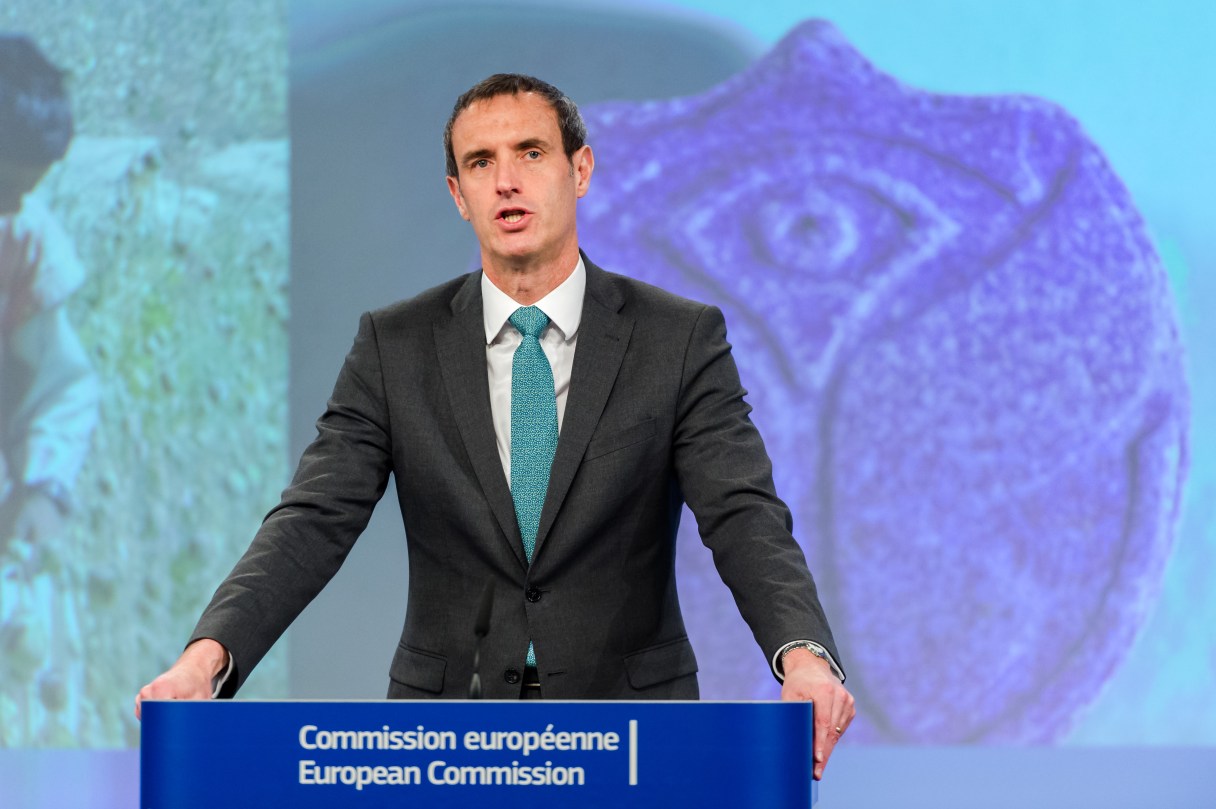
Europol Director Rob Wainwright addresses the media on the EU Drug Markets Report at EU Commission headquarters in Brussels on Tuesday, April 5, 2016. The European Union's illicit drugs market is changing, and the rate of change is being accelerated by globalization and technology, according to the 2016 EU Drug Markets Report, suggesting the market is also increasingly connected with organized crime groups and terrorism. (AP Photo/Geert Vanden Wijngaert)
Europol Director Rob Wainwright addresses the media on the EU Drug Markets Report at EU Commission headquarters in Brussels on Tuesday, April 5, 2016. The European Union's illicit drugs market is changing, and the rate of change is being accelerated by globalization and technology, according to the 2016 EU Drug Markets Report, suggesting the market is also increasingly connected with organized crime groups and terrorism. (AP Photo/Geert Vanden Wijngaert) Europol Director Rob Wainwright addresses the media on the EU Drug Markets Report at EU Commission headquarters in Brussels on Tuesday, April 5, 2016. The European Union's illicit drugs market is changing, and the rate of change is being accelerated by globalization and technology, according to the 2016 EU Drug Markets Report, suggesting the market is also increasingly connected with organized crime groups and terrorism. (AP Photo/Geert Vanden Wijngaert)

BRUSSELS (AP) – A European Union report published Tuesday said the bloc’s citizens spend over $27 billion a year on drugs and warned terror cells may finance some of their activities by dealing.

The report said cannabis accounts for 38 percent of the retail market for drugs, or around $10.6 billion in annual trade. Heroin came in second with a value of $7.7 billion a year.

Europol chief Rob Wainwright said that even though there was no strong evidence yet of any direct link between drugs and violent attacks, he said that as the drug trade “becomes entwined with other forms of crime, and even terrorism, it represents a key threat” to the 28-nation bloc.

The “2016 Drug markets Report” said that even if other sources of income may be more common to extremist cells, “some of these may finance their activities through drug dealing and trafficking.”

The report also said that the drug trade could be seen as a “gateway for radicalization,” with drug offenders pushed toward radical views in jail.