
No dogs allowed
The Ringgold City Council asks the public to keep dogs off the enclosed baseball field next to the Patriot Hall building where children play sports.“I’d like to put up a sign that says no dogs in the fence,” said Vice Mayor Terry Crawford. “It’s for the kids, not the dogs. I would like to put this in a motion to keep dogs off the field.”Crawford said the issue is dogs are going to the bathroom on the field and athletes are running through the mess. The council voted to put up a sign saying “No dogs allowed” on the baseball field.
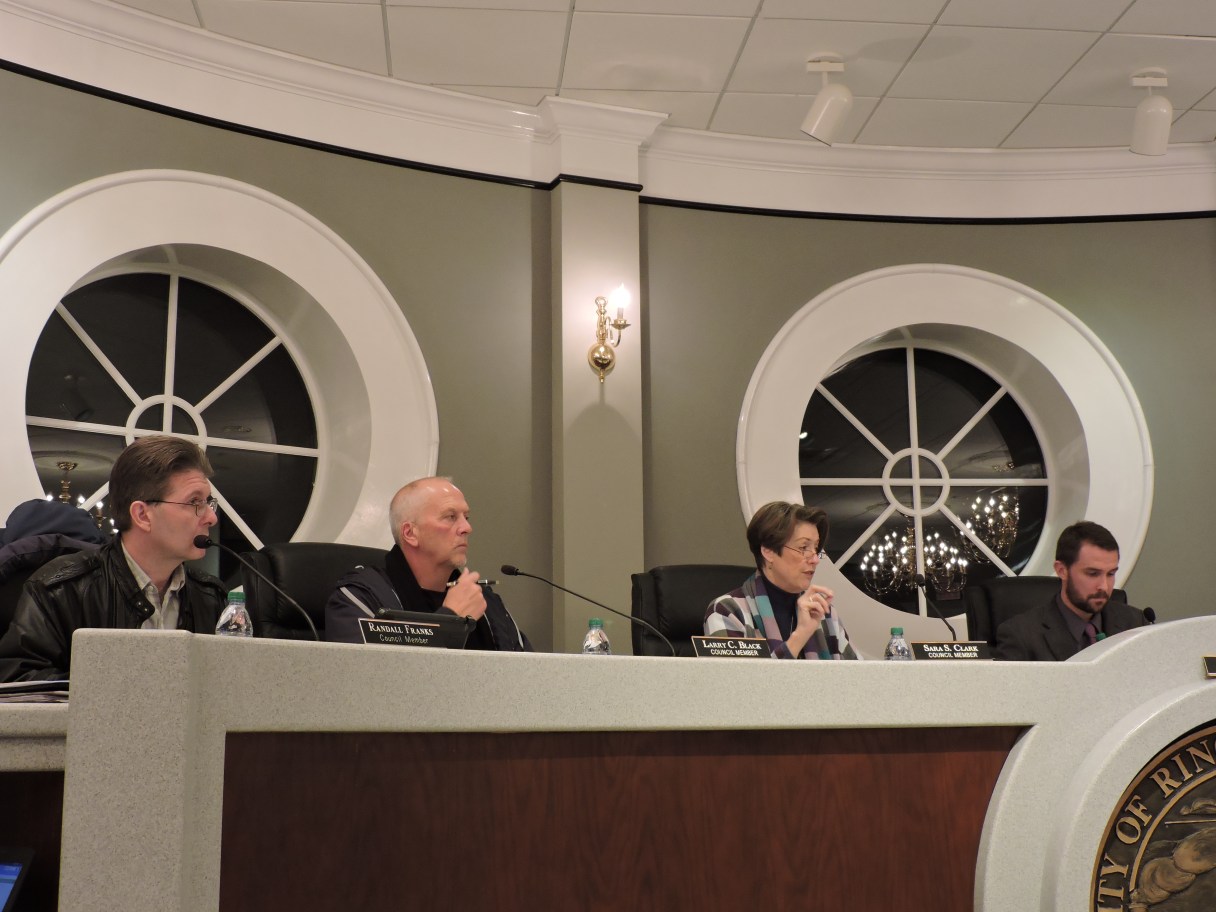
In the wake of the recent report from roadsnacks.net that said the city of Ringgold is a dangerous small town, the City Council formally addressed the issue at its most recent meeting.
“We have had a spike in property crimes,” Mayor Nick Millwood said. “The FBI crime numbers for Ringgold for 2014 were troublesome. The 2015 numbers are not out, but [police] Chief Bilbrey says the numbers are similar to 2014. I want to have a campaign to protect yourself and your property. The numbers that the website [roadsnacks.net] used were legitimate. I want to communicate this concern.”
Cochran’s Union 76 Truck City Inc. was annexed March 25, 2013 by the Ringgold City Council, according to Police Chief Dan Bilbrey. Mayor Millwood has mentioned a few times that annexing that truck stop spurred crime in the city. Crime numbers did go up after the annexation.
Councilman Larry Black, a certified police officer, said he thinks Ringgold’s location along I-75 brings in crime.
“Most of our property crimes happen along I-75,” he said. “We have a great chief of police.”
Councilman Randall Franks suggested people leave lights on around their houses and keep items of value out of their cars.
“We have a very good police department,” agreed Franks. “If you have greater enforcement, then your numbers go up too.”
At the same meeting, police Chief Dan Bilbrey asked the council to help him update the Taser equipment for his officers.
The council unanimously approved purchasing three new Taser devices. Bilbrey said each Taser costs about $1,250 including a cartridge and a holster for the officer.
“In years past, some litigation arose,” concerning the use of Tasers, Bilbrey said. “The model we use is now antiquated and [litigation assistance] is not offered.”
The department’s part-time officers are currently without Tasers, he told the council, before requesting new Tasers for each officer on the force.
“We had nine Tasers and three are not functional,” said Bilbrey. “We had a physical altercation yesterday and luckily the officer was not hurt, but he did not have a Taser.
“One option is to replace Tasers no longer operational. I like to keep everything standardized. The technology has changed and made it a safer deployment. The manufacturer is no longer willing to support the unit.”
Councilwoman Sara Clark said the city does not have excess funds at this time to purchase a new Taser for each officer.
Vice Mayor Terry Crawford said the best option would be to replace the nonworking Tasers first.
“We need to do it in stages,” said Black, adding that he “strongly support[s] the Taser for our officers. Tasers save lives.”
In other business:
Bluffview Subdivision resident David Welch, who lives at 122 Bluffview, voiced concern about speeding in his neighborhood. He said people are driving 40 miles per hour or faster through the subdivision and he is concerned someone will get hurt.
“Even our own mayor had to move because of the speeding,” Welch told the council.
Millwood said he and his family lived in the second house on the left, but in fact moved to another part of the subdivision because it was unsafe to let the children go outside and play.
Vice Mayor Terry Crawford said the cheapest way to handle the situation is to install four-way stops at all the intersections in the neighborhood.
“I want to get feedback from the neighborhood on Facebook first,” said Millwood, adding that he would also like to let Bilbrey have input before the final decision is made.
The council will revisit the Bluffview speeding concerns at its next meeting April 11. “We lived on a straightaway and did not feel safe originally.”