
Tuesday, November 10, 2026Nov 10

LA museum enlists volunteers in search for bugs, plants

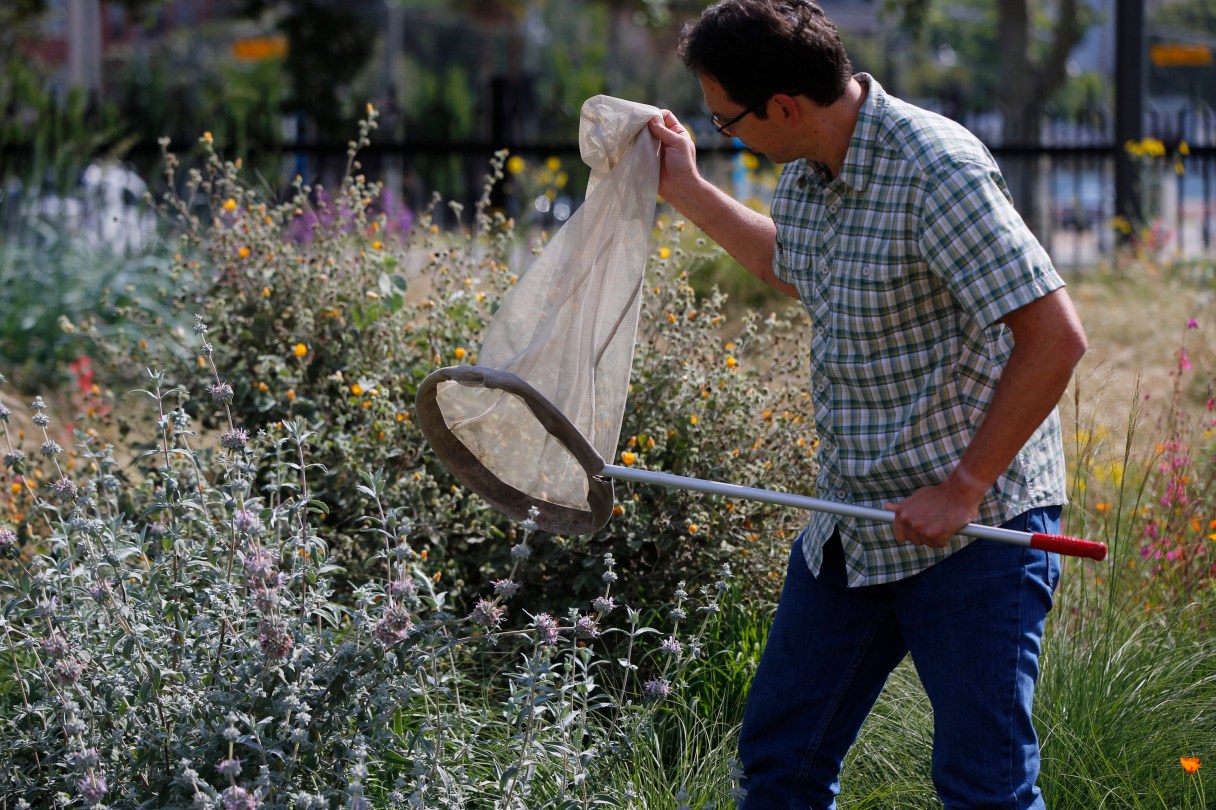
Dr. Brian Brown, Los Angeles' Natural History Museum's entomology curator captures insects on a butterfly net outside the Urban Nature Research Center in Los Angeles on Wednesday, April 13, 2016. BioSCAN is the world's largest urban biodiversity study. Millions of insects from in and around Los Angeles have, and continue to be, collected. Currently, BioSCAN is gearing up for Phase II of the project which will survey Los Angeles from ocean to desert. (AP Photo/Damian Dovarganes)
Dr. Brian Brown, Los Angeles' Natural History Museum's entomology curator captures insects on a butterfly net outside the Urban Nature Research Center in Los Angeles on Wednesday, April 13, 2016. BioSCAN is the world's largest urban biodiversity study. Millions of insects from in and around Los Angeles have, and continue to be, collected. Currently, BioSCAN is gearing up for Phase II of the project which will survey Los Angeles from ocean to desert. (AP Photo/Damian Dovarganes) Dr. Brian Brown, Los Angeles' Natural History Museum's entomology curator captures insects on a butterfly net outside the Urban Nature Research Center in Los Angeles on Wednesday, April 13, 2016. BioSCAN is the world's largest urban biodiversity study. Millions of insects from in and around Los Angeles have, and continue to be, collected. Currently, BioSCAN is gearing up for Phase II of the project which will survey Los Angeles from ocean to desert. (AP Photo/Damian Dovarganes)

LOS ANGELES (AP) – Long before Southern California was paved over with freeways and covered with cars and millions of people, it was teeming with snakes, slugs, spiders, snails and uncounted other slimy, creepy, crawly creatures.

And it still is, say scientists at the Los Angeles County Natural History Museum who are intent on building a better world by enlisting thousands of people to find and catalog those creatures.

On Thursday, the scientists will unveil the museum’s Urban Nature Research Center, a facility that director Lori Bettison-Varga says will serve as headquarters for the nation’s first urban biodiversity study that uses a sprawling city and its environs as a research lab.

“Everybody thinks that Los Angeles is just this big, paved-over place, but it’s not. It’s a hotbed of biodiversity,” says Lila Higgins, head of the center’s citizen-science program.

The scientists recently trained about 400 volunteers and armed some with backyard traps. Now, they will beat the bushes and other spots in their neighborhoods in search of unusual flora and fauna. Some bugs will be taken to the center and examined while many more will have their photos taken and emailed to the facility’s 12 staffers for a closer look.