
TIMELINE
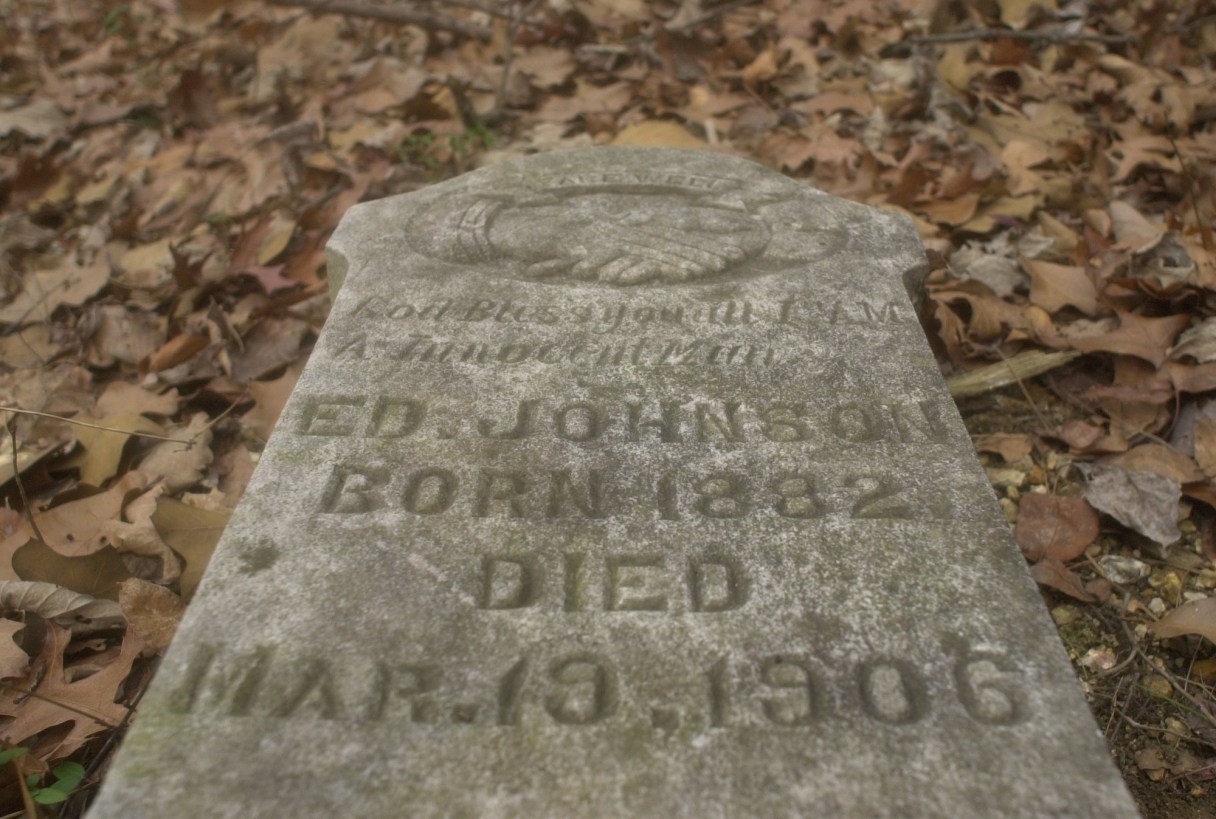
March 19, 1906: A local mob lynches Ed Johnson on the Walnut Street BridgeNovember 15, 1909: The Supreme Court upholds its jurisdiction to intervene in the landmark case and Sheriff Joseph Shipp and five co-defendants were found guilty and sentenced to brief prison terms.1999: Mark Curriden and the late Leroy Phillips write the book “Contempt of Court” about Johnson’s lynching.1999: LaFrederick Thirkill reads article about Pleasant Gardens Cemetery where Johnson is buried and starts organizing cemetery cleanups.April 2006: Thirkill writes and performs in play called “Dead Innocent” to celebrate the 100th Anniversary of Johnson’s death. Thirkill also establishes scholarship to honor Johnson.March 2016: House Joint Resolution 701 passes honoring Ed Johnson.
More Info
IF YOU GOWhat: Ed Johnson Commemorative CeremonyWhere: South entrance of Walnut Street BridgeWhen: 11 a.m. Friday
One-hundred and sixteen years after a local mob lynched Ed Johnson from the Walnut Street Bridge, State Rep. JoAnne Favors will present a resolution honoring him.
Local historian and Orchard Knob Elementary School Principal LaFrederick Thirkill said the resolution brings dignity to Johnson’s death and it gives recognition to his life so that those in the future may know his story.
“The Ed Johnson case impacted courts across the nation,” he said. “His case was important enough to have (U.S. Supreme Court Justice) John Marshall Harlan involved, (then President) Theodore Roosevelt, and (historian) W.E.B. DuBois. I mean, we celebrate the lives of these people in history books in America, but the Ed Johnson story is missing.”
“We have to be his history book,” Thirkill said. “That piece of information that ensures his life was not in vain.”
* * *
On Jan. 25, 1906, 24-year-old Johnson was arrested for the rape of 21-year-old Nevada Taylor.
A mob of more than 1,500 people surrounded the jail that night to lynch him. Hamilton County Sheriff Joseph Shipp and Hamilton County Judge Samuel D. McReynolds anticipated the attack and sent Johnson to Nashville earlier that day for his safety while he awaited his Feb. 6 trial.
At the trial, Taylor refused to swear that Johnson was her assailant. Instead, she said she believed he was the attacker. Yet the all-white jury convicted Johnson, and he was sentenced to death.
Two local black attorneys, Noah Parden and Styles Hutchins, came to Johnson’s defense when his court-appointed attorneys decided not to appeal.
The two attorneys eventually petitioned their case to the U.S. Supreme Court and got a stay of execution, but a mob tore Johnson out of jail and lynched him on March 19, 1906, while their case was still before the court, according to the state resolution.
After the hanging, men shot several rounds of bullets at Johnson’s body as it swung on the Walnut Street Bridge above the Tennessee River. A bullet hit the rope and Johnson’s body plummeted to the bridge. A man put a gun to Johnson’s head and fired five times, according to a New York Times news report.
President Theodore Roosevelt responded to the lynching as the Department of Justice and the Secret Service launched an investigation.
The U.S. Supreme Court eventually found Shipp and others guilty of contempt of court, according to the Tennessee Encyclopedia of History and Culture.
In February 2000 – 100 years after the lynching – Johnson was cleared of the crime by Judge Douglas A. Meyers.
* * *
Thirkill and Favors will be at the Walnut Street Bridge at 11 a.m. Friday for a ceremony in Johnson’s honor, at which Favors will present House Joint Resolution 701.
She expected at least some opposition in Nashville against the resolution. Those signing it, including House Majority Leader Gerald McCormick, encompassed diverse racial and political groups, but opposition never happened, she said.
“I was overwhelmed with the outpouring of support from the Hamilton County delegation,” Favors said. “I think all of them signed it and then all of my colleagues in the Democratic caucus signed it, too. And nobody objected to it being there.”
Local historian and NAACP secretary Eric Atkins initiated the research for the resolution.
He said the case included a lot firsts in black history concerning the law and the judicial system.
Hutchins became the first African-American attorney admitted to the State Bar of Georgia around the early 1880s. And in 1886, he became the second black person from Chattanooga to serve in the Tennessee General Assembly. William C. Hodge was the first.
Parden became the first African-American attorney to argue the merits of a case before a sitting Supreme Court Justice, John Marshall Harlan.
It also was the first occasion in which an African-American attorney was listed as the lead counsel in a case before the U.S. Supreme Court, Atkins said.
Thirkill said it was among the first times in the South in which blacks organized in a major demonstration – and it happened right here in Chattanooga before the march in Selma, Ala., and before the march on Washington, D.C.
After the lynching, blacks refused to go to work in protest of the injustice, Thirkill said.
Atkins first learned of Johnson from his godmother, who died at age 102. Atkins said he was about 10 years old when she shared the story and he’s been intrigued by it since then.
“It was not a stellar moment for our country,” said Atkins about the lynching. “It’s one we’re trying to atone for or make amends for right now.”
House Joint Resolution 701 concludes:
“Be it resolved by the House of Representatives of the 109 General Assembly of the State of Tennessee, The Senate Concurring, that we pay respectful tribute to the memory of Mr. Ed Johnson as we remember the loathsome circumstances of his death, the valiant efforts of his attorneys to seek justice for their client, and the actions of the United States Supreme Court in its effort to secure Mr. Johnson’s constitutional rights.”
Contact staff writer Yolanda Putman at yputman@timesfreepress.com or 757-6431.