
Tuesday, November 10, 2026Nov 10

Tiger countries agree to preserve big-cat habitats

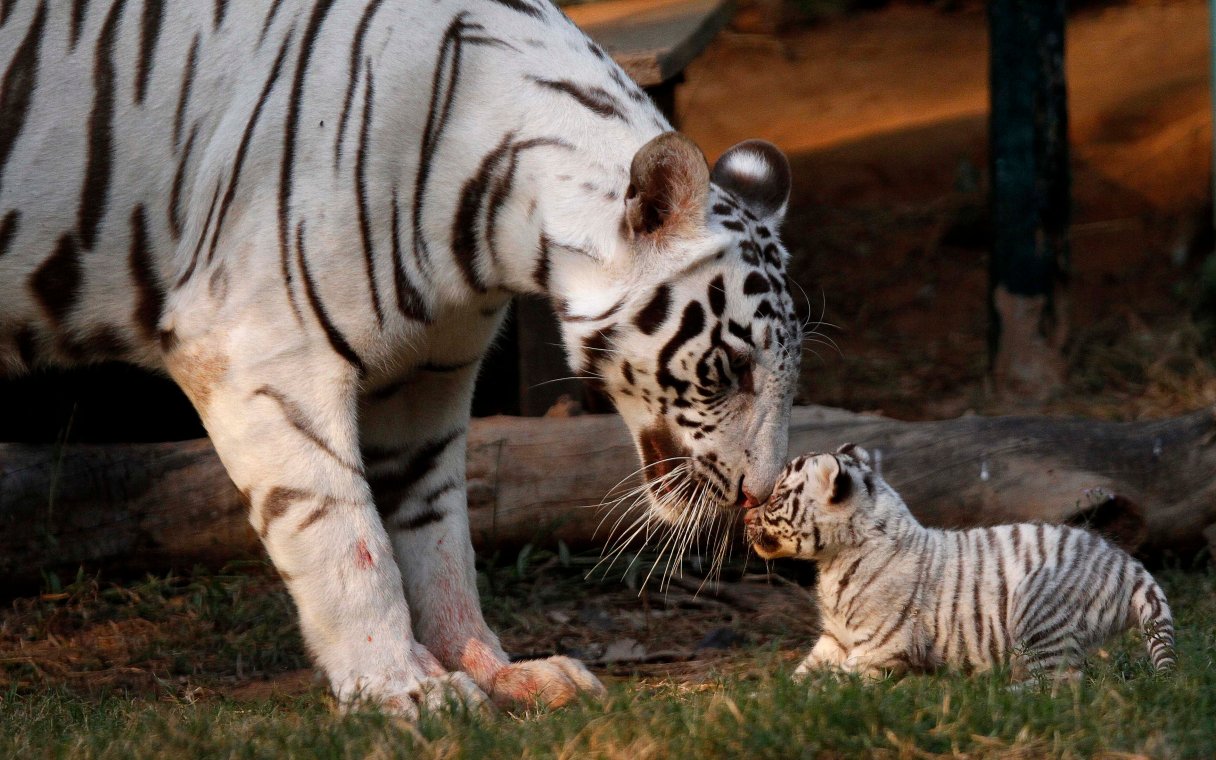
FILE - In this Saturday, Feb. 11, 2012, file photo, Khushi, a white tigress, plays with her newborn cub at the state zoological park in Gauhati, India. Countries with wild tiger populations have agreed to do more to protect tiger habitats that are shrinking drastically because of deforestation and urban sprawl, conservationists said Friday,  April 15, 2016. Representatives from the 13 Asian countries with tigers, meeting this week in New Delhi, issued a resolution acknowledging that the forests in which tigers live are inherently valuable themselves and worthy of protection. (AP Photo/Anupam Nath, File)
FILE - In this Saturday, Feb. 11, 2012, file photo, Khushi, a white tigress, plays with her newborn cub at the state zoological park in Gauhati, India. Countries with wild tiger populations have agreed to do more to protect tiger habitats that are shrinking drastically because of deforestation and urban sprawl, conservationists said Friday, April 15, 2016. Representatives from the 13 Asian countries with tigers, meeting this week in New Delhi, issued a resolution acknowledging that the forests in which tigers live are inherently valuable themselves and worthy of protection. (AP Photo/Anupam Nath, File) FILE - In this Saturday, Feb. 11, 2012, file photo, Khushi, a white tigress, plays with her newborn cub at the state zoological park in Gauhati, India. Countries with wild tiger populations have agreed to do more to protect tiger habitats that are shrinking drastically because of deforestation and urban sprawl, conservationists said Friday, April 15, 2016. Representatives from the 13 Asian countries with tigers, meeting this week in New Delhi, issued a resolution acknowledging that the forests in which tigers live are inherently valuable themselves and worthy of protection. (AP Photo/Anupam Nath, File)

NEW DELHI (AP) – Countries with wild tiger populations have agreed to do more to protect tiger habitats that are shrinking drastically because of deforestation and urban sprawl, conservationists said Friday.

Representatives from the 13 Asian countries with tigers, meeting this week in New Delhi, issued a resolution acknowledging that the forests in which tigers live are inherently valuable themselves and worthy of protection.

These forests can help preserve economic growth by safeguarding water supplies, improving air quality and providing homes for not only tigers but also birds, frogs and other mammals.

“Before, there’s always been this conflict of development versus conservation, as if countries had to choose,” said Sejal Worah, the program director for World Wildlife Fund in India.

“But in this resolution, it clearly states that natural capital is important to the economy of a country,” she said. “Countries understand that preserving tiger habitats does not compromise growth. And that’s important. That’s new.”