
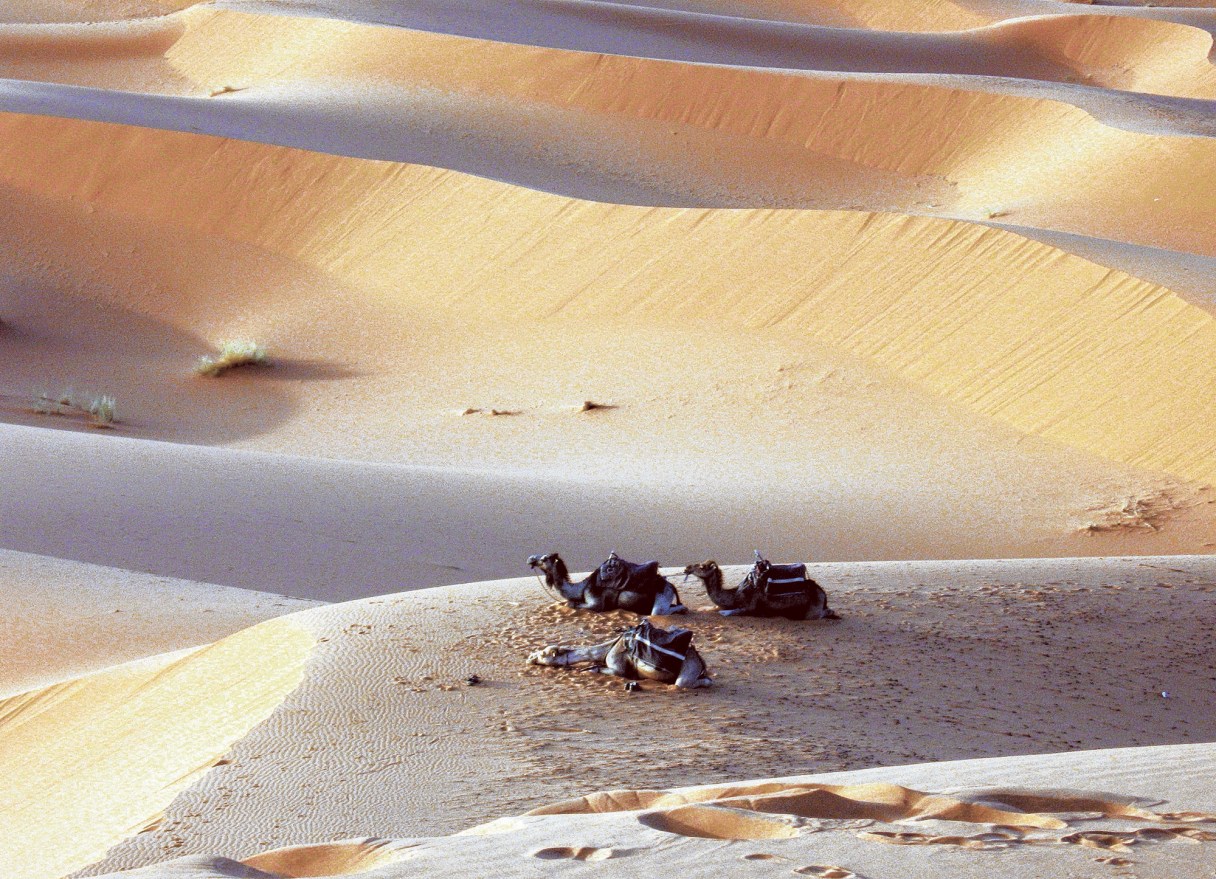
AGADEZ, Niger – It’s Monday and that means it’s moving day in Agadez, the northern Niger desert crossroad that is the main launching pad for migrants out of West Africa. Fleeing devastated agriculture, overpopulation and unemployment, migrants from a dozen countries gather here in caravans every Monday night and make a mad dash through the Sahara to Libya, hoping to eventually hop across the Mediterranean to Europe.
This caravan’s assembly is quite a scene to witness. Although it is evening, it’s still 105 degrees, and there is little more than a crescent moon to illuminate the night. Then, all of a sudden, the desert comes alive.
Using the WhatsApp messaging service on their cellphones, the local smugglers, who are tied in with networks of traffickers extending across West Africa, start coordinating the surreptitious loading of migrants from safe houses and basements across the city. They’ve been gathering all week from Senegal, Sierra Leone, Nigeria, Ivory Coast, Liberia, Chad, Guinea, Cameroon, Mali and other towns in Niger.
With 15 to 20 men – no women – crammed together into the back of each Toyota pickup, their arms and legs spilling over the sides, the vehicles pop out of alleyways and follow scout cars that have zoomed ahead to make sure there are no pesky police officers or border guards lurking who have not been paid off. It’s like watching a symphony, but you have no idea where the conductor is. Eventually, they all converge at a gathering point north of the city, forming a giant caravan of 100 to 200 vehicles – the strength in numbers needed to ward off desert bandits.
Between 9,000 and 10,000 men make this journey every month.
Just as Syria’s revolution was set off in part by the worst four-year drought in the country’s modern history – plus overpopulation, climate stresses and the Internet – the same is true of this African migration wave. That’s why I’m here filming an episode for the “Years of Living Dangerously” series on climate change across the planet, which will appear on National Geographic Channel next fall. I’m traveling with Monique Barbut, who heads the U.N. Convention to Combat Desertification, and Adamou Chaifou, Niger’s minister of environment.
Chaifou explains that West Africa has experienced two decades of on-again-off-again drought. The dry periods prompt desperate people to deforest hillsides for wood for cooking or to sell, but they are now followed by increasingly violent rains, which then easily wash away the topsoil barren of trees. Meanwhile, the population explodes – mothers in Niger average seven children – as parents continue to have lots of kids for social security, and each year more fertile land gets eaten by desertification.
“We now lose 100,000 hectares of arable land every year to desertification,” says Chaifou. “And we lose between 60,000 and 80,000 hectares of forest every year.”
As long as anyone could remember, he says, the rainy season “started in June and lasted until October. Now we get more big rains in April, and you need to plant right after it rains.” But then it becomes dry again for a month or two, and then the rains come back, much more intense than before, and cause floods that wash away the crops, “and that is a consequence of climate change” – caused, he adds, primarily by emissions from the industrial North, not from Niger or its neighbors.
Says the U.N.’s Barbut, “Desertification acts as the trigger, and climate change acts as an amplifier of the political challenges we are witnessing today: economic migrants, interethnic conflicts and extremism.”
She shows me three maps of Africa with an oblong outline around a bunch of dots clustered in the middle of the continent. Map No. 1: the most vulnerable regions of desertification in Africa in 2008. Map No. 2: conflicts and food riots in Africa 2007-2008. Map No. 3: terrorist attacks in Africa in 2012.
All three outlines cover the same territory.