
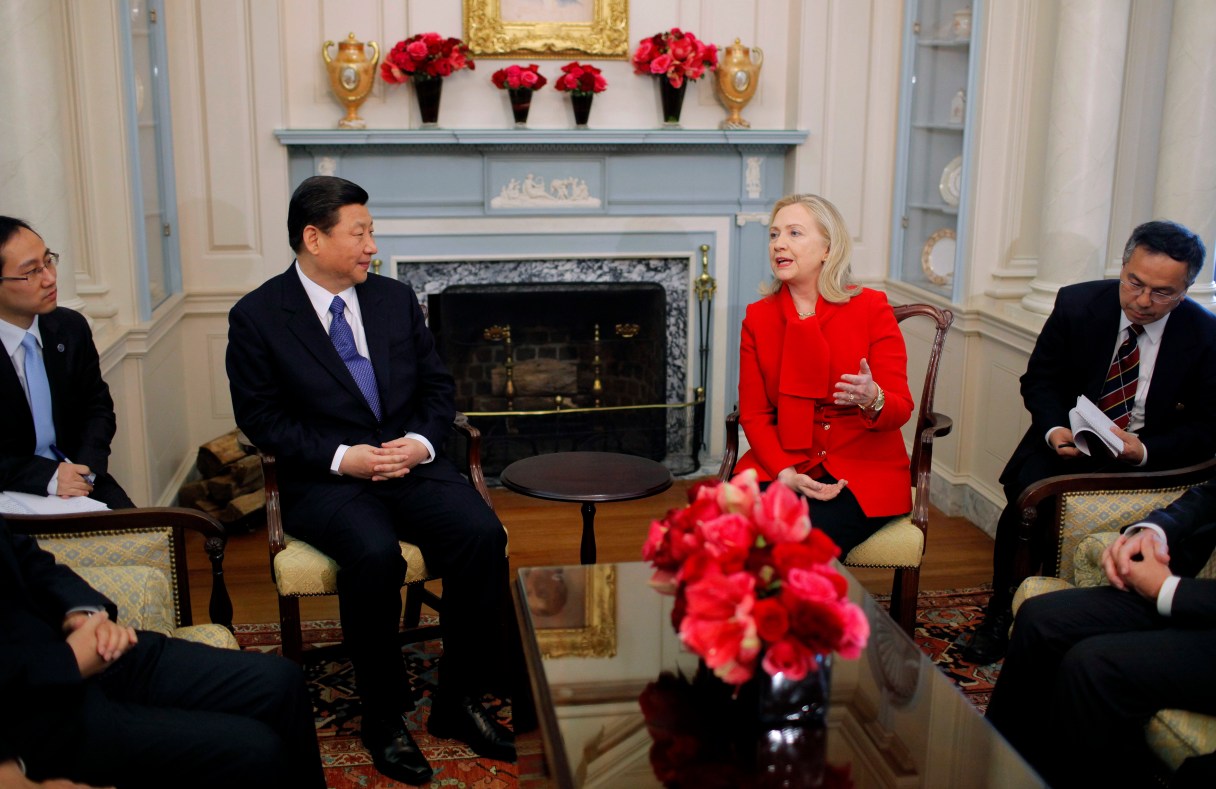
WASHINGTON (AP) – Hillary Clinton was the first standard-bearer for the Obama administration’s strategic push into Asia, but her opposition to the Trans-Pacific Partnership trade deal could be a major obstacle to sustaining it should she win the presidency.
The TPP has been the main economic plank of President Barack Obama’s seven-year effort to intensify engagement with a fast-growing region and counter China’s rising clout with nations that count it as their principal trading partner.
Clinton championed TPP as a “gold standard” agreement when she served as secretary of state during Obama’s first term. But as the front-running Democratic presidential candidate, she has opposed the deal signed in February because of its potential impact on U.S. workers – organized labor being a core constituency of the Democrat Party.
Leading Republican candidate Donald Trump, who also advocates a remake of Washington policies for dealing with allies Japan and South Korea and strategic rival China, has decried TPP as a “disaster.” Clinton’s rival for the Democratic nomination, Bernie Sanders, also staunchly opposes the pact.
Clinton’s campaign won’t say whether she would seek to renegotiate it with the 11 other TPP nations that have faced their own political challenges in selling it at home. The agreement has not yet been ratified by Congress.