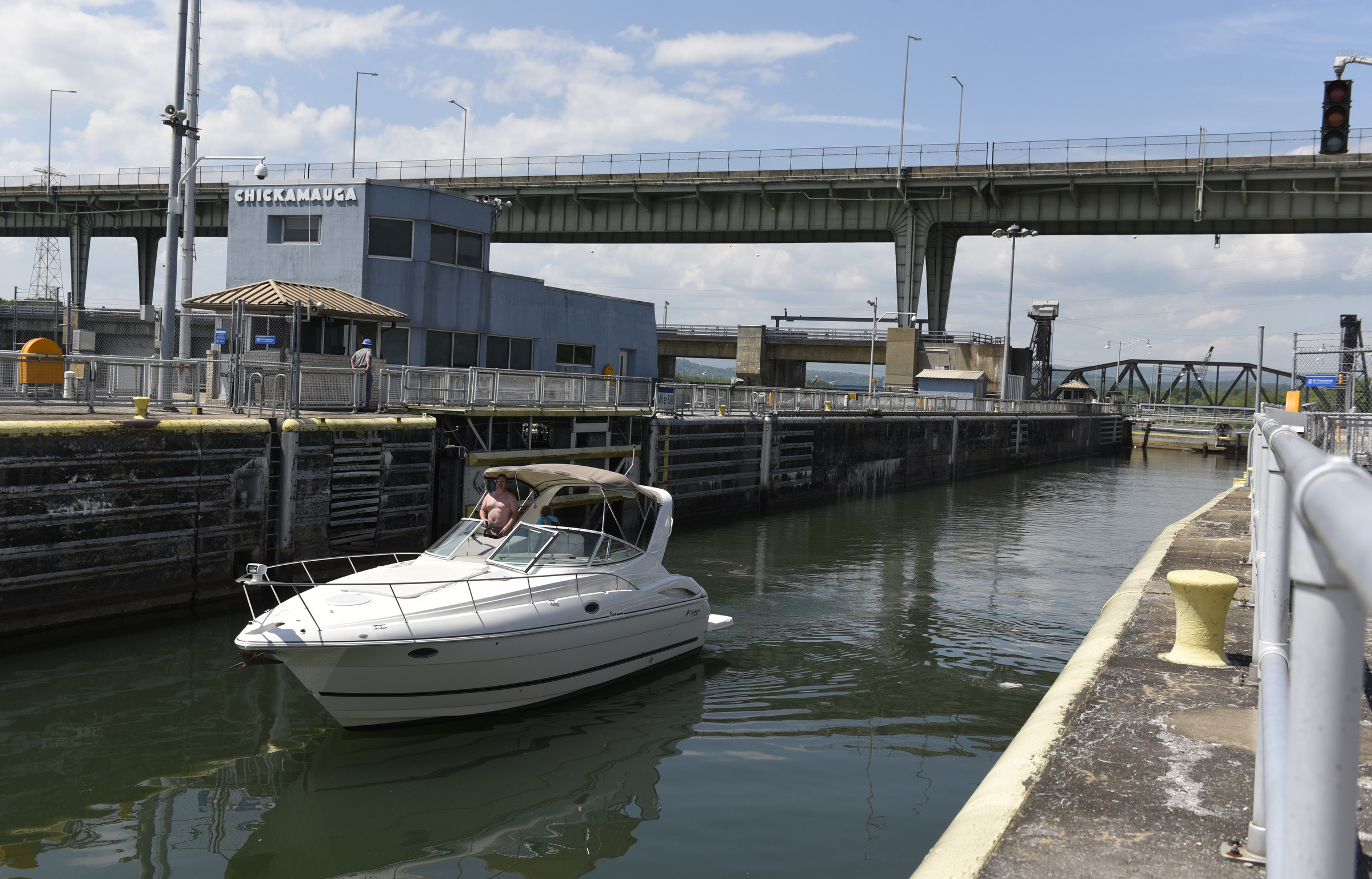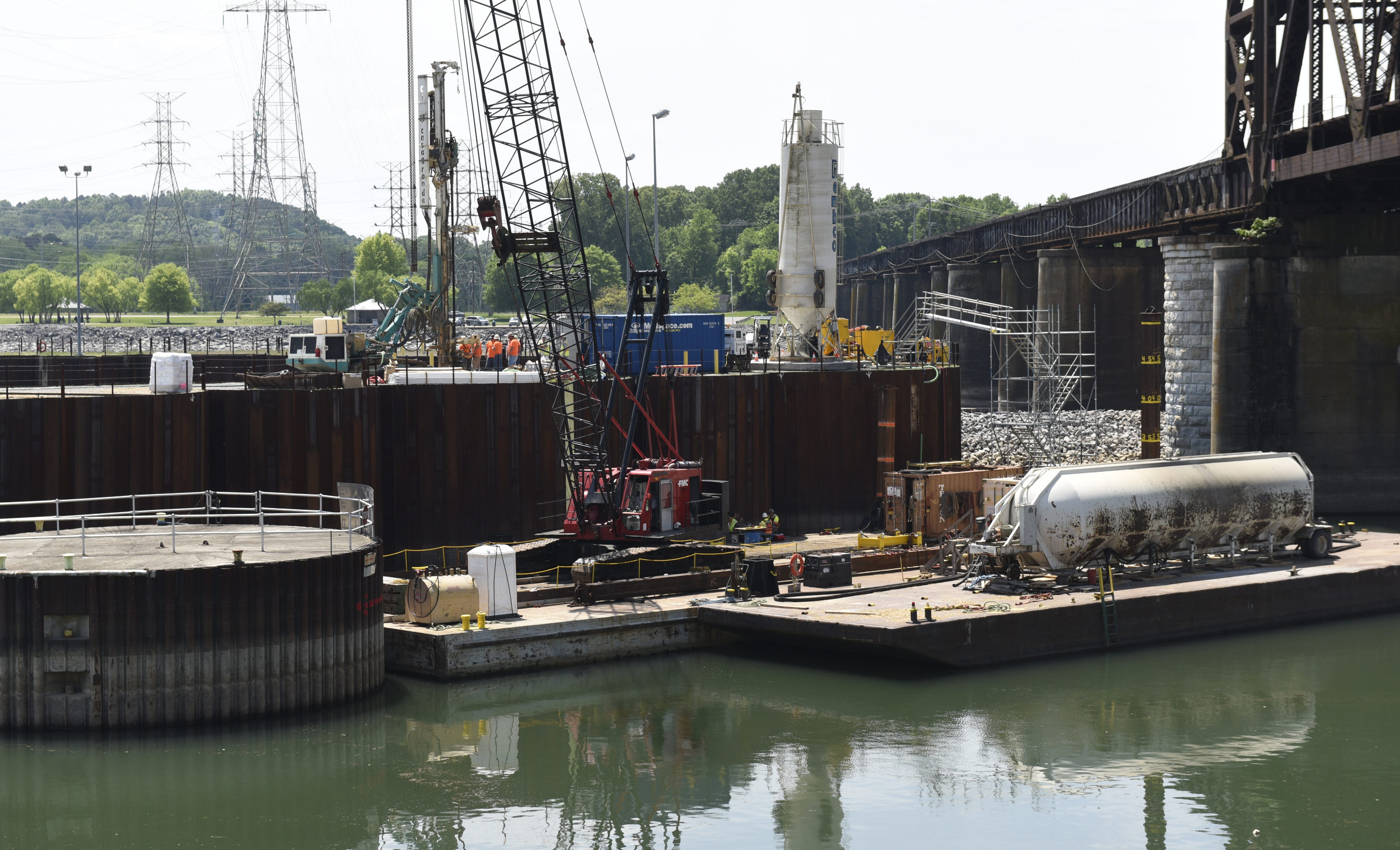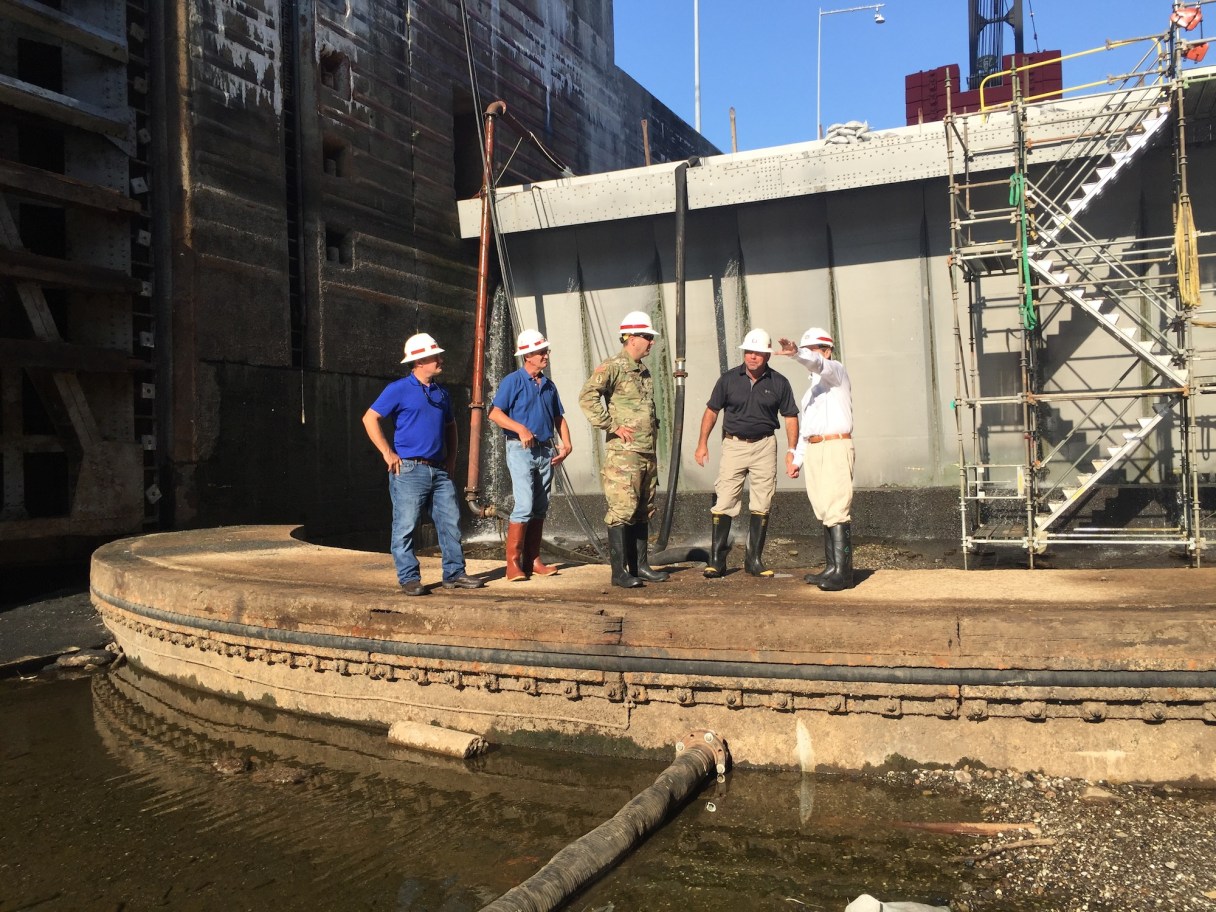
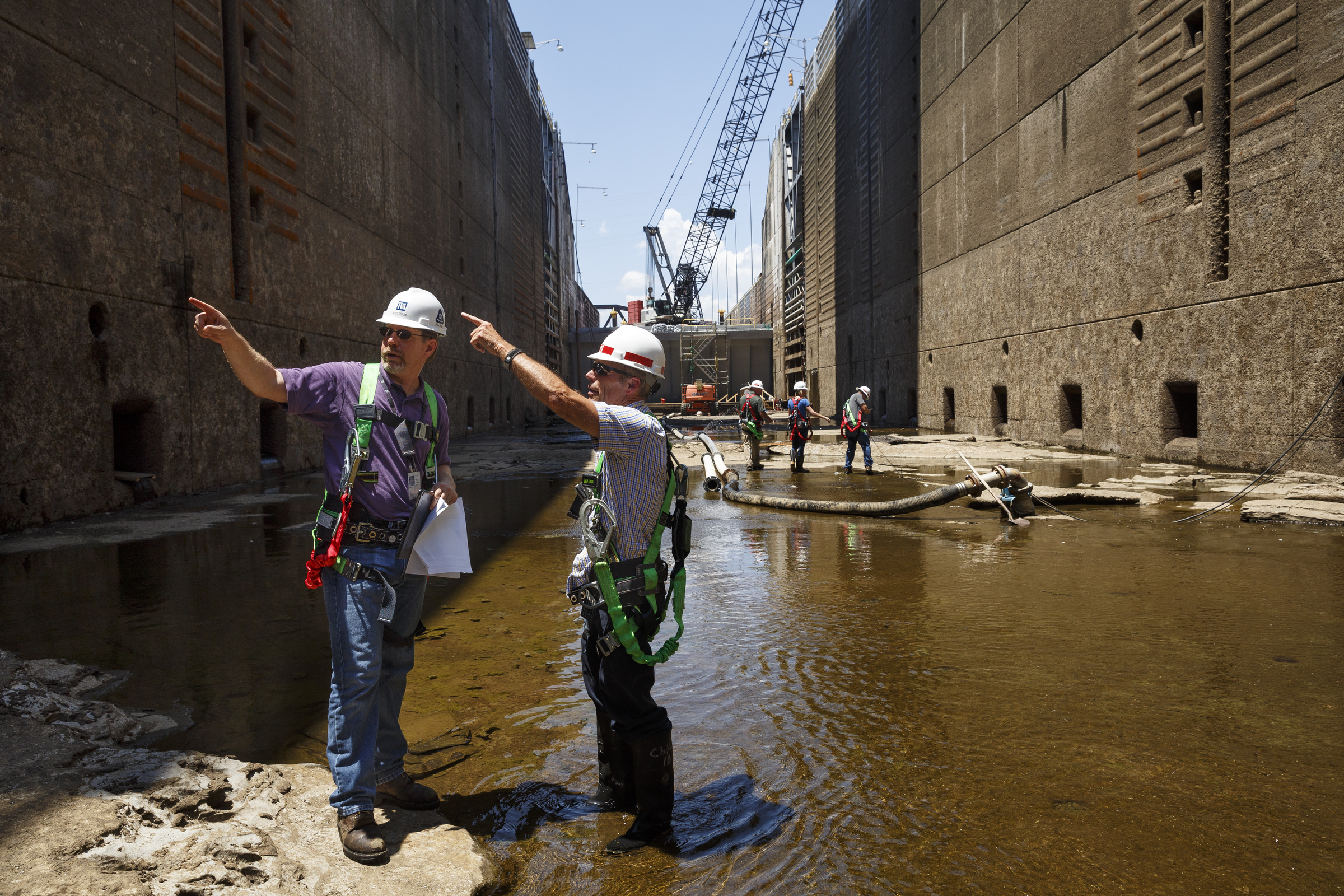
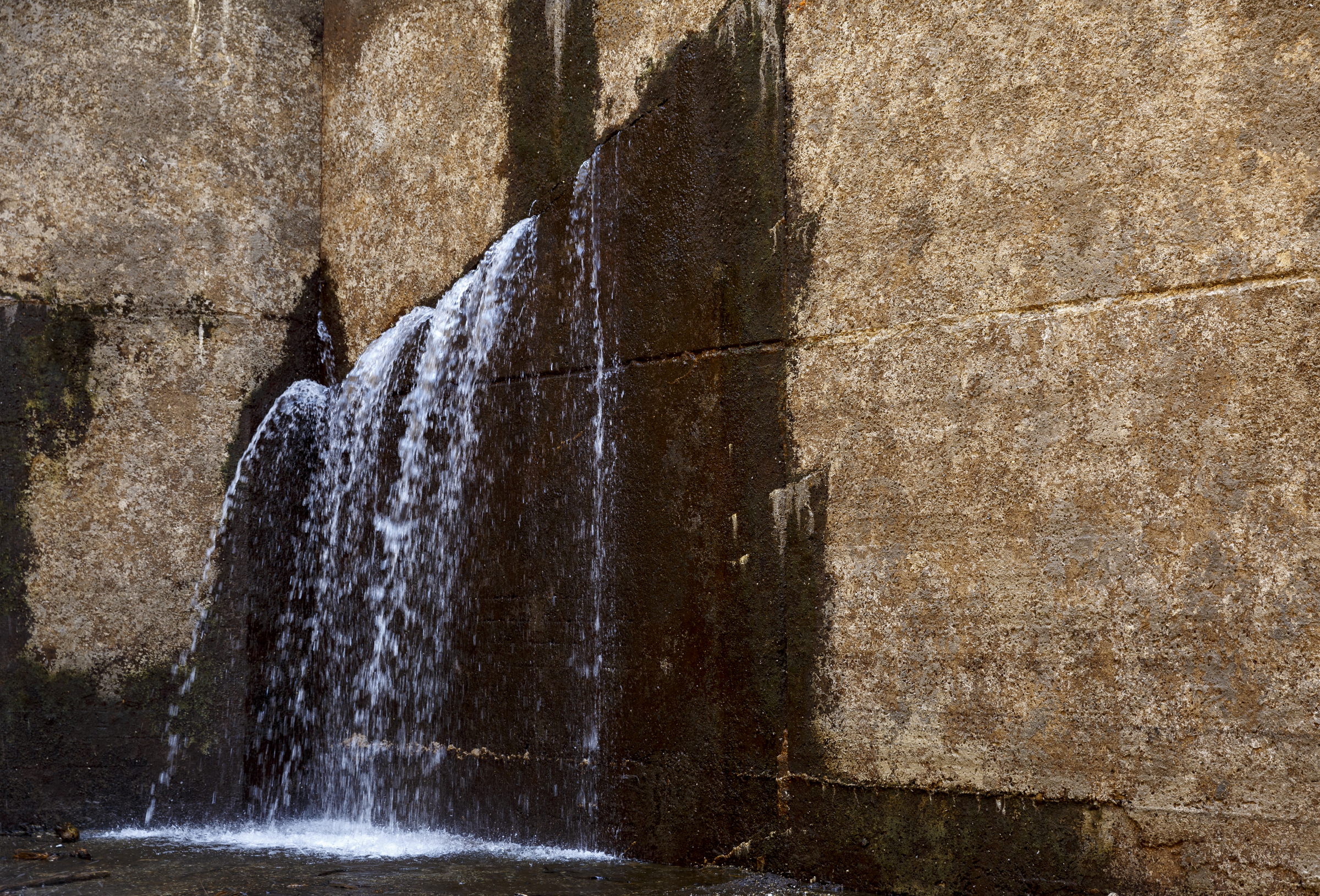
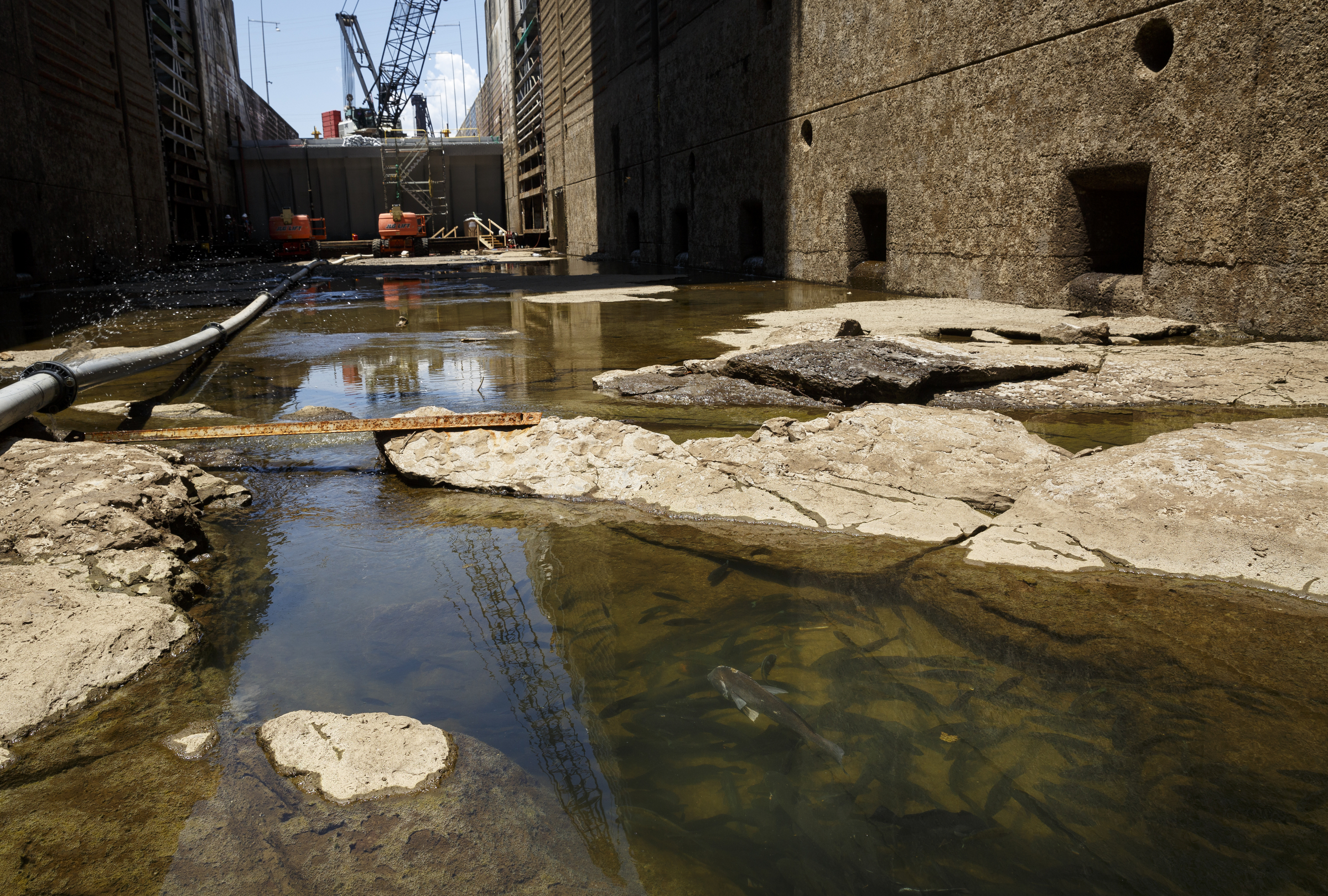
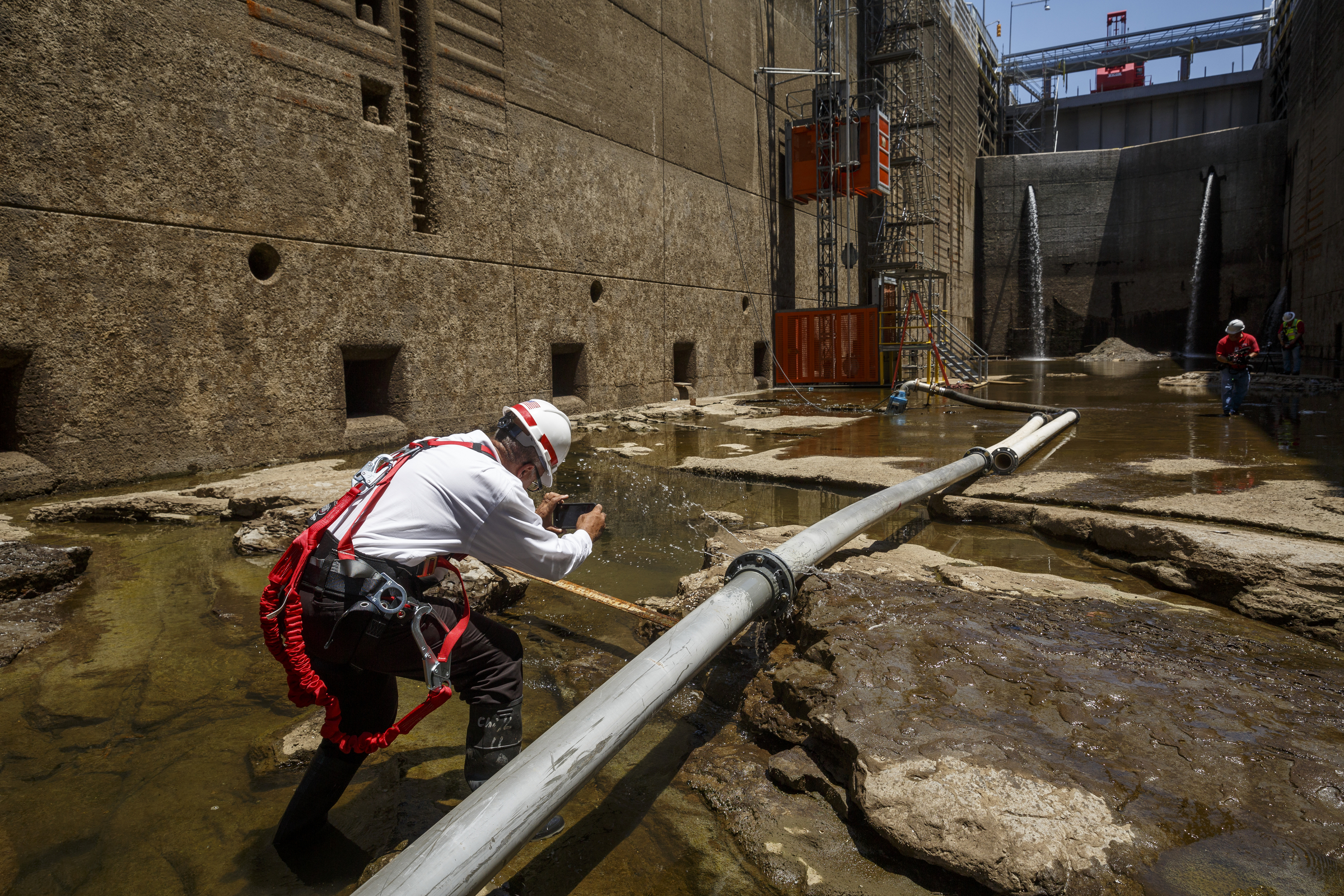
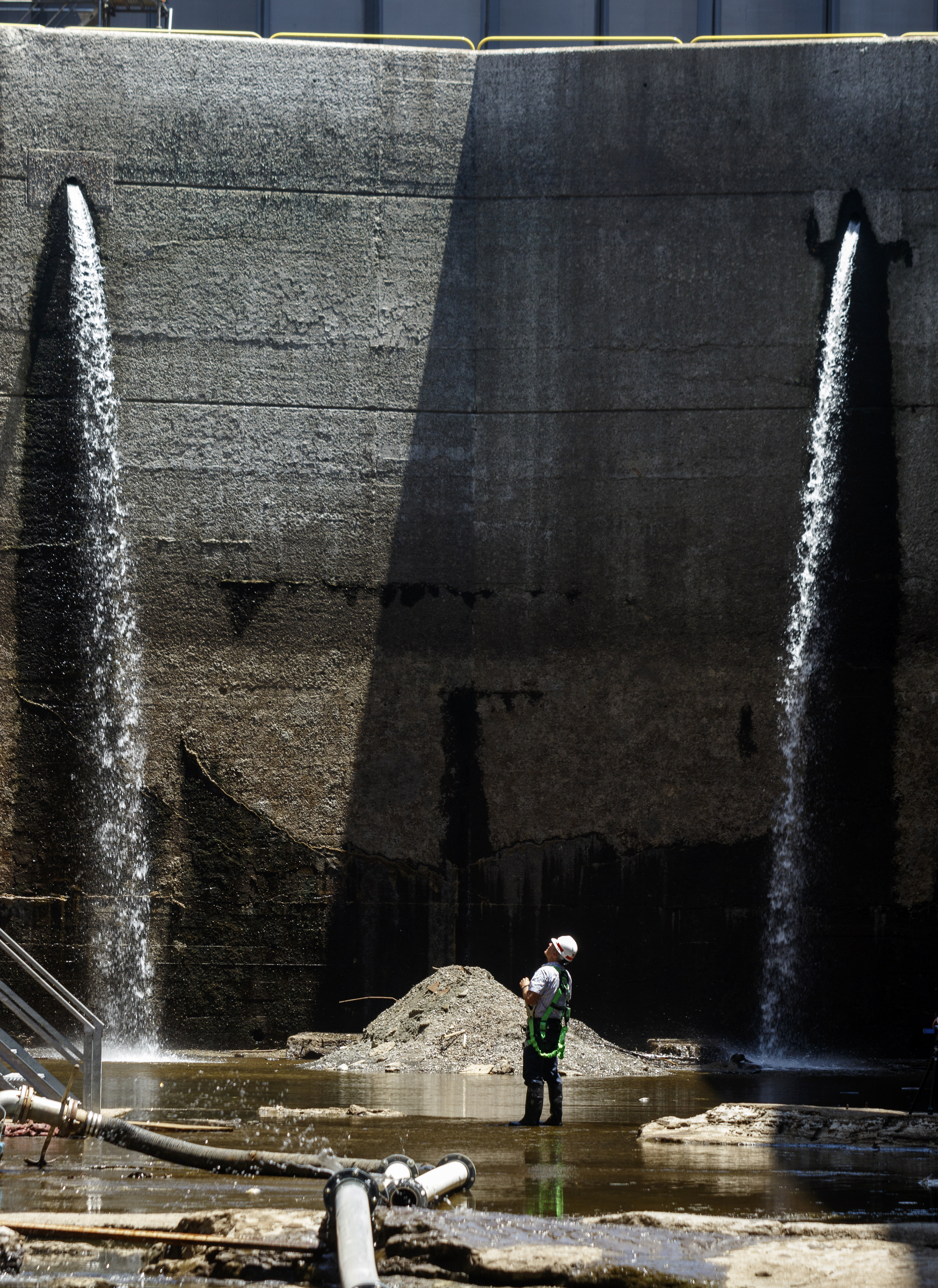

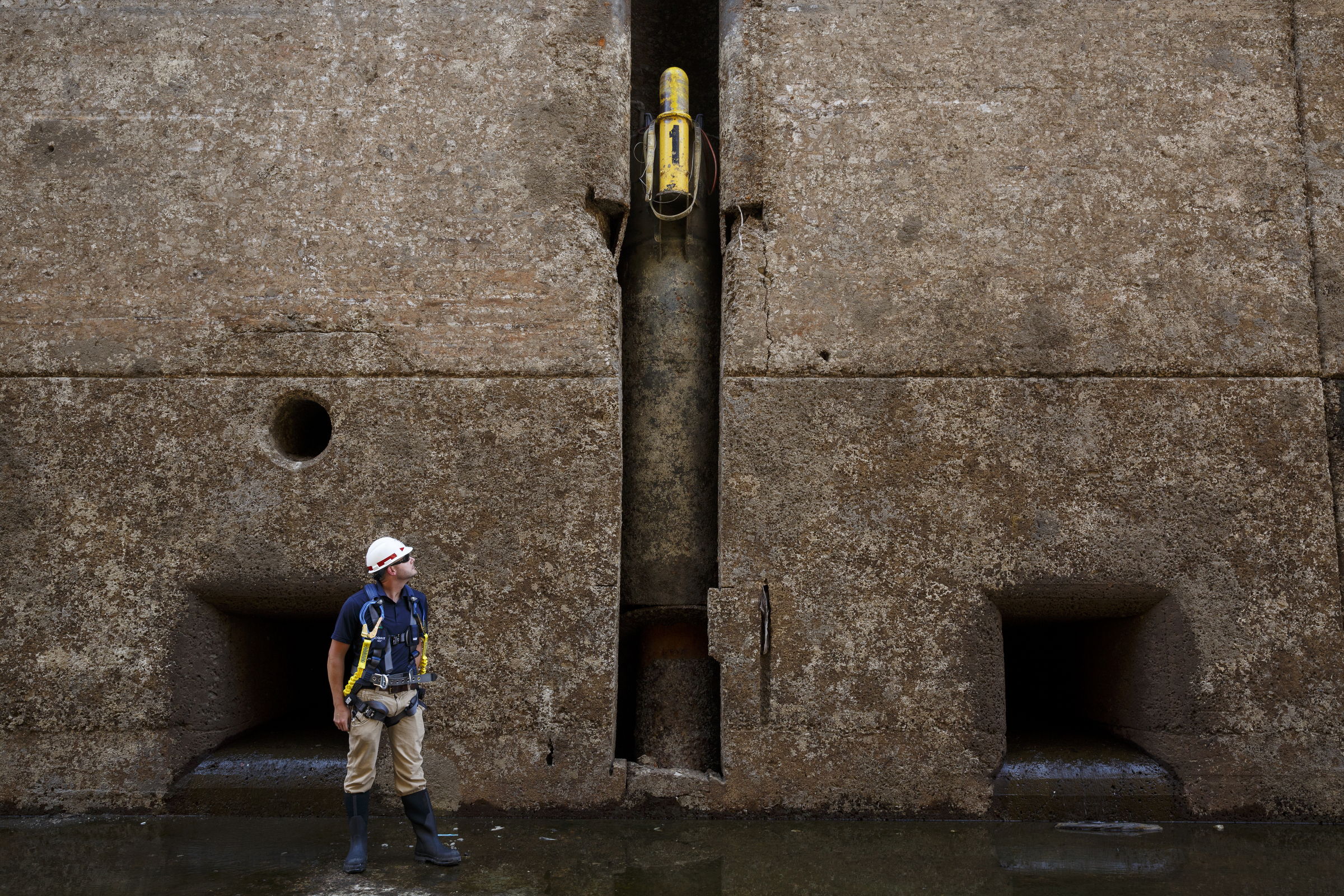
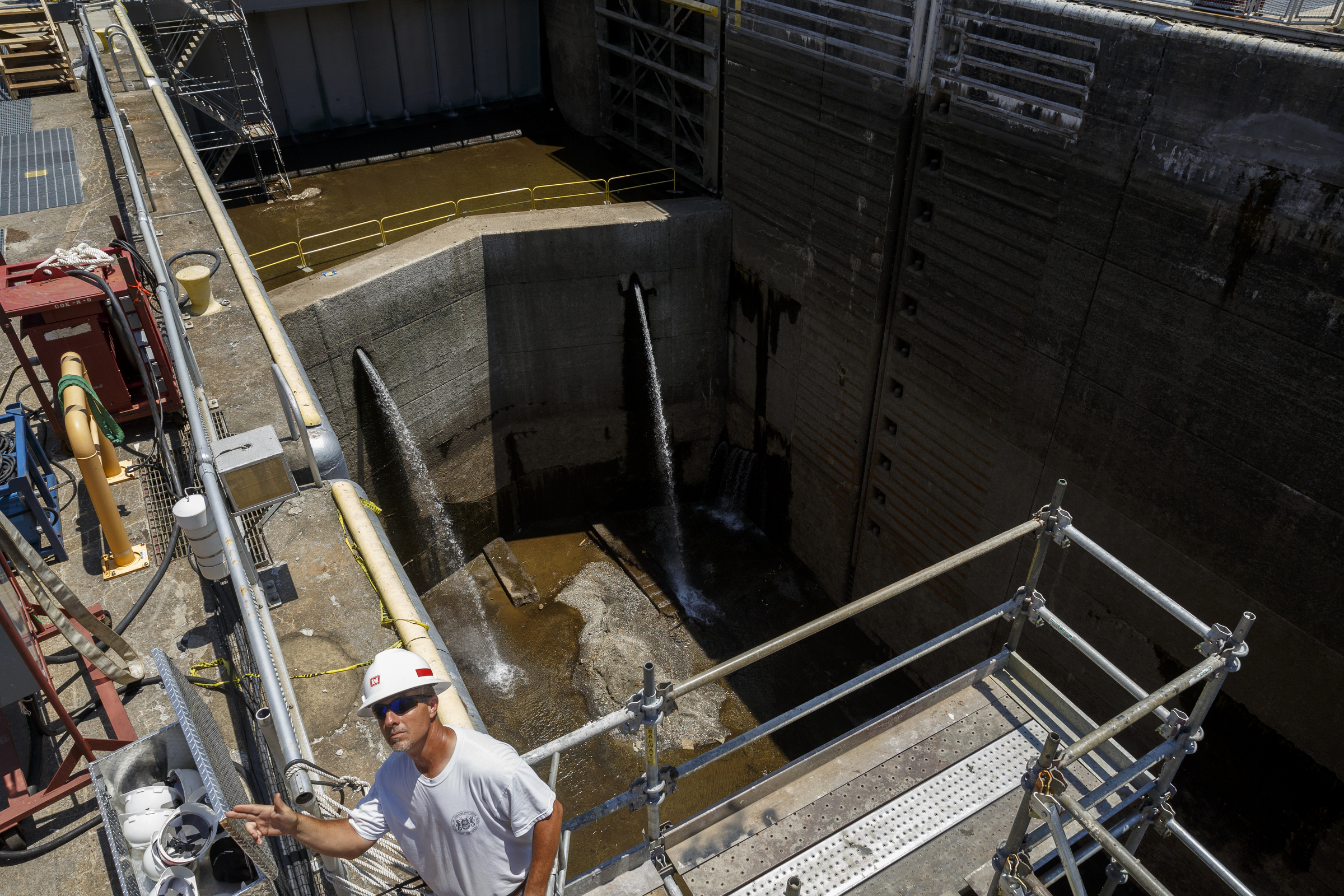
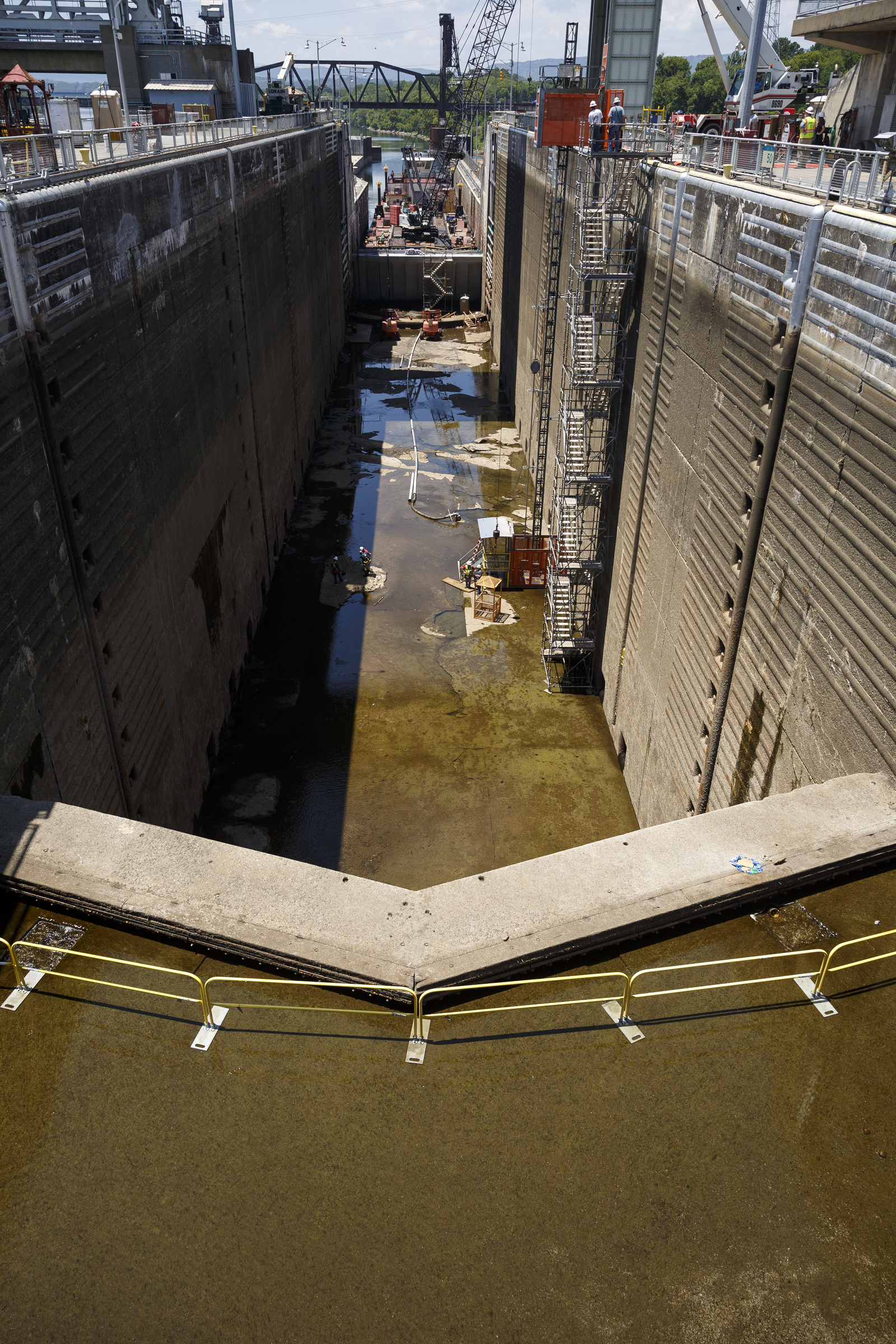
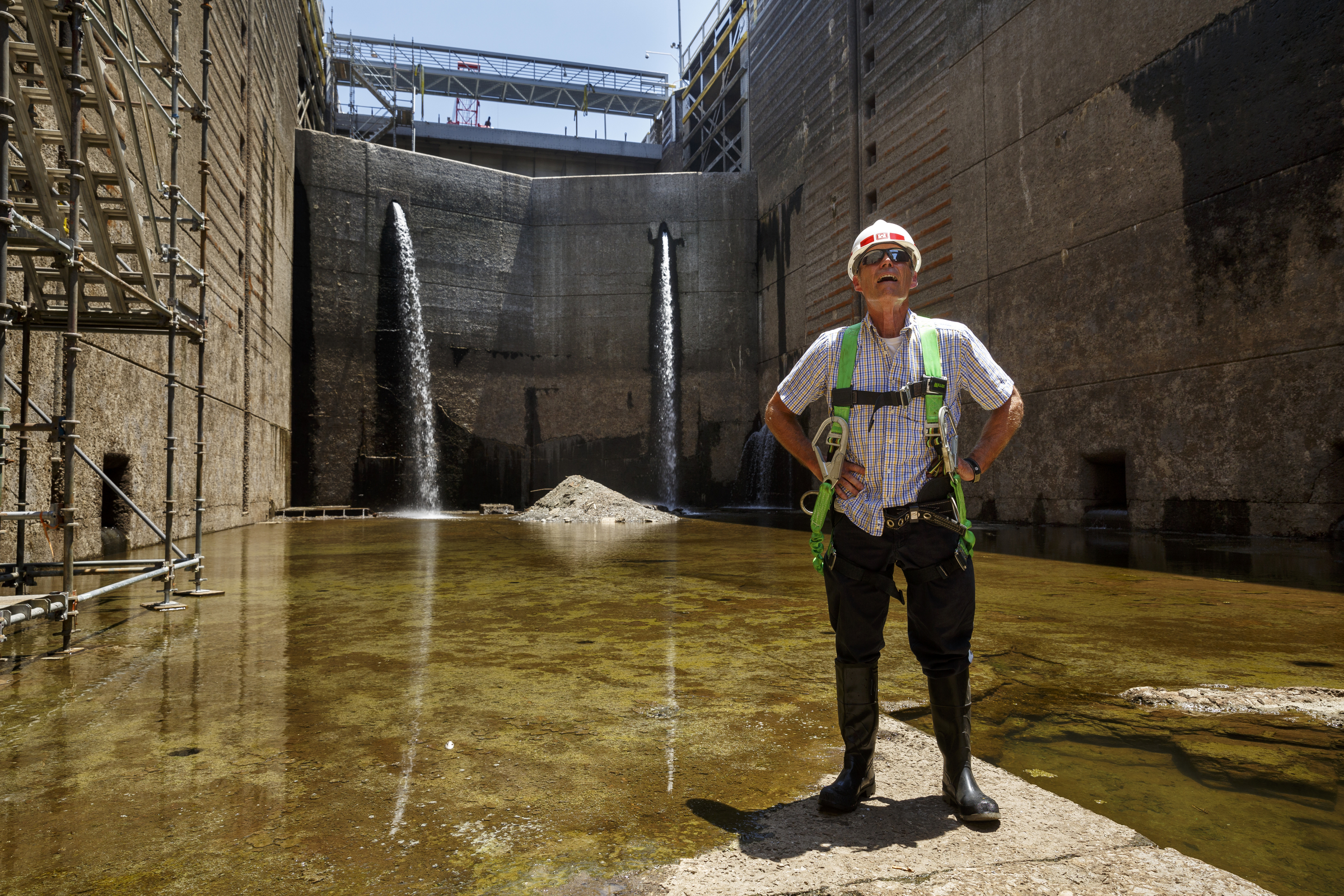
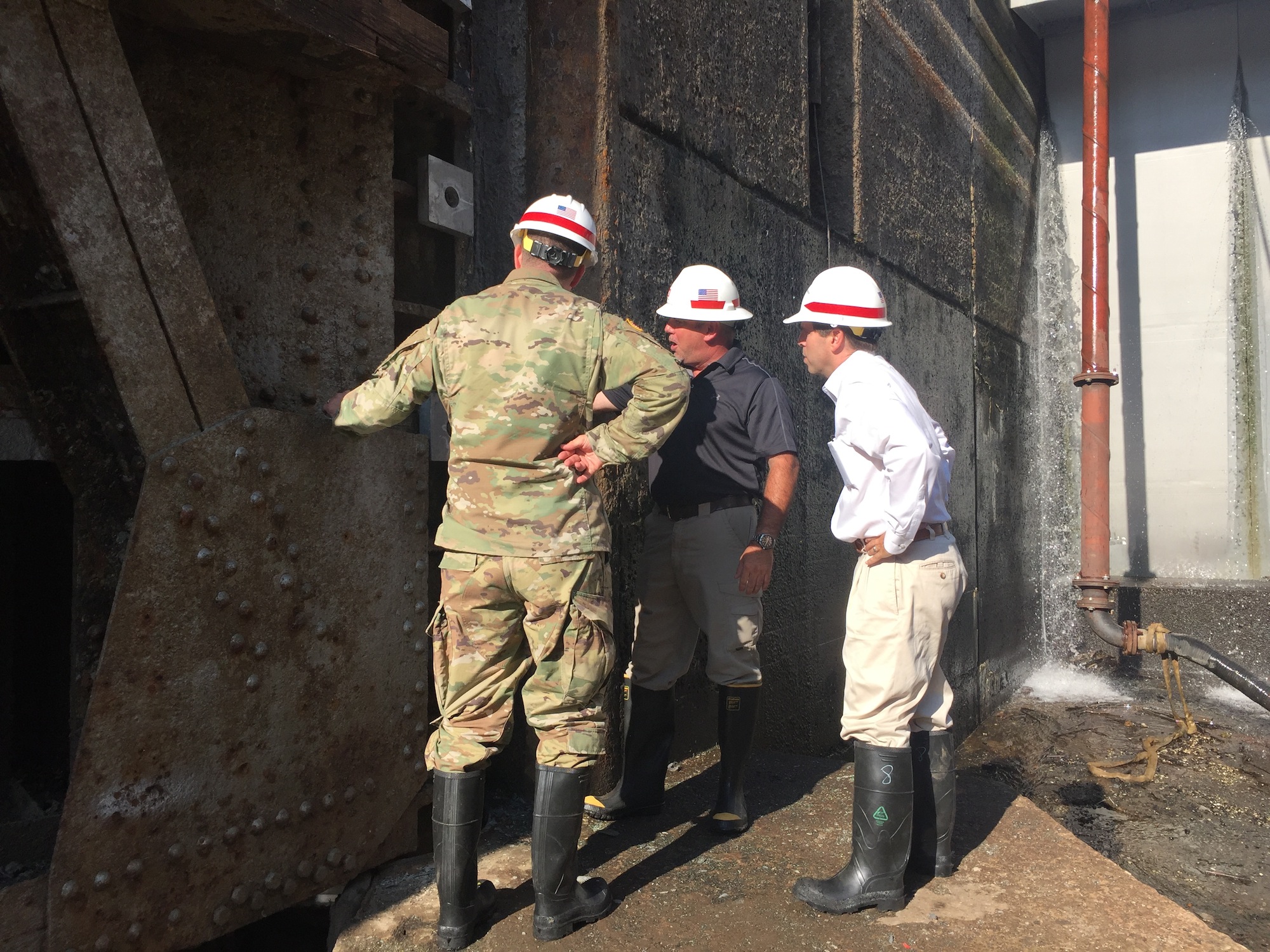
U.S. Rep. Chuck Fleischmann, R-Tenn., on Wednesday descended to the bottom of the aging Chickamauga lock, and after examining the cracked concrete in the 76-year-old chamber, insisted that it must be replaced with a new and bigger lock being built just a few hundred feet away.
“This is an antiquated structure that must be replaced,” Fleischmann said after reviewing the $1.3 million of maintenance and repair work being wrapped up this week by the Corps. “My commitment is steadfast. I have made this a legislative priority to make sure that the existing lock gets the funding it needs for maintenance and repair and that the new lock is very high on the priority list to make sure that money flows to get it built.”
Fleischmann, a member of the House appropriations committee, said “the future is very optimistic” for the completion of the new 110-foot-by-600-foot lock.
Work on the new, $755 million lock has been delayed over the past decade due to funding shortfalls in the Inland Waterways Trust Fund that pays for the construction of new dams and locks in America.
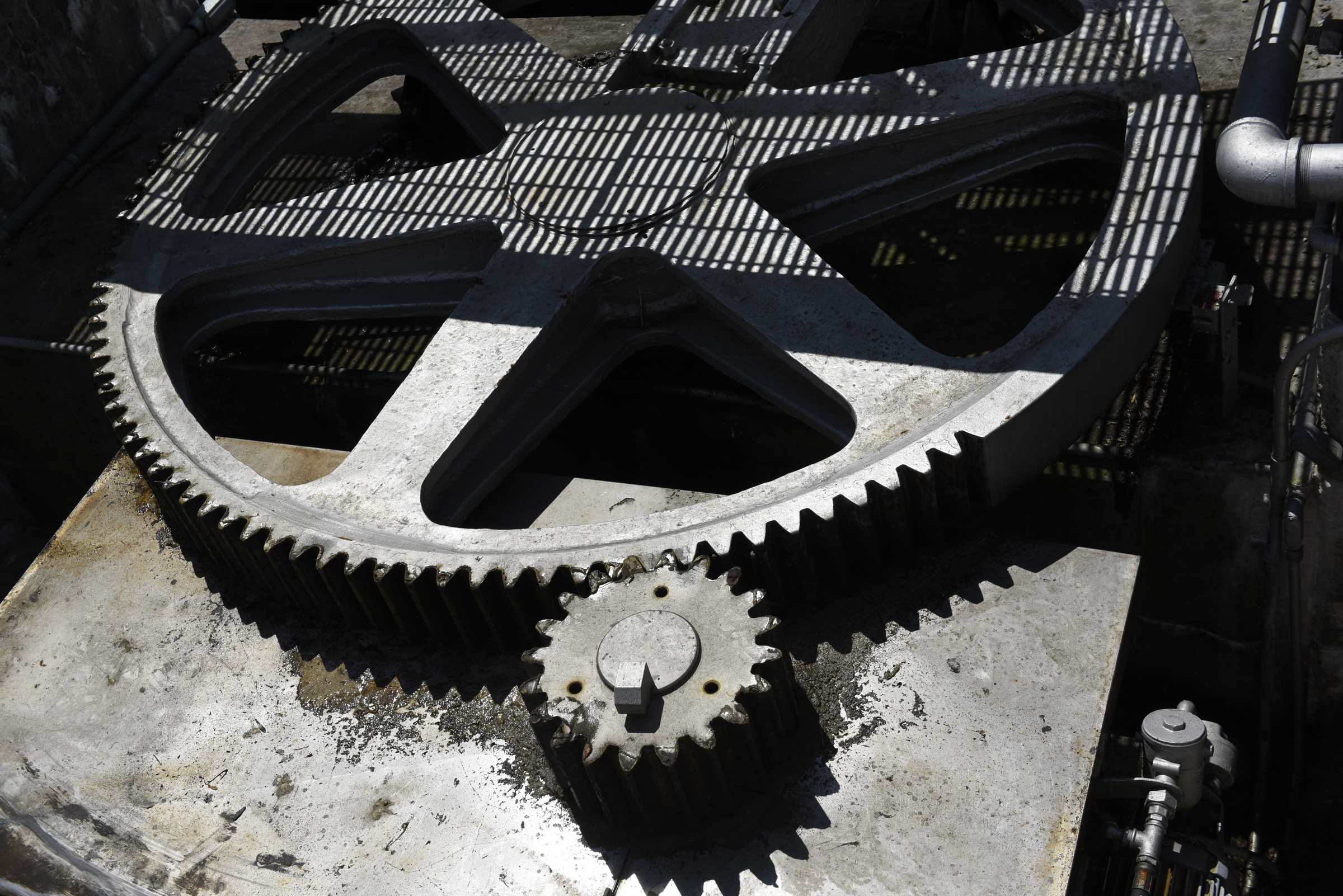
During a tour to the bottom of the existing lock chamber that was emptied of more than 10 million gallons of water three weeks ago, Fleischmann praised the Army Corps of Engineers for its repair efforts to keep the old lock open while he and others work to get funding for the new lock.
Fleischmann said more money will be needed to finish the new lock, where the Corps has already spent $185 million in design and initial construction of a coffer dam. On the eve of today’s Republican primary election, the congressman said he has worked over the past six years in Congress to restart work on the once stalled lock project.
Although his campaign staff criticized his GOP rival two years ago for supporting a tax increase to help pay for the new lock, Fleischmann ultimately supported a 9-cent-per-gallon increase in the barge fuel tax to provide more matching funds to replenish the Inland Waterways Trust Fund drained by major capital projects in Ohio, Pennsylvania and Kentucky.
Fleischmann also worked to help change the funding formula and pushed the Corps to keep the Chickamauga lock as a priority project. The congressman said more funds should be available as the top priority locks at the Olmsted Lock on the Ohio River, on the Mongahela River near Pittsburgh and at the Kentucky lock downstream on the Tennessee River are completed in the next few years.
Weston Wamp, who ran against Fleischmann two years ago in a closely divided Republican primary election, was an early supporter of the higher barge fuel tax which Fleischmann initially declined to endorse. On Wednesday, Wamp wrote in a tweet that Fleischmann “always gets very optimistic about the lock in early August” just before the GOP primary.
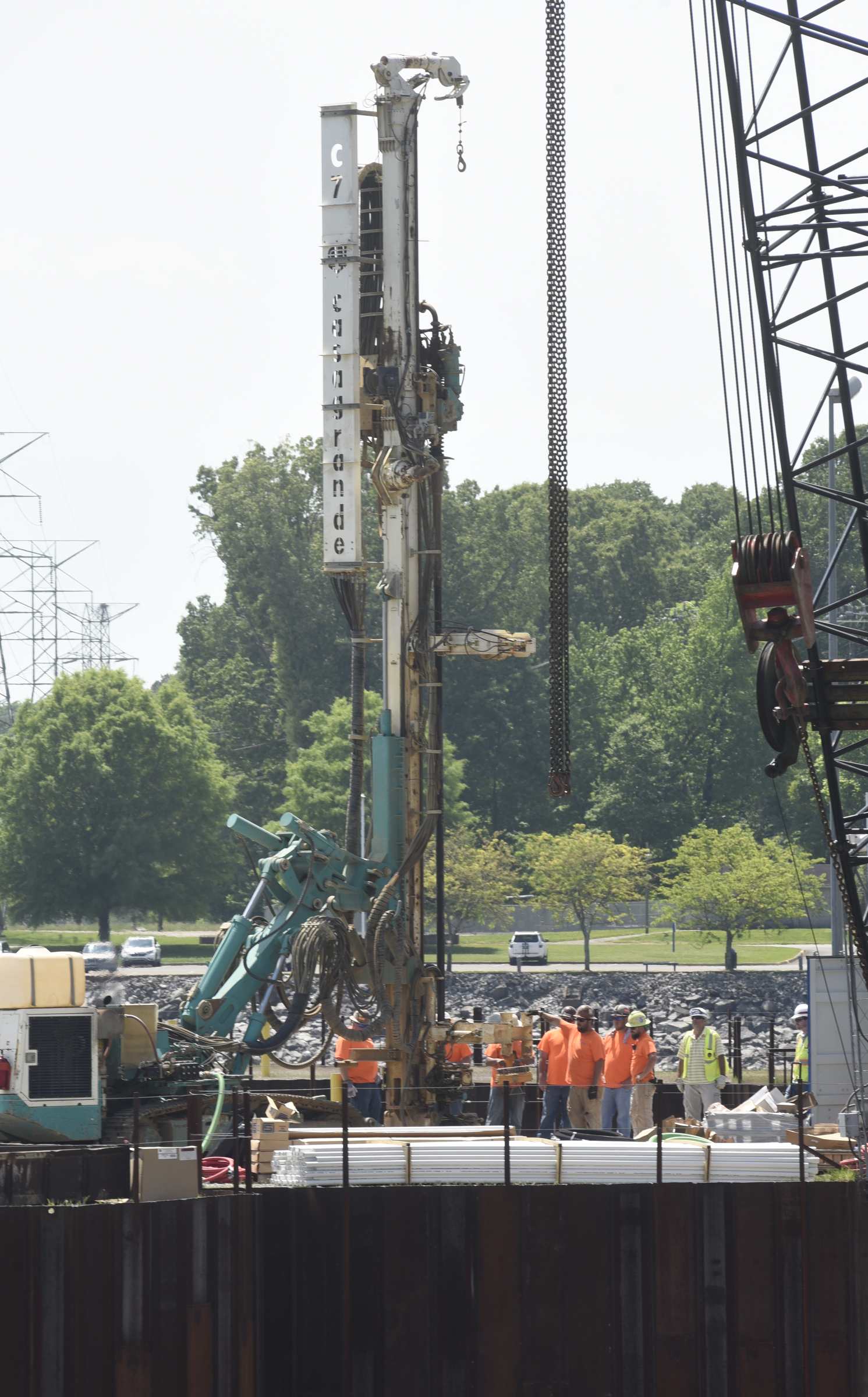
The new lock is getting nearly $30 million of funds in the current fiscal year, up from a mere $3 million last year, to help pay for the removal of 98,000 cubic yards of rock from the riverbed below the Chickamauga Dam where the new 110-foot by 600-foot lock will be built.
Fleischmann said he is hopeful that the new Chickamauga lock will get about $37 million of additional federal funding in fiscal 2017, although Congress has yet to adopt a final version of the energy and water appropriations bill.
The Corps has spent more than $185 million so far on the new lock, but it is projected to cost more than $500 million to be completed in the next seven years – and then only if adequate funds are provided each year.
Lt Col. Stephen Murphy, who heads the Nashville district office of the U.S. Army Corps of Engineers, said the new lock could be finished by 2023 “with sufficient funding.”
The new lock will be able to handle more barges than the existing lock and is needed to avoid a shutdown of the upper third of the Tennessee River to navigation, which could happen once the existing lock can no longer be maintained.
Murphy said the old lock is like “a sick patient” that must be nurtured.
“We have a great crew from across America that is doing yeoman’s work to keep this open,” he said.
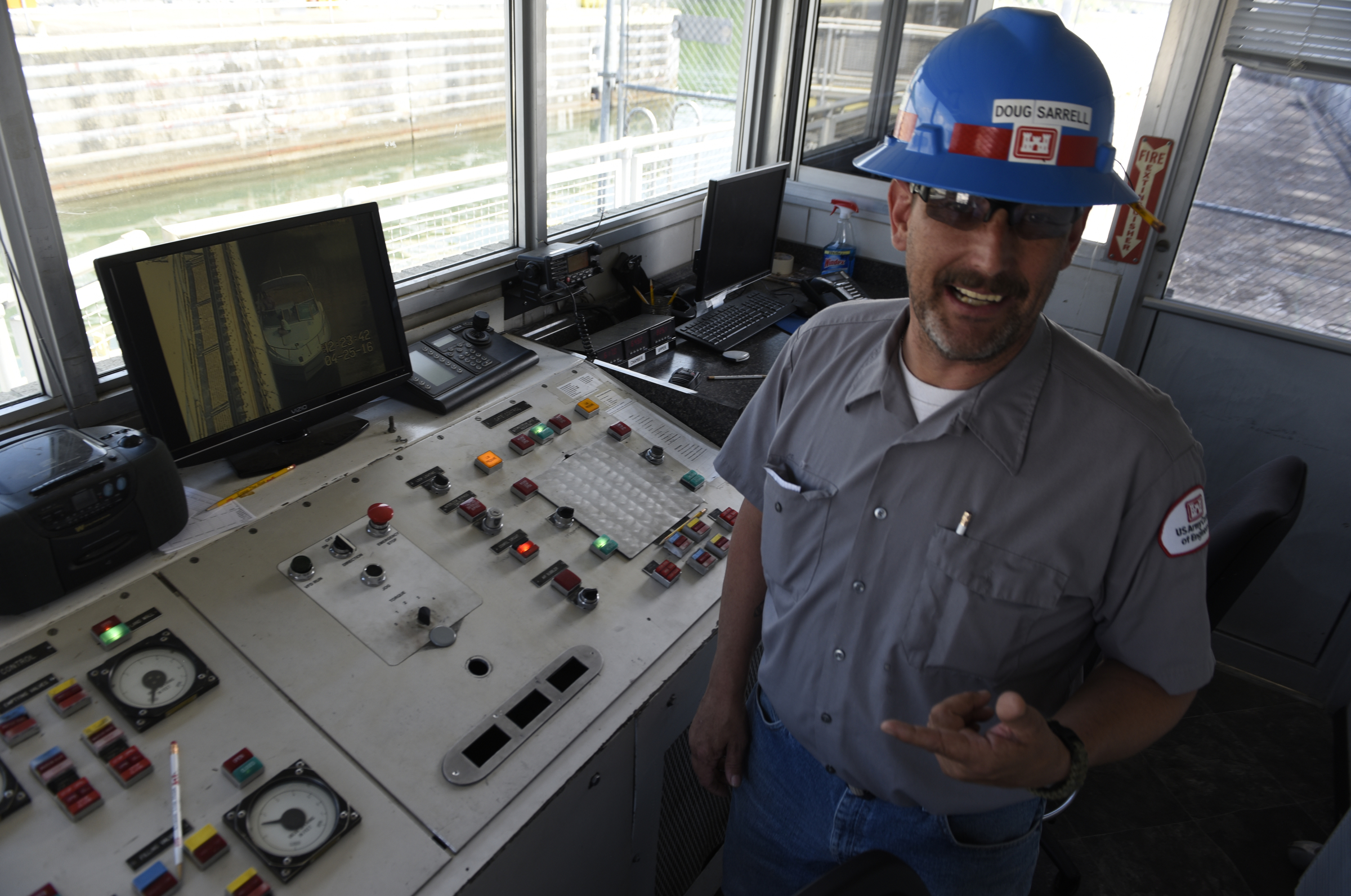
The Corps has brought a crew of 45 maintenance workers and engineers to Chattanooga to dewater and repair the existing lock this summer. The work work began July 11 and will leave the lock between the Nickajack and Chickamauga Reservoirs shut down until next Thursday.
The dewatering of the lock is part of the Corps’ maintenance schedule to maintain and protect the locks that allow river barges to move up and down the 652-mile Tennessee River system. The Corps had a similar month-long maintenance outage at the Chickamauga lock four years ago, and has had to briefly suspend operations several times since due to severe weather or equipment problems.
During such work, river traffic is blocked from moving from downstream of Chattanooga to any of the navigable 318 miles above Chattanooga.
Fleischmann said the temporary lock closures underscore the need for a new lock to avoid the prospect of a permanent shut down of the river artery.
“The funds to maintain the existing lock are are robust and they are there,” Fleischmann told reporters after talking with Corps officials. “The money for the new lock is in a different fund, which we have restructured to make sure we have funds flowing for that work.”
Contact Dave Flessner at dflessner@timesfreepress.com or at 423-757-6340.