
Thursday, October 29, 2026Oct 29

This story is free to read.

WHY IT MATTERS: Voting rights

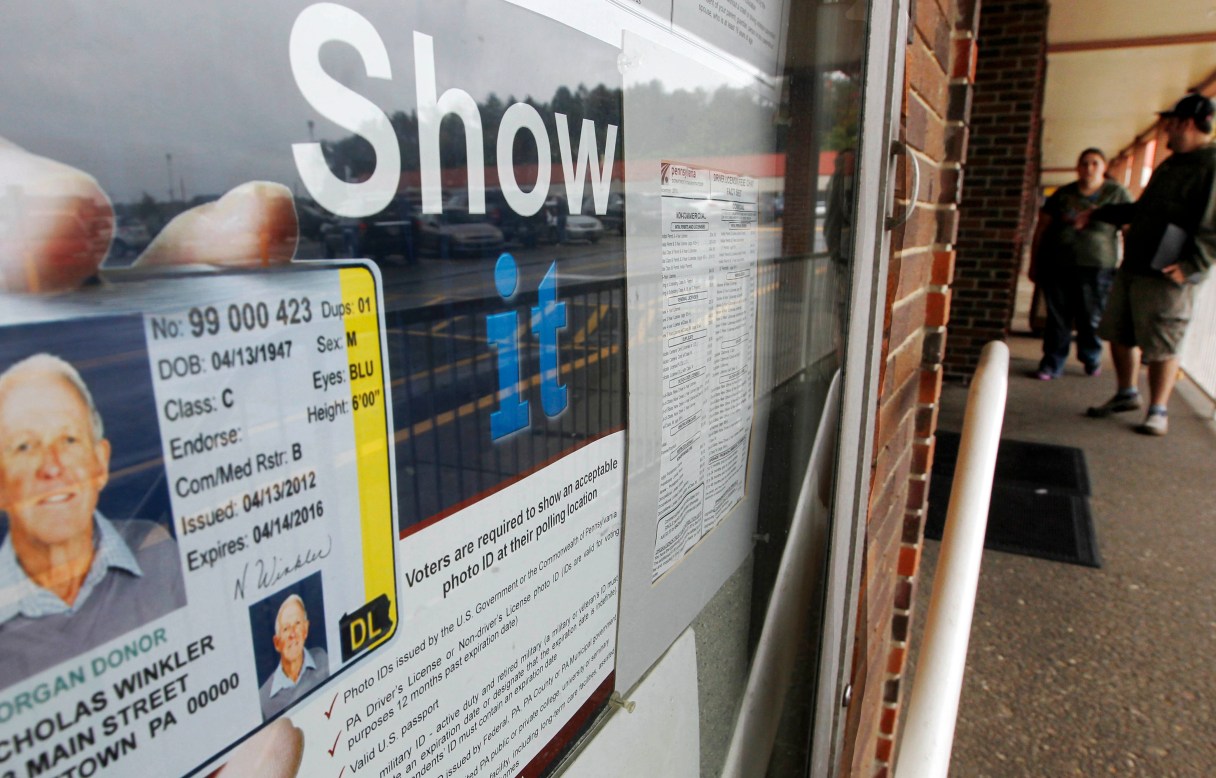
FILE - In this Wednesday, Sept. 26, 2012 file photo, people pass the signs telling of the requirement for voters to show an acceptable photo ID to vote as they head into the the Penndot Drivers License Center in Butler, Pa. Who gets to vote, and how easily, matters because it can determine who wins elections. The issue is particularly salient for black Americans, who for much of U.S. history were disenfranchised and then effectively barred from voting until passage of the 1965 law. It's also become more partisan with the rapid growth of minorities such as Latino and Asian immigrants, who tilt Democratic. (AP Photo/Keith Srakocic, File)
FILE - In this Wednesday, Sept. 26, 2012 file photo, people pass the signs telling of the requirement for voters to show an acceptable photo ID to vote as they head into the the Penndot Drivers License Center in Butler, Pa. Who gets to vote, and how easily, matters because it can determine who wins elections. The issue is particularly salient for black Americans, who for much of U.S. history were disenfranchised and then effectively barred from voting until passage of the 1965 law. It's also become more partisan with the rapid growth of minorities such as Latino and Asian immigrants, who tilt Democratic. (AP Photo/Keith Srakocic, File) FILE - In this Wednesday, Sept. 26, 2012 file photo, people pass the signs telling of the requirement for voters to show an acceptable photo ID to vote as they head into the the Penndot Drivers License Center in Butler, Pa. Who gets to vote, and how easily, matters because it can determine who wins elections. The issue is particularly salient for black Americans, who for much of U.S. history were disenfranchised and then effectively barred from voting until passage of the 1965 law. It's also become more partisan with the rapid growth of minorities such as Latino and Asian immigrants, who tilt Democratic. (AP Photo/Keith Srakocic, File)

WASHINGTON (AP) – THE ISSUE:

Who should be able to vote and how easy should it be? It’s a question that goes to the core of democracy.

Voting rights are in flux in the final months of Barack Obama’s two terms as the first black president. Citing a need to combat fraud, Republican-controlled legislatures are tightening voter laws by limiting early voting and same-day registration, by requiring IDs at polling places, and more. In 2013, declaring “our country has changed,” the Supreme Court invalidated a key provision of the 1965 Voting Rights Act, which required mostly Southern states with a history of discrimination to get advance federal approval to change election laws. The court decision made it easier for states to impose new restrictions.

This year, 17 states were set to have restrictions involving voter ID or other requirements for the first time in a presidential election. Among them: the battlegrounds of North Carolina, Virginia, Ohio, Wisconsin, Arizona and Georgia.

The Obama Justice Department has challenged voter ID and other laws, saying they could restrict access for minorities and young people. In recent weeks, lower courts temporarily staved off some of the toughest requirements in North Carolina, Texas and Wisconsin after judges found no evidence of rampant voter fraud.