
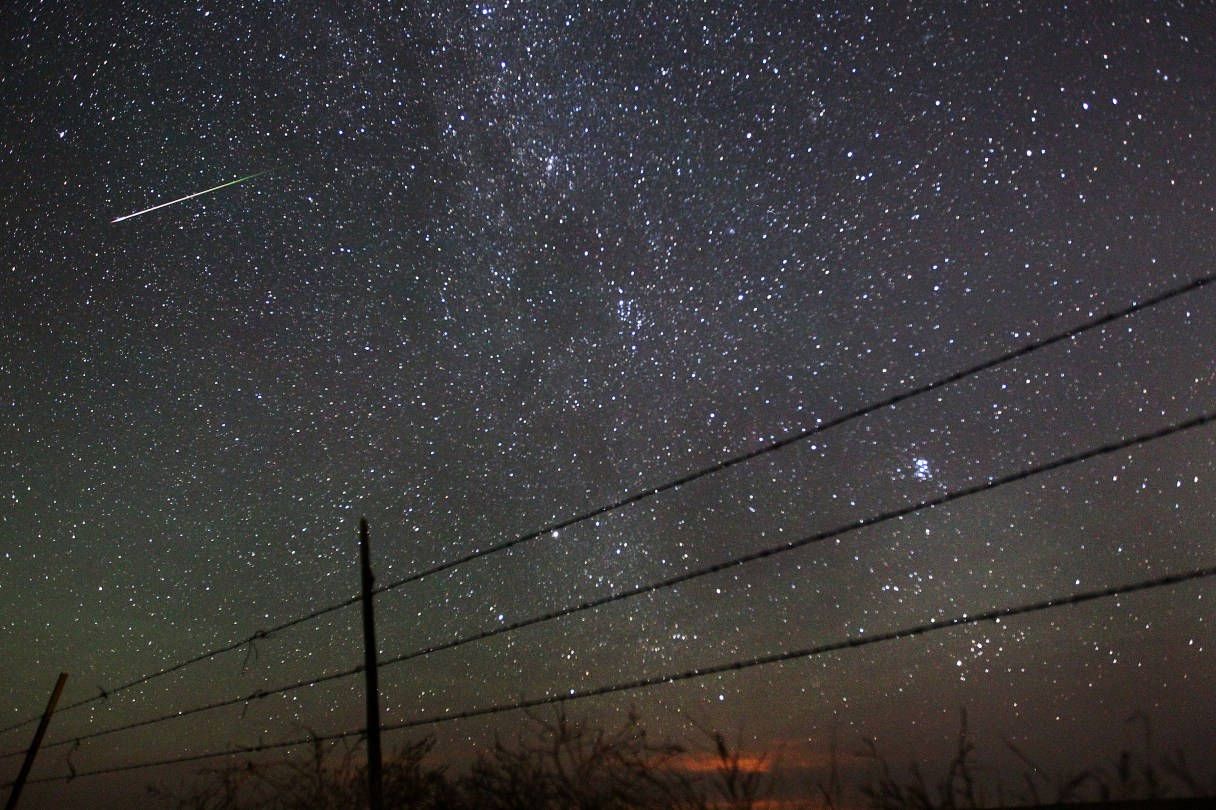
Stargazers are treated to a breathtaking meteor shower every August as the Earth hurtles through the centuries-old particle trails of a comet, but this year is special.
The Perseid shower is a result of the Swift-Tuttle comet that orbits the sun every 133 years. As the comet makes its lonely circles, it leaves behind a 17-mile-wide ribbon of rock and ice for the Earth to tear through, burning up countless leftover bits in its atmosphere.
This year, Jupiter’s gravitational influence has tugged together several of those trails from the comet’s previous orbits in 1079, 1479 and 1862, lining them up for an unusually high-density display of meteors that could reach up to 200 per hour.
According to an article published by NASA, the Earth usually passes through the edge of Swift-Tuttle’s trail, but on occasion, the planet passes through closer to the center, where there is more debris.
“You don’t need a telescope, you just need a good pair of eyes and the biggest field of view you can get,” said Jack Pitkin, a University of Tennessee at Chattanooga professor and manager of the Clarence T. Jones Observatory.