

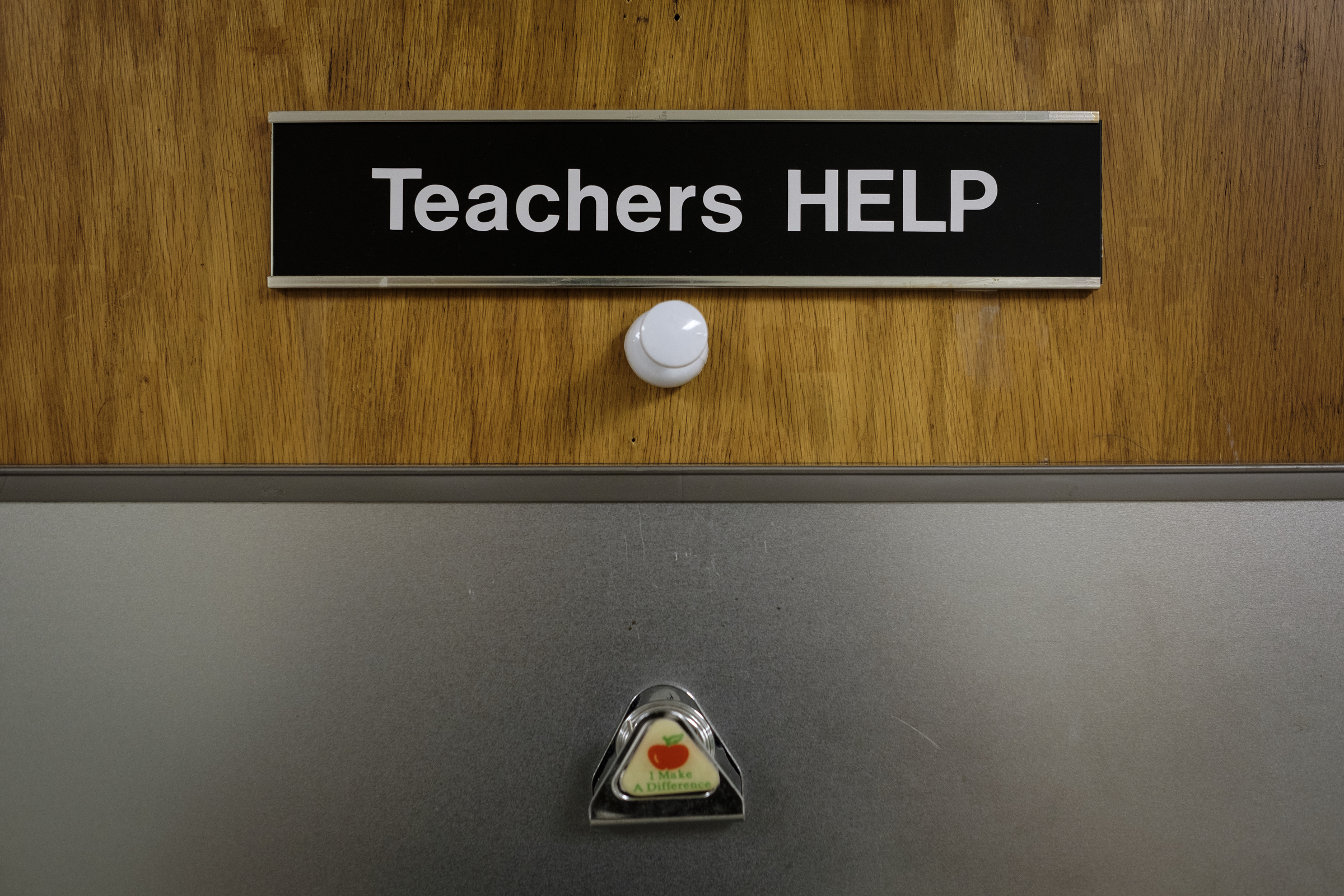
 Staff photo by Doug Strickland / A clip reading “I make a difference” is magnetized to a board beneath a door labeled “Teachers HELP” inside Hunter Hall, home of the UTC School of Education, on the school’s campus Friday, July 22, 2016, in Chattanooga, Tenn.
Also read…
* New online guide provides information about Hamilton County Schools * Cooper: Highly effective teachers should be ultimate goal
For years, we’ve heard educators – even while they were bemoaning lack of parental involvement and the challenges of teaching children from impoverished homes – extol the virtues of local teachers.
For years, we’ve been told that teachers need higher pay and more support from involved parents and community leaders because “good” teachers are leaving the schools for better jobs.
For years, teachers unions and school administrators, too, have told us that it’s unfair to tie teachers’ evaluations to their students’ standardized test scores – gains or flat-lines which the state has been measuring, teacher by teacher, since the early 1990s. In fact, teacher evaluations have taken into account the learning gains data since 1995. But taking those numbers into account is all that has happened. Early efforts to tie a teacher’s license renewals to those gains or non-gains was dropped after teacher unions raised a ruckus.
As it turns out, that kid-glove handling of teachers hasn’t really affected our kids for the better – especially here in Hamilton County.