
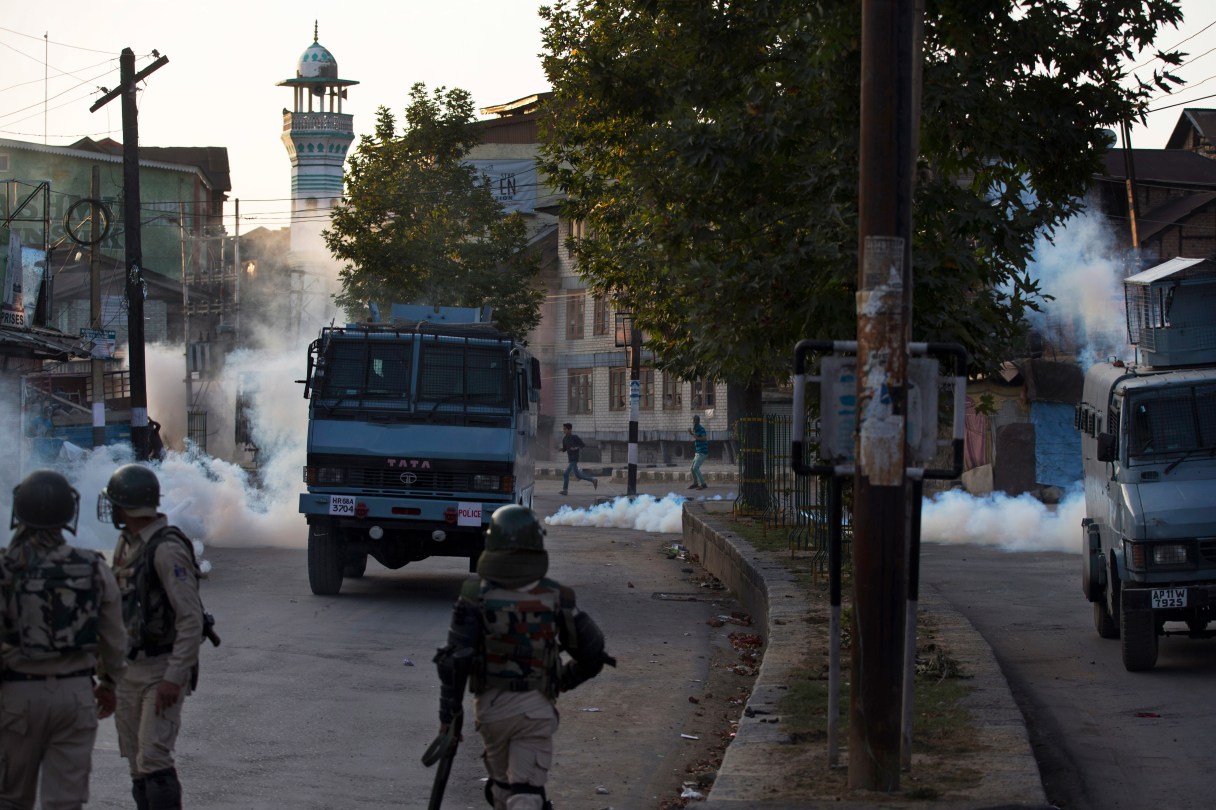
SRINAGAR, India (AP) – When news spread in early July that Indian troops had killed a charismatic commander of Indian-controlled Kashmir’s biggest rebel group, the public response was spontaneous and immense. Tens of thousands of angry youths poured out of their homes in towns and villages across the Himalayan region, hurling rocks and bricks and clashing with Indian troops.
A strict curfew and a series of communications blackouts since then have failed to stop the protesters, who are seeking an end to Indian rule in Kashmir, even as residents have struggled to cope with shortages of food, medicine and other necessities. The clashes, with protesters mostly throwing rocks and government forces responding with bullets and shotgun pellets, has left more than 60 civilians and two policemen dead. Thousands of civilians have been injured and hundreds of members of various government security forces.
On Friday, clashes erupted in at least 20 places after government forces fired tear gas and shotguns to stop protesters who tried to march on the main roads.
But Kashmir’s fury at Indian rule is not new. The stunning mountain region has known little but conflict since 1947, when British rule of the subcontinent ended with the creation of India and Pakistan.
___