
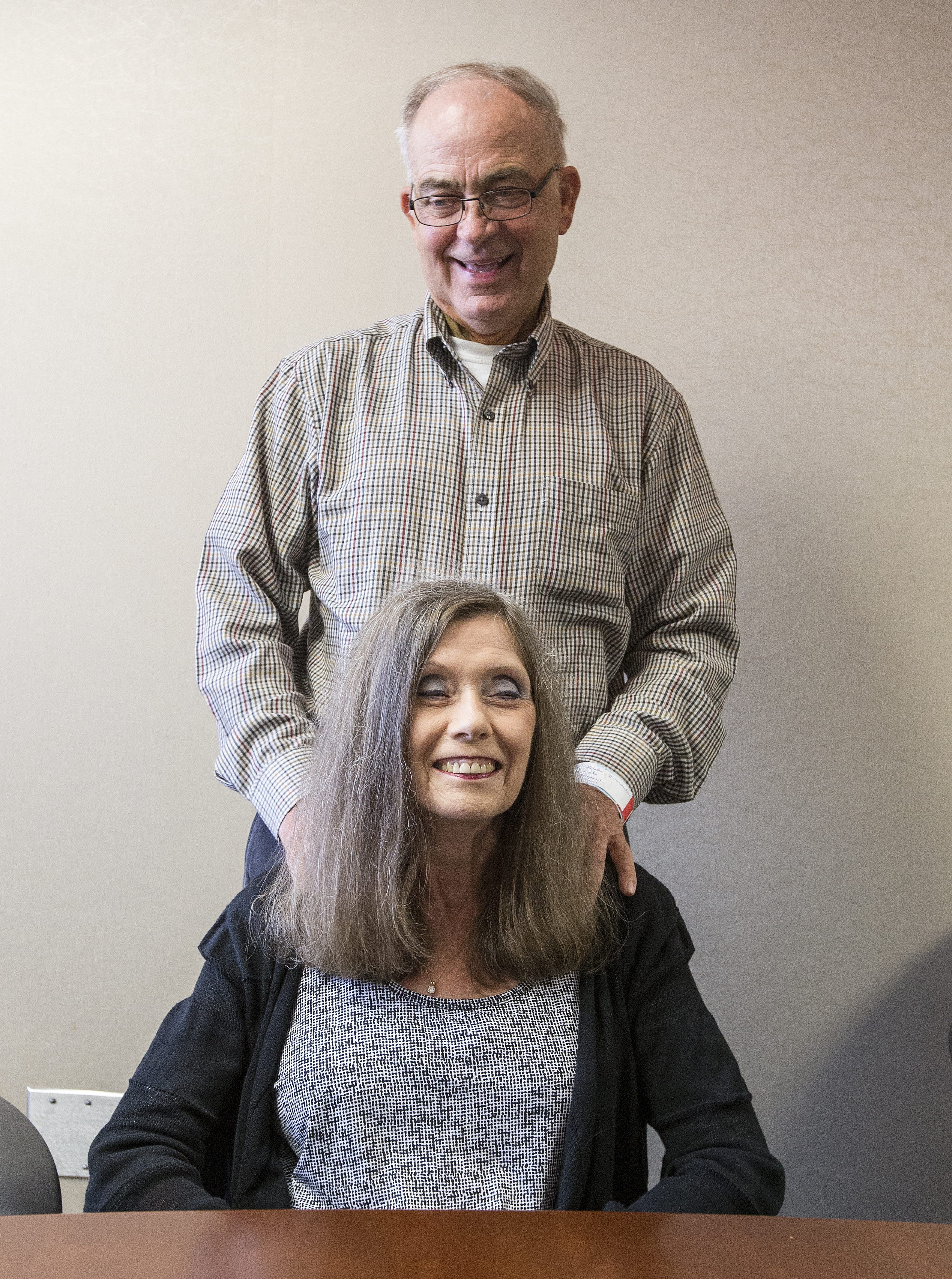
 Rex Parton and his wife, Nancy, at Vanderbilt University Medical Center.
Rex Parton couldn’t believe what his doctors at Vanderbilt University Medical Center were telling him.
The 71-year-old Athens, Tenn., resident was suffering from heart and kidney problems and “I couldn’t walk 25 or 30 feet without sitting down on the ground because I couldn’t breathe anymore,” he said Friday.
Doctors had inserted an LVAD – left ventricle assistive device – in the left side of his heart to help pump blood. But it was not working, and Parton’s health was failing.
“They said, ‘Mr. Parton, you really need a transplant, but you’re past the age,” he said. “My wife and I looked at them and said, ‘What do you mean, past the age? You’re telling me I may live two more weeks.'”
But the doctors insisted they were only following hospital policy – patients over 70 years of age were not eligible for heart transplants because surgeons believed it was unlikely they would survive the operation. There were only a limited number of hearts available for transplant, and they needed to be used in cases in which they were most likely to keep a patient alive for many years. And Parton needed both a heart and a kidney.