
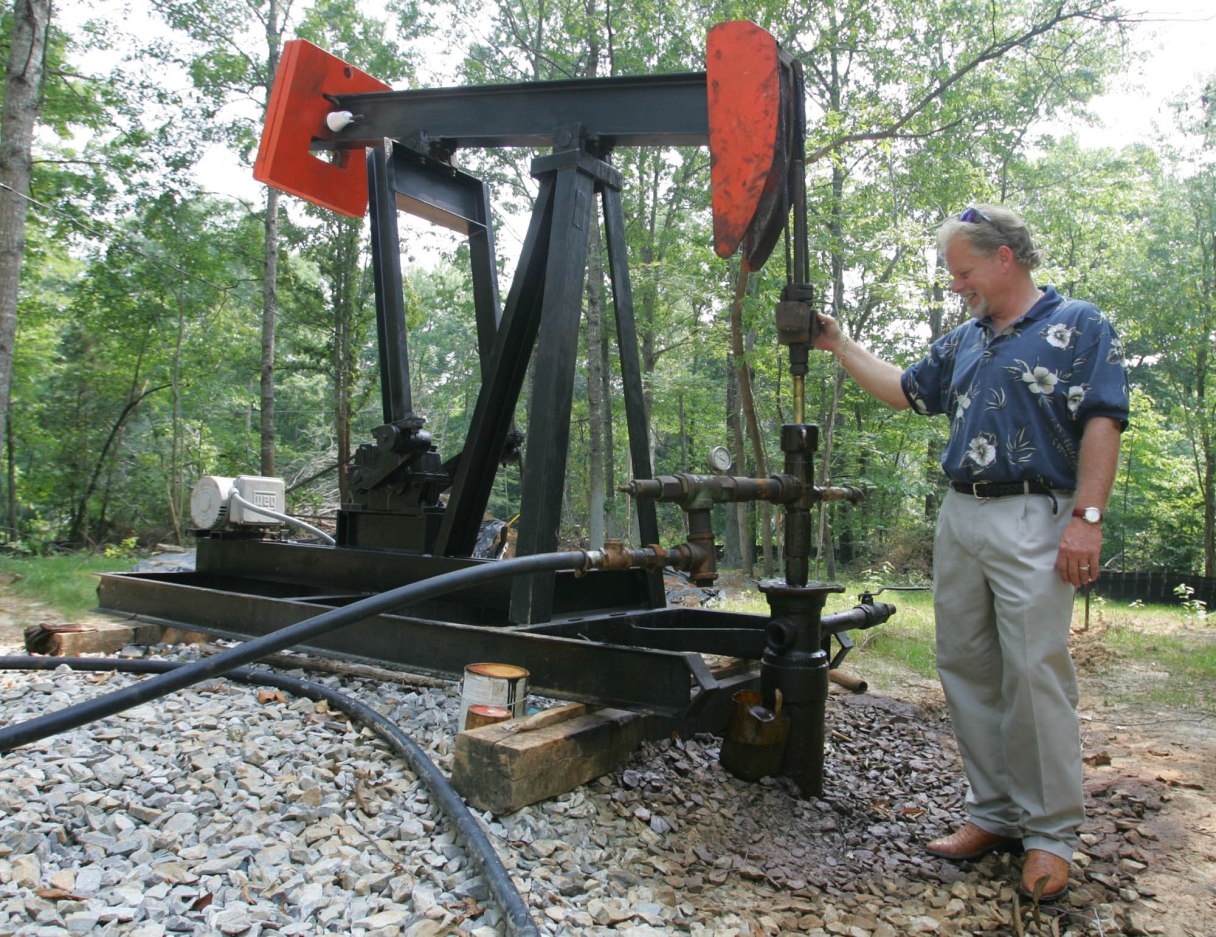

President Obama, likely feeling he has nothing to lose, is expected next week to propose a $10 per barrel tax on domestic and imported oil to pay for green transportation programs.
Such a proposal will be dead on arrival in Congress, which will be controlled for at least another year by Republicans who favor fiscal responsibility instead of more deficit spending.
So why would Obama do it, knowing as he does it won’t go anywhere?
‘ Because he can. He’s the president. As has been his wont, he has no interest in working with Congress toward a compromise. Green energy, no matter how financially irresponsible it might be (remember Solyndra?), fits his radical environmental agenda.
‘ Because he hates oil. As a fossil fuel, it’s naturally dirty and doesn’t fit into his utopian view of state-controlled, utilitarian mass transportation and getting more cars off the road.
‘ Because the price of oil is low. Oil this week was trading for less than $35 per barrel, significantly lower than the $125 per barrel it reached in 2011 and 2012. Although Obama opposed the process, hydraulic fracking made the ability to extract oil in the United States easier, increasing the available supply. That, in turn, lowered gasoline prices, made people less worried about conserving fuel and less interested in fuel-efficient vehicles. With low prices, the president figures, what’s another $10 per barrel?
‘ Because, hey, wait until 2017. Former secretary of state Hillary Clinton and Sen. Bernie Sanders, I-Vt., currently are pandering to the far left base of the party to gain its favor and the presidential nomination. If one of them, or, even better, both of them, pick up the mantle of the bill, Obama’s legacy might have another line added to it if one of them were ever to have a Democratic Congress that might pass it.
The tax collection from such a bill would fund about $300 billion worth of investments, including boosting spending on green transportation infrastructure – generously called “enhanced transportation options” by administration officials – by about 50 percent. That would cover the likes of subways, buses, light rail and an expansion of the high-speed rail initiative the president put in his 2009 stimulus bill.
The money also would fund goodies such as electric-vehicle charging stations, a Climate Smart Fund that rewards states that make greener choices with federal dollars, and greener airplanes.
The confounding reality is the U.S. needs a long-term transportation plan instead of the 36 consecutive highway bill patches that were signed under Democratic or divided Congresses before the Republican-led Congress passed the five-year Fixing America’s Surface Transportation Act in December. But it must rely on compromise, fiscal responsibility and the use of all types of energy, three considerations the Obama administration has not wanted to make.