
Monday, November 2, 2026Nov 2

This story is free to read.

Bank of England chief: we won’t predict EU exit consequences

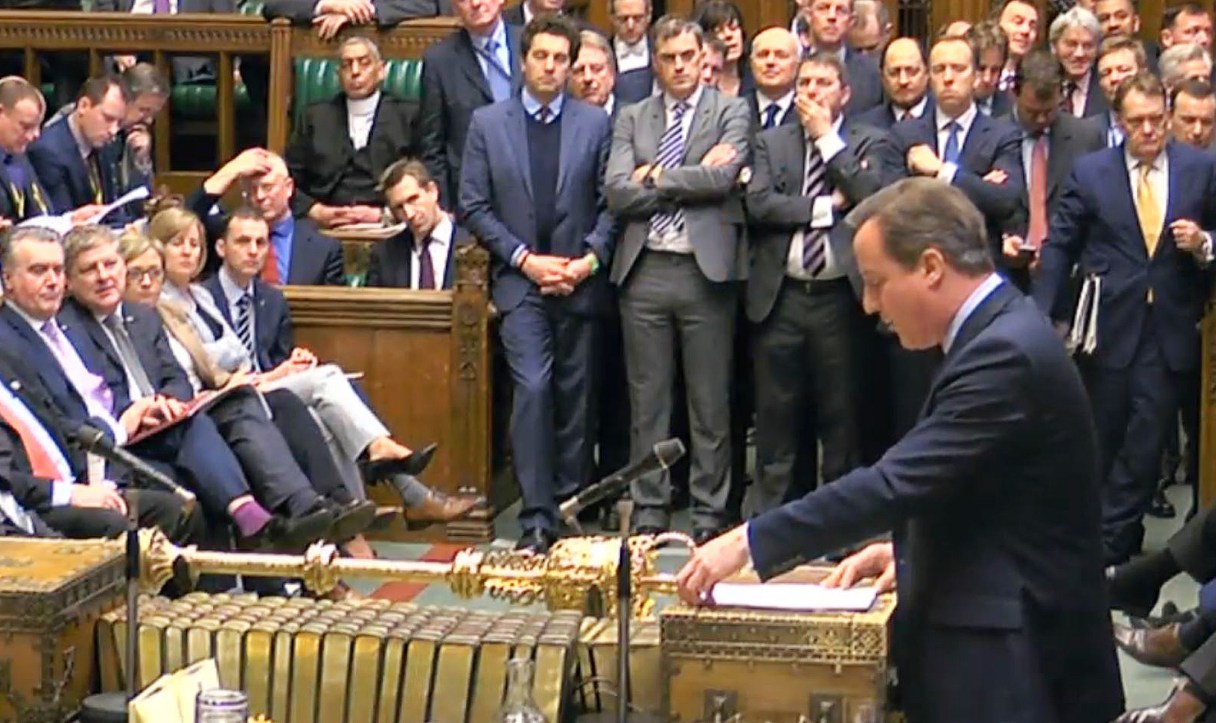
In this screen grab taken from video, Britain's Prime Minister David Cameron addresses Members of Parliament,  in the House of Commons in London, Monday, Feb. 22, 2016, to lay out his case for staying in the European Union. Uncertainty over Britain’s future in the European Union sent the pound plunging Monday, as Prime Minister David Cameron tried to shore up support for remaining in the bloc when the U.K. holds a referendum in June. (PA via AP) UNITED KINGDOM OUT
In this screen grab taken from video, Britain's Prime Minister David Cameron addresses Members of Parliament, in the House of Commons in London, Monday, Feb. 22, 2016, to lay out his case for staying in the European Union. Uncertainty over Britain’s future in the European Union sent the pound plunging Monday, as Prime Minister David Cameron tried to shore up support for remaining in the bloc when the U.K. holds a referendum in June. (PA via AP) UNITED KINGDOM OUT In this screen grab taken from video, Britain's Prime Minister David Cameron addresses Members of Parliament, in the House of Commons in London, Monday, Feb. 22, 2016, to lay out his case for staying in the European Union. Uncertainty over Britain’s future in the European Union sent the pound plunging Monday, as Prime Minister David Cameron tried to shore up support for remaining in the bloc when the U.K. holds a referendum in June. (PA via AP) UNITED KINGDOM OUT

LONDON (AP) – Bank of England Governor Mark Carney says the central bank will not be predicting the likely economic consequences of a British vote to leave the European Union.

Carney told a committee of lawmakers Tuesday that “we are not making a judgment about the potential outcome of the referendum … or an assessment of the potential consequences of a leave vote.”

The heads of almost 200 firms have warned that leaving the EU would “deter investment, threaten jobs and put the economy at risk.”

The looming June 23 vote has caused jitters for Britain’s pound, which hit a seven-year low of $1.4058 Monday before rallying to just above $1.41.

Carney said the currency’s volatility has “spiked to levels consistent with around the height of the Scottish referendum” on independence in 2014.