
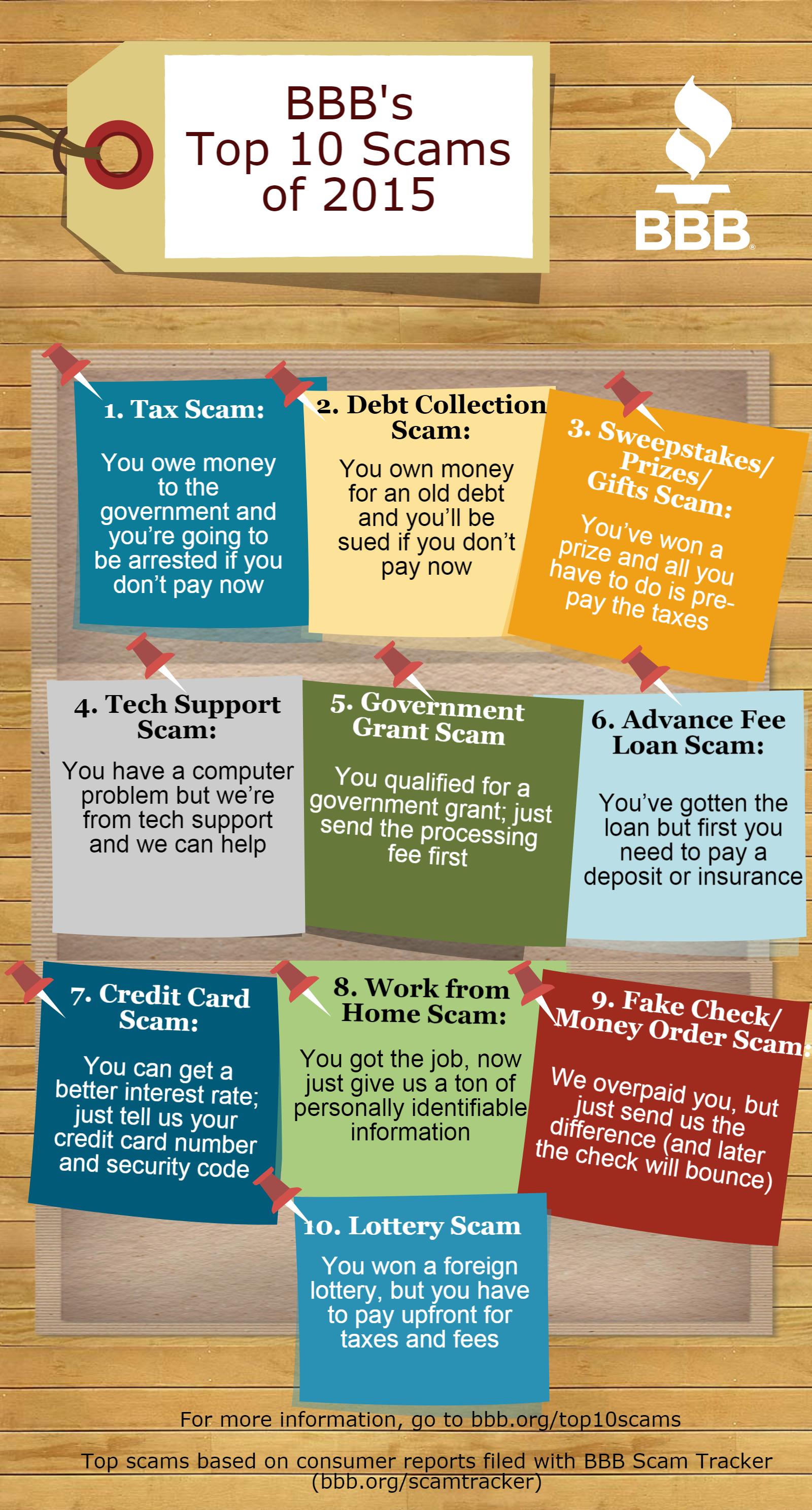
What you can do
› Don’t be pressured into making fast decisions. › Take time to research the organization. Check them out on bbb.org, search online, etc. › Never provide your personal information (address, date-of-birth, banking information, ID numbers) to people you do not know. › Don’t click on links from unsolicited email or text messages. › If you are unsure about a call or email that claims to be from your bank, utility company, etc., call the business directly using the number on your bill or credit card. › Never send money by wire transfer or prepaid debit card to someone you don’t know or haven’t met in person. › Never send money for an emergency situation unless you can verify the emergency. For more information: › For scam information go to BBB Scam Stopper (bbb.org/scam). › Report scams (whether or not you’ve lost money) to BBB Scam Tracker. › For information on investment scams, go to BBB Smart Investing. › To search for a business in the U.S. or Canada, or to find your local BBB, go to BBB.org. › For information on charities, go to Give.org (BBB Wise Giving Alliance). For information on U.S. government services, go to: USA.gov.
Q. What was the most pervasive scam of 2015?
A. When the Better Business Bureau launched BBB Scam Tracker earlier this year, it was expected that tax scams would be high on the list. What was surprising was how high; more than the next three categories put together. In the first 10,000 scams reported nationally, 24 percent were about imposters pretending to be the Internal Revenue Service or the U.S. Treasury Department.
The rest of the top 10 were all some form of imposter scam. Fortunately, about 85% reporting scams recognize them as fraud before money was stolen. Sadly, the top 10 scams still account for more than $1 million dollars lost from those who filed with BBB. Scammers are all basically imposters; three of the top four scams reported to us are those that scare people with threats of arrest, lawsuits or other frightening actions. Scammers are pretending to be government agents, lawyers, debt collectors, police officers. They engage directly with you, so your best bet to avoid being scammed is to stop engaging. Follow this advice; hang up the phone, delete the email, and shut the door.
How the Top 10 scams work