
Tuesday, November 3, 2026Nov 3

This story is free to read.

Emergency planners work on playbooks for the deadly Big One

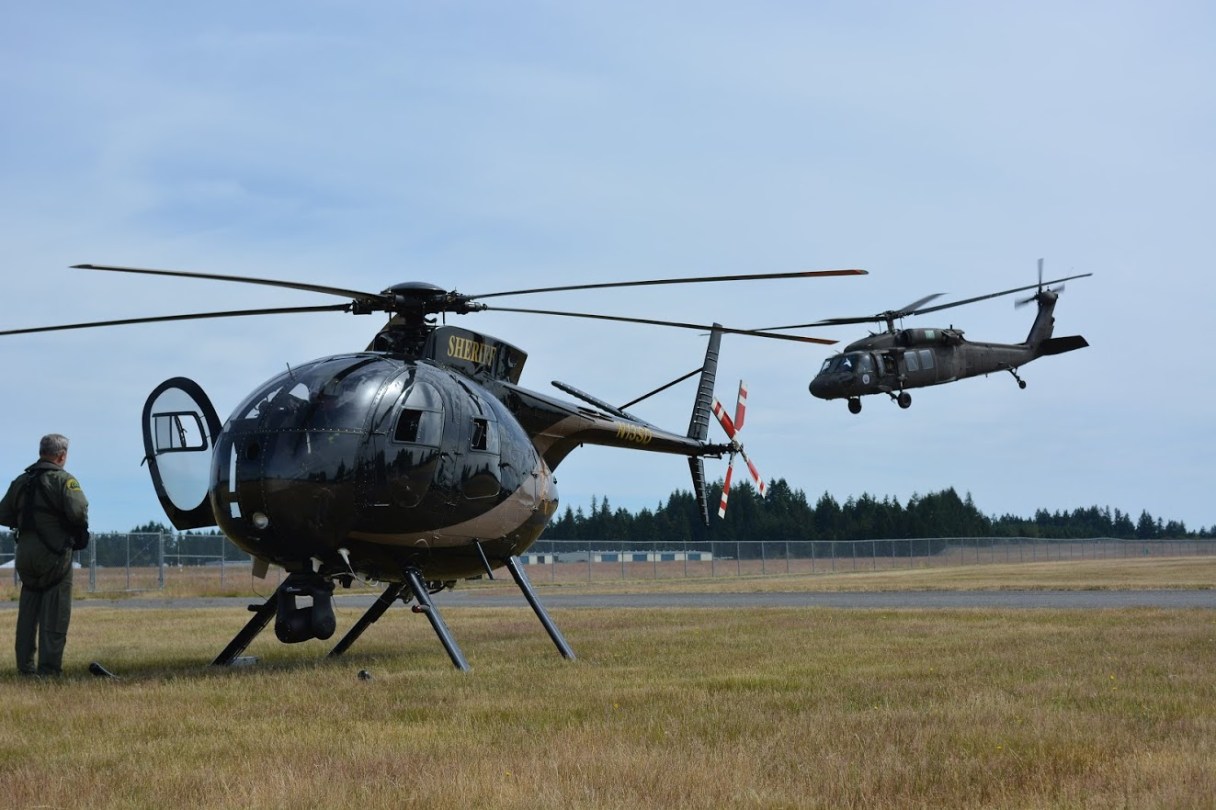
In this July 15, 2015, photo provided by the Washington State Army National Guard, a Washington National Guard UH- 60 Black Hawk helicopter, right, lands next to a Snohomish County Sheriff's Department helicopter during exercise Evergreen Tremor, to prepare for a Cascadia Subduction Zone earthquake. For the past few years emergency officials in the Pacific Northwest have been drafting detailed contingency plans for the day a mega-quake and tsunami hit the region.  (Washington State Army National Guard via AP)
In this July 15, 2015, photo provided by the Washington State Army National Guard, a Washington National Guard UH- 60 Black Hawk helicopter, right, lands next to a Snohomish County Sheriff's Department helicopter during exercise Evergreen Tremor, to prepare for a Cascadia Subduction Zone earthquake. For the past few years emergency officials in the Pacific Northwest have been drafting detailed contingency plans for the day a mega-quake and tsunami hit the region. (Washington State Army National Guard via AP) In this July 15, 2015, photo provided by the Washington State Army National Guard, a Washington National Guard UH- 60 Black Hawk helicopter, right, lands next to a Snohomish County Sheriff's Department helicopter during exercise Evergreen Tremor, to prepare for a Cascadia Subduction Zone earthquake. For the past few years emergency officials in the Pacific Northwest have been drafting detailed contingency plans for the day a mega-quake and tsunami hit the region. (Washington State Army National Guard via AP)

PORTLAND, Ore. (AP) – When a magnitude 9.0 earthquake and tsunami strike the Pacific Northwest, which seismologists say could happen in our lifetime, it will likely be the worst natural disaster in U.S. history.

Thousands may die. Coastal communities could be engulfed. And the region’s economy could be set back for years.

To prepare for such a calamity, emergency officials over the past few years have been working together to hammer out contingency plans intended to lessen the loss of life and put the region in a better position to recover.

Waves of cargo planes and helicopters would be sent to the region, as well as tens of thousands of soldiers, emergency officials, mortuary teams, police officers, firefighters, engineers, medical personnel and others.