
Despite a rally on Wall Street on Friday, the beginning of the year was the worst in the history of the Dow average and the S&P 500 index.
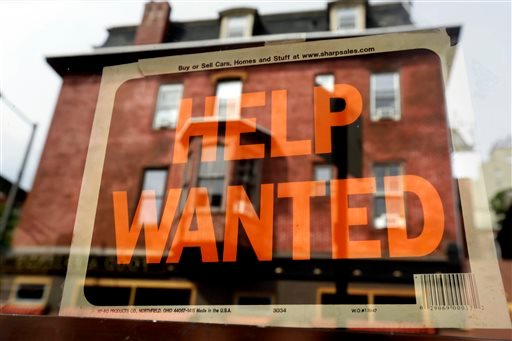
But for all the turmoil in the financial markets, Tennessee should continue to see more job and income growth in 2016, although at a slower pace than last year, according to the state’s annual economic forecast.
The Center for Business and Economic Research at the University of Tennessee, which released its annual economic outlook Friday in advance of Gov. Bill Haslam’s State of the State speech on Monday, predicts employment will grow another 1.7 percent this year and another 1.3 percent in 2017.
Last year, Tennessee’s employment grew by 1.9 percent, or 54,600 jobs, matching the growth rate of the U.S. as a whole.
“Financial market instability has captured the headlines, but the U.S. and Tennessee economies are both on a very firm foundation and we probably have the strongest economy in our state since well before the start of the Great Recession (in 2008),” said University of Tennessee Economist Matt Murray, who authored the annual economic forecast for the state. “I think a recession or downturn this year is highly unlikely unless we see some unexpected shock to the system or some very sharp deterioration in the global economy.”
But Murray said Tennessee is unlikely to sustain the robust 6.5 percent growth in tax collections the state enjoyed last year. Nominal taxable sales are expected to expand by 4.7 percent this year and 3.5 percent in 2017.
“As it prepares its budget, the state shouldn’t anticipate continuing the pace of growth in tax collections that we saw in the past year,” Murray said. “But the drop in gas prices and the generally favorable economic conditions has lifted income and generated healthy gains in taxable sales.”
The state may end the current fiscal year with a budget surplus of as much as $750 million. Gov. Haslam is expected to outline his plans for spending the surplus and his budget plans for next year when he addresses the Legislature on Monday.
While interest rates increased in 2015 and will continue to rise in 2016, both residential and nonresidential investment are expected to expand, according to the report.
Tennessee’s unemployment rate continues to be higher than the 2015 national average of 5.3 percent. The state unemployment rate dropped from 6.6 percent in 2014 to 5.9 percent in 2015. Tennessee’s unemployment rate is expected to average 5.5 percent this year and then fall to 5.4 percent in 2017.
Nominal personal income is projected to rise by 4.8 percent this year and 4.7