
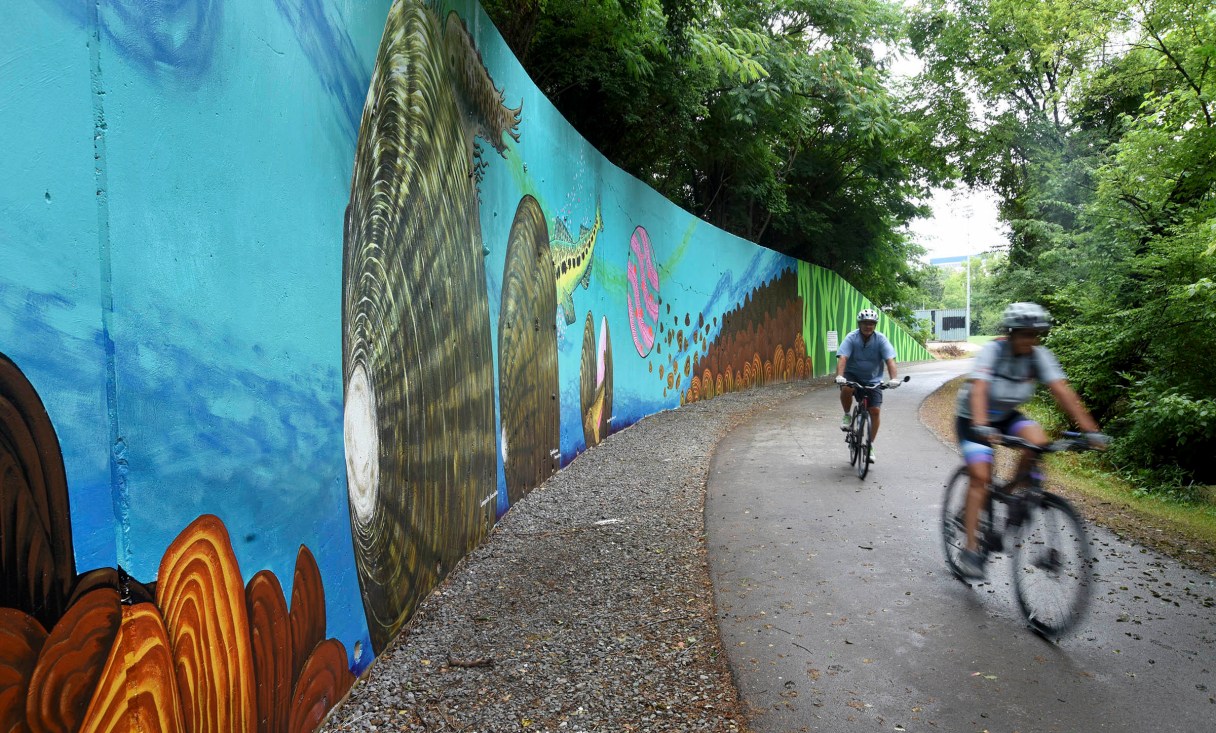
KNOXVILLE, Tenn. (AP) – Some of the rarest and most beautiful denizens of the Tennessee River are rendered larger than life along Knoxville’s Third Creek Greenway.
The 230-foot-long mural depicts the pink mucket pearly mussel and the Cumberland combshell, two endangered freshwater mussels that symbolize the Tennessee River’s status as a hot spot for freshwater mussel diversity. The new mural was spearheaded by the Center for Biological Diversity as part of a nationwide project to use art in public places to increase appreciation for regional biodiversity.
On Sunday, the Center for Biological Diversity will host a public celebration for the high-profile mural. The celebration lasts from 2-4 p.m. and will include live music, craft activities and refreshments. From the University of Tennessee Rugby Field, attendees should park at Tyson Park and walk south on the Third Creek Greenway to the mural wall.
The mural is near the UT Institute of Agriculture campus on a retaining wall close to the Alcoa Highway and Cumberland Avenue exit ramp across the creek from the University Commons, behind Walmart.
The Third Creek mural was painted by Portland, Ore., artist Roger Peet with help from Merrilee Challis and Tricia Tripp. The project was made possible by the logistical support of Knoxville attorney and activist Chris Irwin, who worked with the city to get approval and even sandblasted and primed the wall so the artists could complete the project in a timely fashion.