
Thursday, November 12, 2026Nov 12

A year later, Iran nuclear deal is holding but fragile

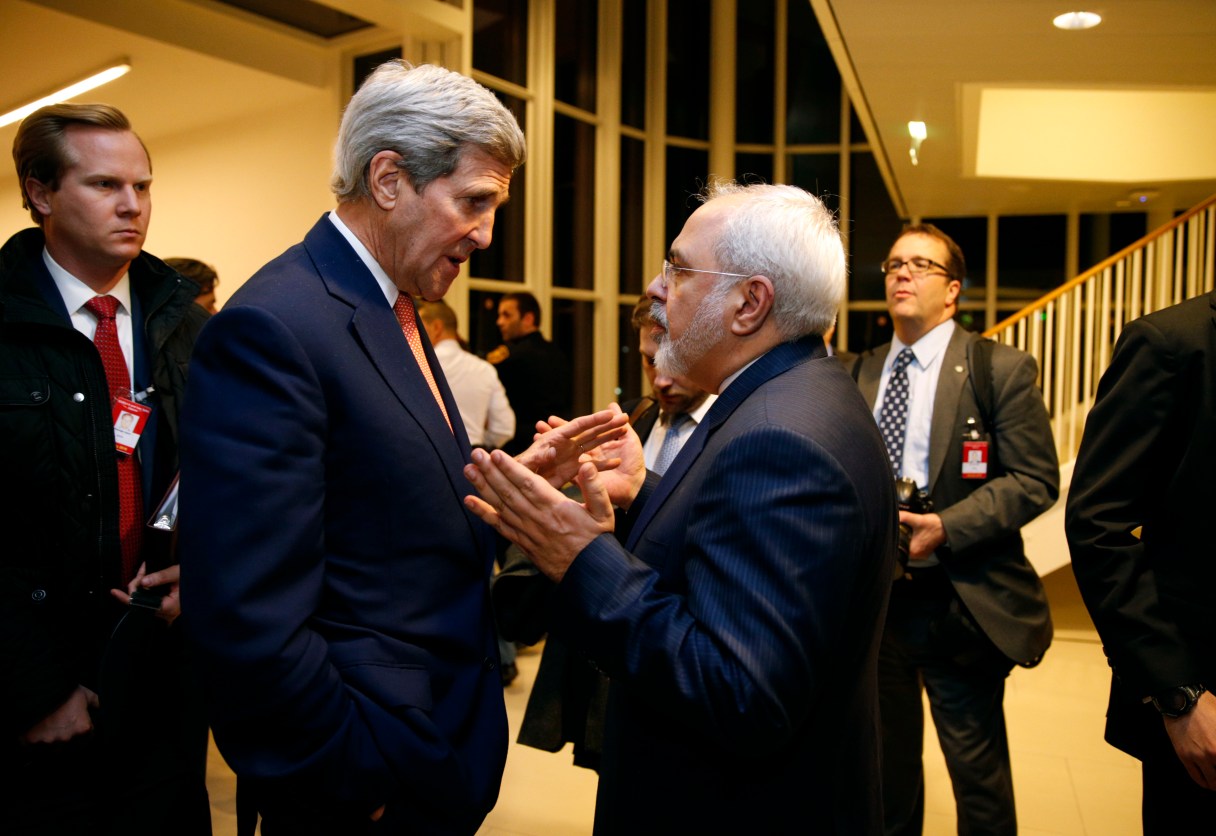
FILE - In this Jan. 16, 2016 file-pool photo, Secretary of State John Kerry talks with Iranian Foreign Minister Mohammad Javad Zarif in Vienna, after the International Atomic Energy Agency (IAEA) verified that Iran has met all conditions under the nuclear deal. The Iran nuclear accord is fragile at its one-year anniversary. Upcoming elections in the U.S. and Iran could yield new leaders determined to derail the deal. The Mideast’s wars pit U.S. and Iranian proxies in conflict, with risks of escalation. Iran's ballistic missiles are threatening American allies in the Arab world and Israel, raising pressure on the United States to respond with force. (Kevin Lamarque/Pool via AP, File)
FILE - In this Jan. 16, 2016 file-pool photo, Secretary of State John Kerry talks with Iranian Foreign Minister Mohammad Javad Zarif in Vienna, after the International Atomic Energy Agency (IAEA) verified that Iran has met all conditions under the nuclear deal. The Iran nuclear accord is fragile at its one-year anniversary. Upcoming elections in the U.S. and Iran could yield new leaders determined to derail the deal. The Mideast’s wars pit U.S. and Iranian proxies in conflict, with risks of escalation. Iran's ballistic missiles are threatening American allies in the Arab world and Israel, raising pressure on the United States to respond with force. (Kevin Lamarque/Pool via AP, File) FILE - In this Jan. 16, 2016 file-pool photo, Secretary of State John Kerry talks with Iranian Foreign Minister Mohammad Javad Zarif in Vienna, after the International Atomic Energy Agency (IAEA) verified that Iran has met all conditions under the nuclear deal. The Iran nuclear accord is fragile at its one-year anniversary. Upcoming elections in the U.S. and Iran could yield new leaders determined to derail the deal. The Mideast’s wars pit U.S. and Iranian proxies in conflict, with risks of escalation. Iran's ballistic missiles are threatening American allies in the Arab world and Israel, raising pressure on the United States to respond with force. (Kevin Lamarque/Pool via AP, File)

WASHINGTON (AP) – The Iran nuclear accord is fragile at its one-year anniversary.

Upcoming elections in the U.S. and Iran could yield new leaders determined to derail the deal. The Mideast’s wars pit U.S. and Iranian proxies in conflict, with risks of escalation. Iran’s ballistic missiles are threatening the Middle East, raising pressure on the United States to respond forcefully.

But for now, the seven-nation nuclear pact is holding. Washington and Tehran are expanding cooperation beyond any level imaginable back when the Iranians were edging closer to nuclear weapons capability. And Boeing’s recent announcement of a multibillion-dollar plane deal with Iran Air suggests some of the agreement’s early problems may be working out.

“It really wasn’t long ago that we saw a rapidly expanding nuclear program in Iran, only months away from having enough weapons-grade uranium to build 10 to 12 nuclear weapons, and we were on the cusp of confrontation,” Secretary of State John Kerry said recently.

“We have changed the strategic equation.”