
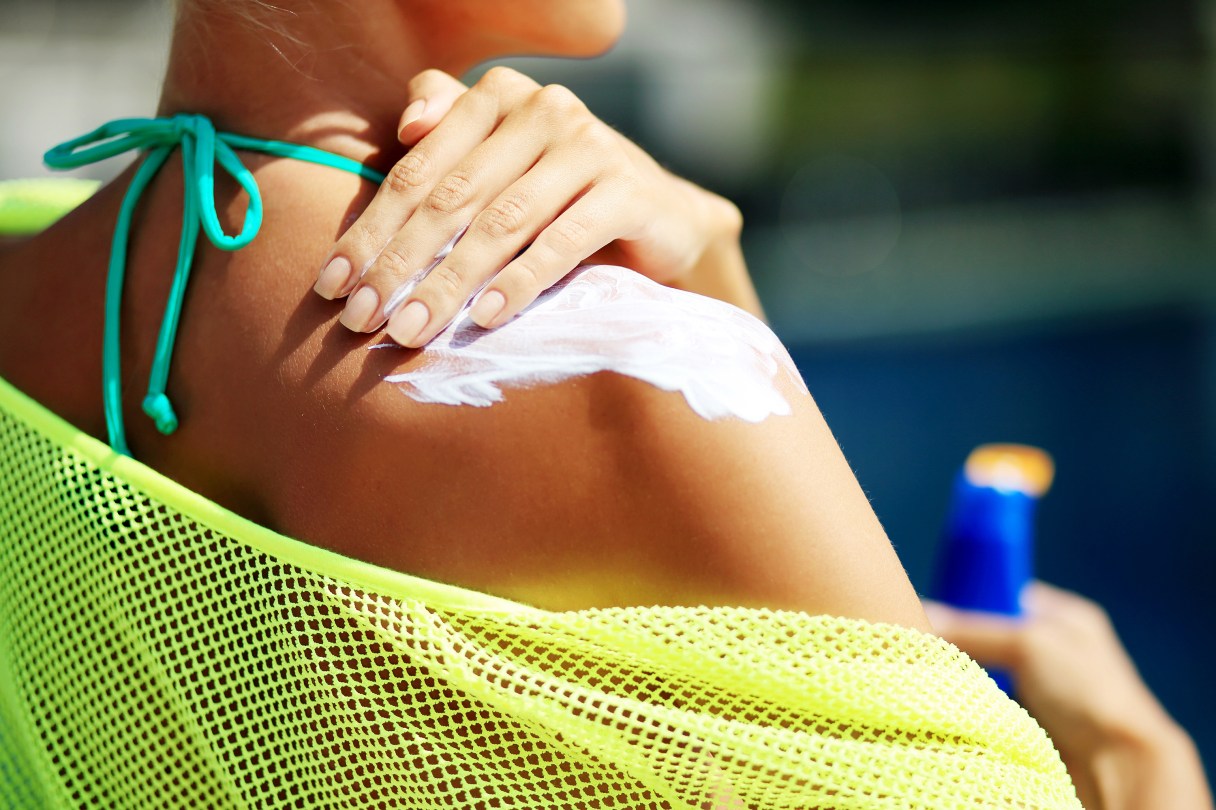
 That sunscreen in your bag may not protect your skin as much as you think. Even after regulators updated standards for labeling sunscreen in 2012, tests have shown many provide far less protection than advertised. (AP Photo/David Goldman, File)
Sunscreens recommended by Consumer Reports
› Pure Sun Defense SPF 50 Disney Frozen› Coppertone Water Babies SPF 50› Equate Ultra Protection SPF 50› No-Ad Sport SPF 50› Ocean Potion Protect & Nourish SPF 30› Aveeno Protect + Hydrate SPF 30› Banana Boat Sun Comfort Continuous Spray SPF 50+› Neutrogena Beach Defense Water + Sun Protection SPF 70› Caribbean Breeze Continuous Tropical Mist SPF 70› Equate Sport Continuous Spray SPF 30› DG Body Sport SPF 30 (spray)› Coppertone Kids Stick SPF 55› Up & Up Kids Stick SPF 55› Avon Sun + Sunscreen Face Lotion SPF 40› Up & Up Ultra Sheer SPF 30For the Natural Ingredient Lovers, Consumer Reports Deputy Content Editor Trisha Calvo offered this tip: “Chemical sunscreens can irritate some people’s skin. If you want to use a mineral sunscreen, consider Cotz Plus SPF 58 (which delivered an SPF 38 in our tests) or California Baby Super Sensitive SPF 30+, which met its SPF. Another option is to look for a chemical sunscreen that does not contain oxybenzone, which can cause negative skin reactions. One on our Recommended list is Ocean Potion Protect & Nourish SPF 30.”
Sunblock is supposed to protect humans from more than wrinkles. It’s supposed to protect human life from cancerous melanoma. But this month, the sunscreen industry received a one-two punch from two respected watchdogs.
Consumer Reports tested 40 water-resistant sunblocks and found that 40 percent failed to offer the SPF protection claimed on their labels. Consumer Reports named names – Banana Boat Kids Tear-Free Sting-Free Lotion SPF 50 and CVS Kids Sun Lotion SPF 50 each had an actual SPF of 8.
There also was alarming news for Americans who love natural ingredients and regard the minerals zinc oxide and titanium dioxide as the gold standards for sunscreens. Consumer Reports found a stunning 74 percent of mineral sunscreens failed to have the SPF protection they claimed. A July article by the organization told readers that 2016’s “results aren’t a fluke; we’ve observed this pattern over the past four years.”
Americans might be shocked to learn that the Food and Drug Administration views sunscreen as an over-the-counter drug that must be regulated and tested. Yet the FDA does not test sunscreens. Manufacturers test their own products. They are not required to share the results with the FDA unless ordered to. Companies only have to test a sunscreen when a product launches or is reformulated. The sunscreen industry seems aware of the inherent conflict of interest but also pragmatic.
“The FDA simply doesn’t have the financial resources or enough staffers to test all the sunscreen products out there,” said Jay Sirois, director of regulatory and scientific affairs for the Consumer Healthcare Products Association, whose members include sunscreen makers. “Our members comply with the testing guidelines the FDA has set for the products.”
Getting worse
As climate changes brings more hotter, cloudless days each year, good sunblock becomes more crucial. This month, the bipartisan nonprofit Climate Central (staffed by scientists from Princeton, Harvard, Stanford and Cornell, among others) released a study ranking the 200 U.S. cities whose climates are getting hotter the fastest. Chattanooga ranked sixth, far ahead of 19th-ranked Atlanta and even ahead of the desert city of Tucson, Ariz., at seventh. The climate study broke in the wake of the hottest June ever recorded in the United States and as a heat dome clamped down on the Southeastern U.S. almost to Chattanooga.
“There are manmade factors and geographical features that are causing some cities like Chattanooga to warm faster than other Southern cities – for example, a city’s rapid downtown development can have more impenetrable asphalt surfaces reflecting heat from the sun and fewer green spaces,” says Climate Central senior scientist Alyson Kenward. “Winters and springs are getting hotter in Tennessee annually. Tennessee is getting hotter faster than the 50 states.”
Such changes translate into increased skin cancer risks according to a 2009 Journal of the Royal Society of Medicine paper. British doctors then consoled themselves that European sunscreen is equipped to protect Brits from fiercer sunshine.
Americans cannot be that confident. U.S. sunscreens are made with completely different ingredients from European sunblocks and tested in a very different way. This disturbs researchers at the Environmental Working Group, a Washington, D.C.-based nonprofit where Sonya Lunder studies toxic chemicals in food, water, air and consumer products. The EWG does its own test of sunscreens each year focused on which products contain potential toxins and carcinogens.
In Europe, there are 27 chemical ingredients – tested by government entities for safety and effectiveness – that manufacturers can choose from to create potent sunscreens, says Lunder, who holds a master’s of public health in environmental health sciences from the University of California-Berkeley.
“In the United States, there are only 17 chemicals the FDA has approved for use in sunscreens,” Lunder says by phone from Denver. “And the FDA does not test sunscreen. In America, manufacturers test sunscreen. They don’t even have to share the results with the FDA unless they are asked to do so.
“It’s very hard to get a new ingredient approved by the FDA. It takes a long time. The FDA regards sunscreen as an over-the-counter drug. There are more effective ingredients being used in European sunscreen that have not been approved by the FDA for use in American sunscreen.”
She agrees with Consumer Reports’ recommendation that Americans continue to use sunscreen with an SPF of 40 or higher to get at least minimal protection.
“My advice is always wear a hat outdoors. Always,” Lunder adds.
Locally
Local dermatology Dr. Cara Hennings, who specializes in both adult and pediatric dermatology, says she will continue to wear sunscreen whenever she goes outdoors. But she emphasizes that additional protection is critical and includes using shade from trees, buildings and umbrellas as refuge from the sun, especially if you have a baby with you. Bald Chattanoogans should slather sunscreen on their scalps, she says, hats for everybody else.
“Always remember to use sun-protective clothing, hats and shade in addition to the sunscreens,” Hennings says. “Babies less than 6 months old should use more of the mineral sunscreens and try to avoid direct sunshine.
“There are UV bracelets that let you know with color changes when to reapply sunscreen. Most people don’t use sunscreen correctly because they forget to reapply or don’t apply enough. This will help you remember to reapply but you could use an alarm on your phone to remember to reapply every two hours. Put it on 15 to 20 minutes before going outdoors.”
Hennings also keeps track of promising new developments in sun protection, including a sunscreen pill.
“The sun protection pill contains polypodium leucotomos that is a powerful antioxidant,” she says, noting that tests indicate that it seems to be safe. “It can possibly help with sun protection, but sunscreens need to be used as well.
“I use sunscreen sticks on my kid’s face,” she says. “I use sprays after swimming and do two coats. I am careful not to breathe it in. I look for broad spectrum, greater than 40 SPF and 80-minute water resistant when I am going to be out for a long time.”
Contact Lynda Edwards at 423-757-6391 or ledwards@timesfreepress.com.