
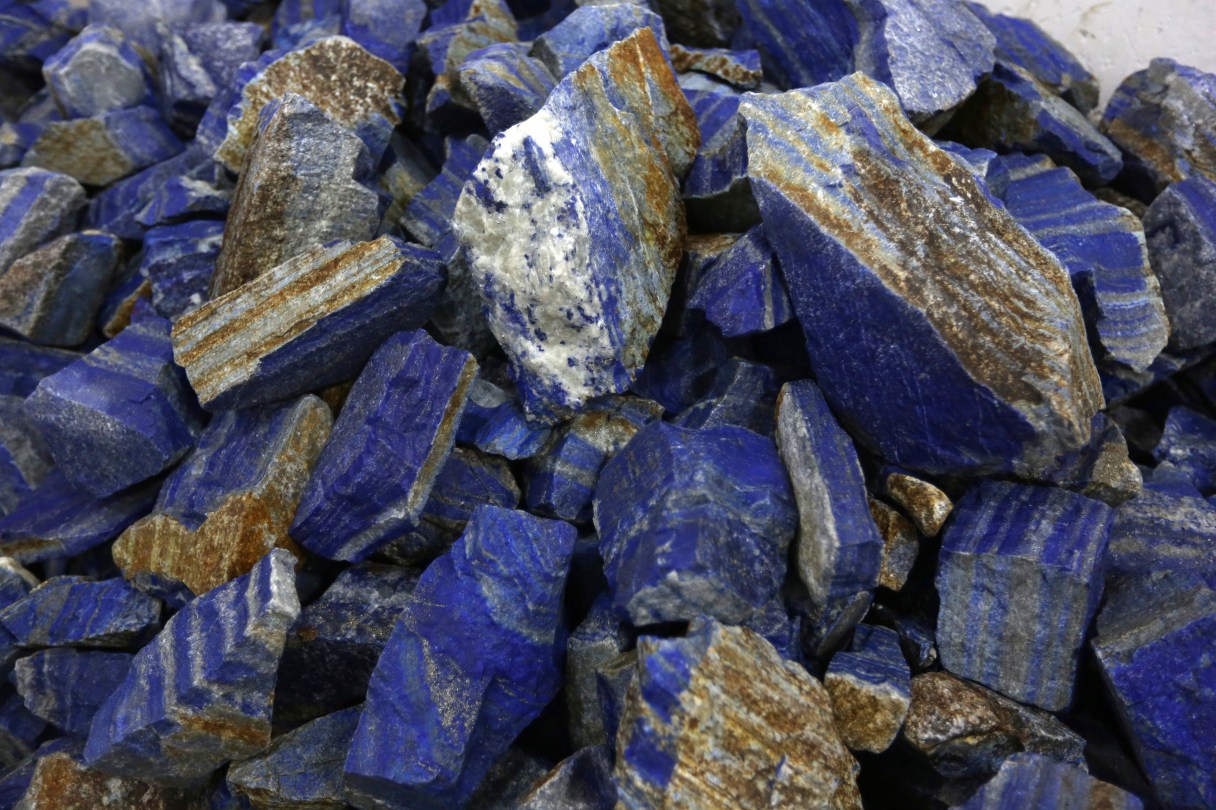
KABUL, Afghanistan (AP) – Afghanistan’s mineral wealth is helping fuel the war that has long ravaged the country, with armed anti-government groups – including the Taliban – earning up to $20 million a year from illegal mining of lapis lazuli, a London-based corruption watchdog said on Monday.
The group, Global Witness, appealed in its new report to have lapis lazuli, a blue stone almost unique to Afghanistan, classified as a “conflict mineral.”
The lapis lazuli mines are mostly concentrated in northern Badakhshan province where the stone has been mined for centuries for use in jewelry and ornaments, prized for its bright blue hues. The province has been “deeply destabilized” by violent competition for control of the mines between local strongmen, law makers and the Taliban, Global Witness said.
Badakhshan is also a microcosm of what is happening across the country, as mining has become the Taliban’s second biggest source of income, after drugs. The Taliban, who have been fighting to overthrow the Kabul administration for 15 years, control the production of opium poppies, mostly in the southern province of Helmand, the raw material for most of the world’s heroin. The drugs trade is worth up to $3 billion a year, experts have said.
Afghanistan’s mineral and petrochemical assets are believed to be worth billions of dollars, but the government does not have the money or expertise to develop them, and international firms are deterred by the deteriorating security situation.