
Wednesday, November 11, 2026Nov 11

Lancome shuts Hong Kong shops as ‘kowtow’ controversy grows

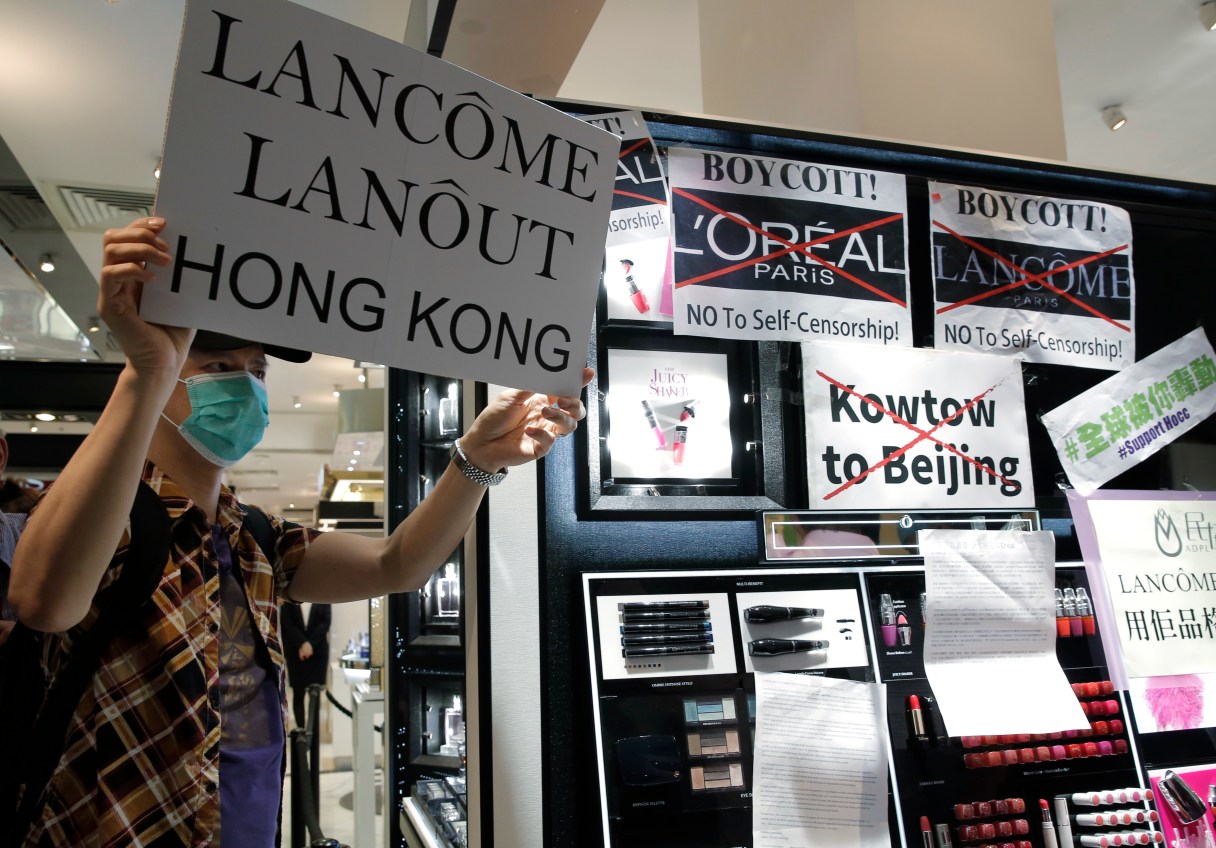
A protestor displays a placard at a Lancome counter inside a department store at Hong Kong's Times Square, Wednesday, June 8, 2016. French cosmetics company Lancome has sparked a backlash in Hong Kong after it canceled a promotional concert featuring a singer known for pro-democracy views, with many accusing it of caving in to political pressure from Beijing. (AP Photo/Kin Cheung)
A protestor displays a placard at a Lancome counter inside a department store at Hong Kong's Times Square, Wednesday, June 8, 2016. French cosmetics company Lancome has sparked a backlash in Hong Kong after it canceled a promotional concert featuring a singer known for pro-democracy views, with many accusing it of caving in to political pressure from Beijing. (AP Photo/Kin Cheung) A protestor displays a placard at a Lancome counter inside a department store at Hong Kong's Times Square, Wednesday, June 8, 2016. French cosmetics company Lancome has sparked a backlash in Hong Kong after it canceled a promotional concert featuring a singer known for pro-democracy views, with many accusing it of caving in to political pressure from Beijing. (AP Photo/Kin Cheung)

HONG KONG (AP) – Lancome has shut all its Hong Kong shops for a day as protesters accused the cosmetics brand of kowtowing to Beijing when it scrapped a promotional event featuring an activist singer.

The company sparked a backlash in Hong Kong with its cancellation of Denise Ho’s mini-concert. The move apparently came in response to criticism by Chinese nationalist newspaper Global Times that led to calls to boycott the brand in mainland China.

Several dozen protesters marched to an unstaffed Lancome counter in a downtown department store Tuesday and taped up signs accusing the company of self-censorship.

Ho, known for her support of Hong Kong’s pro-democracy movement, said in an interview that she was shocked that a multinational brand would give in to internet bullying and “obvious political pressure.”