
Thursday, November 12, 2026Nov 12

Venezuelans pick through trash for food to eat or sell

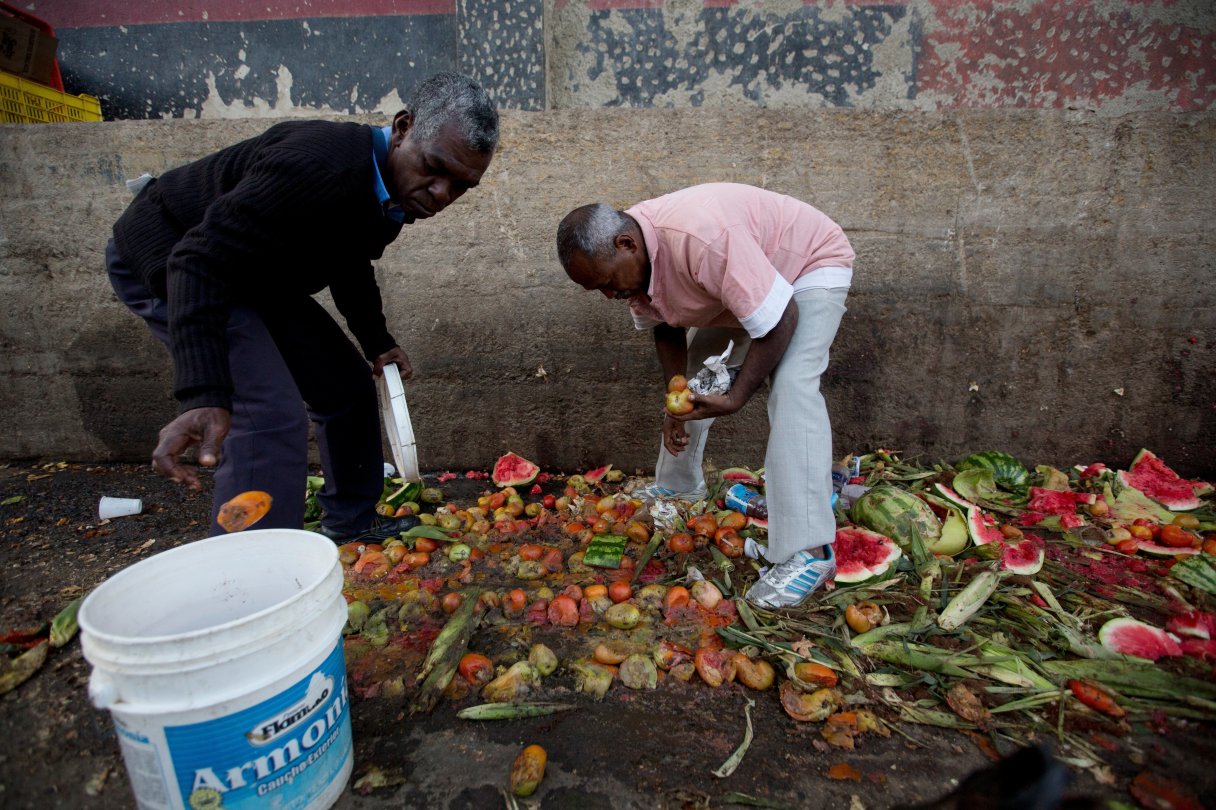
In this May 31, 2016 photo, Pedro Hernandez, left, and his friend Luis Daza, pick up tomatoes from the trash area of the Coche public market in Caracas, Venezuela. At Coche, even once middle class Venezuelans made desperate by the country's economic collapse have taken to sifting through the trash to resell or feed themselves on discarded fruits and vegetables. (AP Photo/Fernando Llano)
In this May 31, 2016 photo, Pedro Hernandez, left, and his friend Luis Daza, pick up tomatoes from the trash area of the Coche public market in Caracas, Venezuela. At Coche, even once middle class Venezuelans made desperate by the country's economic collapse have taken to sifting through the trash to resell or feed themselves on discarded fruits and vegetables. (AP Photo/Fernando Llano) In this May 31, 2016 photo, Pedro Hernandez, left, and his friend Luis Daza, pick up tomatoes from the trash area of the Coche public market in Caracas, Venezuela. At Coche, even once middle class Venezuelans made desperate by the country's economic collapse have taken to sifting through the trash to resell or feed themselves on discarded fruits and vegetables. (AP Photo/Fernando Llano)

CARACAS, Venezuela (AP) – Until recently, Julio Noguera worked at a bakery. But he now spends his evenings searching through the garbage for food.

“I come here looking for food because if I didn’t, I’d starve to death,” Noguera said as he sorted through a pile of moldy potatoes. “With things like they are, no one helps anyone and no one gives away meals.”

Across town, unemployed people converge every dusk at a trash heap on a downtown Caracas sidewalk to pick through rotten fruit and vegetables tossed out by nearby shops. They are frequently joined by small business owners, college students and pensioners – people who consider themselves middle class even though their living standards have long ago been pulverized by triple-digit inflation, food shortages and a collapsing currency.

Venezuela’s poverty had eased during the administration of the late President Hugo Chavez. But a study by three leading Caracas universities found that 76 percent of Venezuelans are now under the poverty line, compared with 52 percent in 2014.

Staples such as corn flour and cooking oil are subsidized, costing pennies at the strongest of two official exchange rates. But fruit and vegetables have become an unaffordable luxury for many Venezuelan families.