
More Info
Budget rundownHere’s a quick look at some of the numbers:General fund balance (basically, the county’s savings): $91 millionGeneral fund amount reserved for debt service obligations: $35 millionAmount of expenditures — roughly 62 percent — proposed for Department of Education: $417.7 million, plus another 3 percent of the overall budget in the form of debt service for capital projectsPercentage of expenditures that goes toward county employee salaries and benefits: 57Percent salary bump proposed for county employees: 2.5Amount of expenditures proposed for Hamilton County Sheriff’s Office: $33.5 million — a $1.9 million increasePercent property tax revenues are expected to grow by: 2.9, for an additional $3.9 million
More Info
Budget rundownThe general fund balance — basically, the county’s savings — currently amounts to about $91 million, said Hamilton County Mayor Coppinger. Of that amount, the county reserves $35 million for debt service obligations, he said.The proposed budget also calls for 62 percent of expenditures — $417.7 million — to go toward the Department of Education, Coppinger said. This represents an increase of $12 million over last year’s funding.Another 3 percent of the overall budget goes to the school system in the form of debt service for capital projects, he said.Proposed Hamilton County Sheriff’s Office expenditures amount to $33.5 million, representing a $1.9 million increase, which includes $606,000 for raises and $484,000 for eight school resource officers that had been paid for with grant money previously.Property tax revenues are expected to grow by $3.9 million, which amounts to a 2.9 percent increase, according to the budget proposal.Employee salary increases account for $2.65 million of the budget, Coppinger said. About 57 percent of the general fund budget goes toward employee salaries and benefits.Coppinger said the county still has 54 employees less than it had in 2011. That year, the county eliminated 57 positions and has only added three positions since then.About 12 percent of the proposed budget — $26.6 million — goes toward housing inmates.The 2017 budget timeline calls for the county commission to vote on the proposal on June 29.
Following Hamilton County Mayor Jim Coppinger’s presentation last week of the proposed budget for fiscal year 2017, county commissioners are reviewing the numbers before their vote on June 29.
The proposed $679.6 million budget amounts to a $14.3 million increase over last year, but doesn’t include a property tax increase or, for the second year in a row, county commissioner discretionary funds.
Last year, six commissioners voted to take $900,000 out of the county’s general fund balance to use as discretionary money after Coppinger left it out. The six commissioners – Chester Bankston, Tim Boyd, Randy Fairbanks, Jim Fields, Warren Mackey and Sabrena Smedley – also torpedoed Coppinger’s veto of the amended budget. Commissioners Gregory Beck, Joe Graham and Marty Haynes opposed the measure.
Neither Coppinger nor any of the seven commissioners attending the comprehensive budget workshop last week mentioned the absence of discretionary funds from the proposal.
“Everyone knows it,” Coppinger said after the meeting.
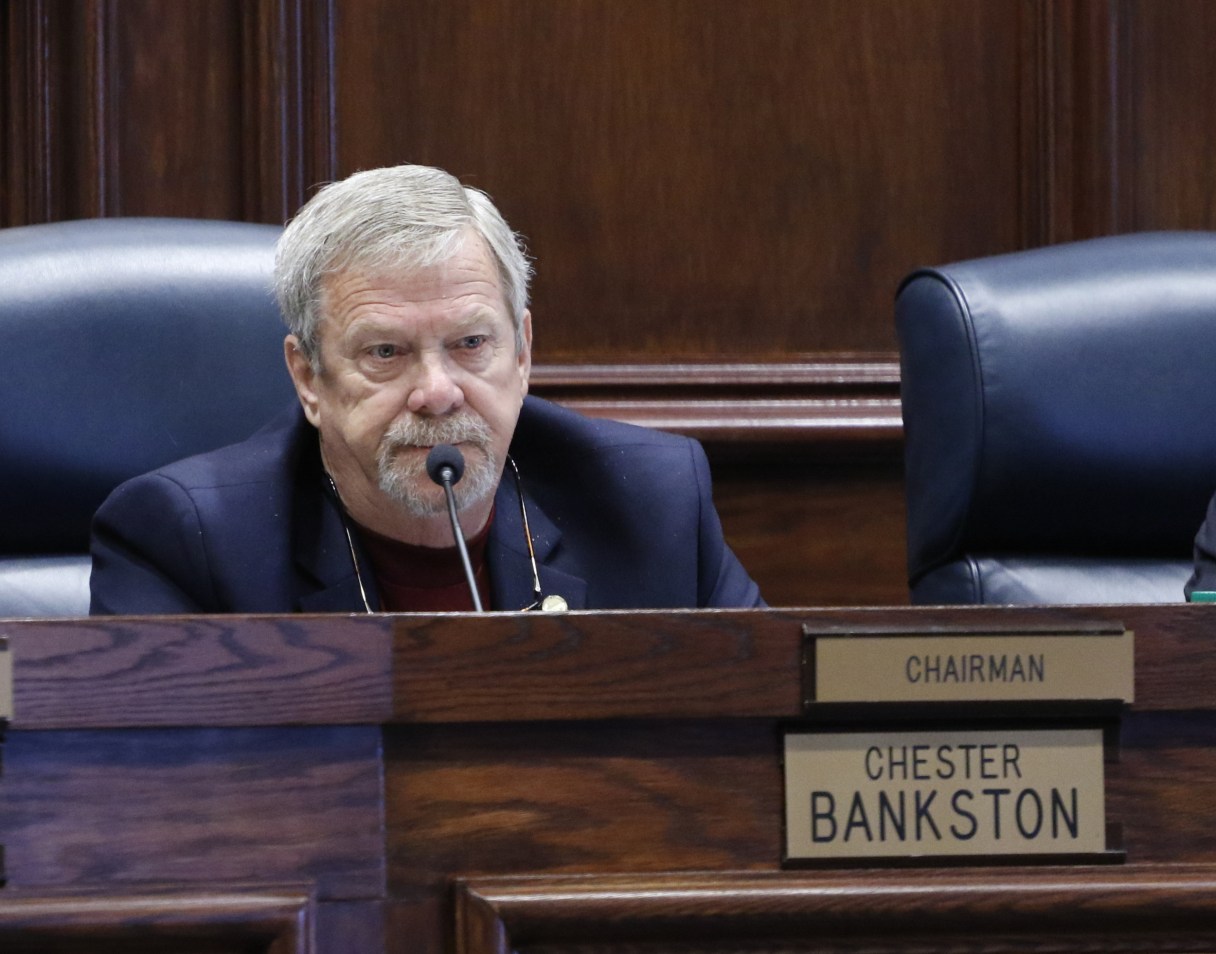
Bankston, commission chairman and District 9 commissioner, would not comment.
Last year, he said it was “the right thing do” after the divided commission voted to withdraw nearly $1 million from the general fund balance.
“I have so many projects in my district that just don’t get funded outside of discretionary spending,” Bankston said at that time. “I have the largest district. I have 11 schools in my district and every one of them gets a part of that money.”
In a followup interview after last week’s budget presentation, District 7 Commissioner Sabrena Smedley said she was not focusing on discretionary funding this year as long as the budget was balanced without any recommended tax increase.
“I’m very glad it was a balanced budget without a tax increase, and as far as discretionary funding goes, I’m not too concerned about that,” she said. “I was able to honor my commitments to finish using discretionary funding last year for projects that I had already started the year before: getting rid of the Porta Potties [for East Hamilton Middle/High School] and purchasing defibrillators.”
But it appears not all commissioners plan to leave the issue of discretionary funding alone.
In May, Boyd said he wanted to ask his colleagues what they thought about discretionary fund policies. He said he would request the commission’s legislative assistant to send emails to the other commissioners so he could gather their opinions.
He said the proposed email correspondence did not amount to a Tennessee Open Meeting Act violation because no deliberation would take place electronically. The proposed emails were only for informational purposes, Boyd argued, and the public could review them upon request.
In response to a Times Free Press request for those emails, Bankston said last week that no such emails were sent.
“I had it shut down as soon as I learned of it,” he said, explaining that the proposed email exchange does violate the state’s Open Meeting Act, also known as the Sunshine Law.
Boyd also said no emails were sent concerning discretionary funds.
“I was told it was a questionable violation of the Sunshine Law,” he said.
Boyd said he would now like to have a special meeting in which commissioners could decide whether discretionary spending is a good policy and “put the matter to bed for once and for all.”
Staff writer Gabrielle Chevalier contributed to this story.
Contact Paul Leach at pleach@timesfreepress.com or 757-6481