
Tuesday, November 10, 2026Nov 10

New for-profit medical schools springing up across US

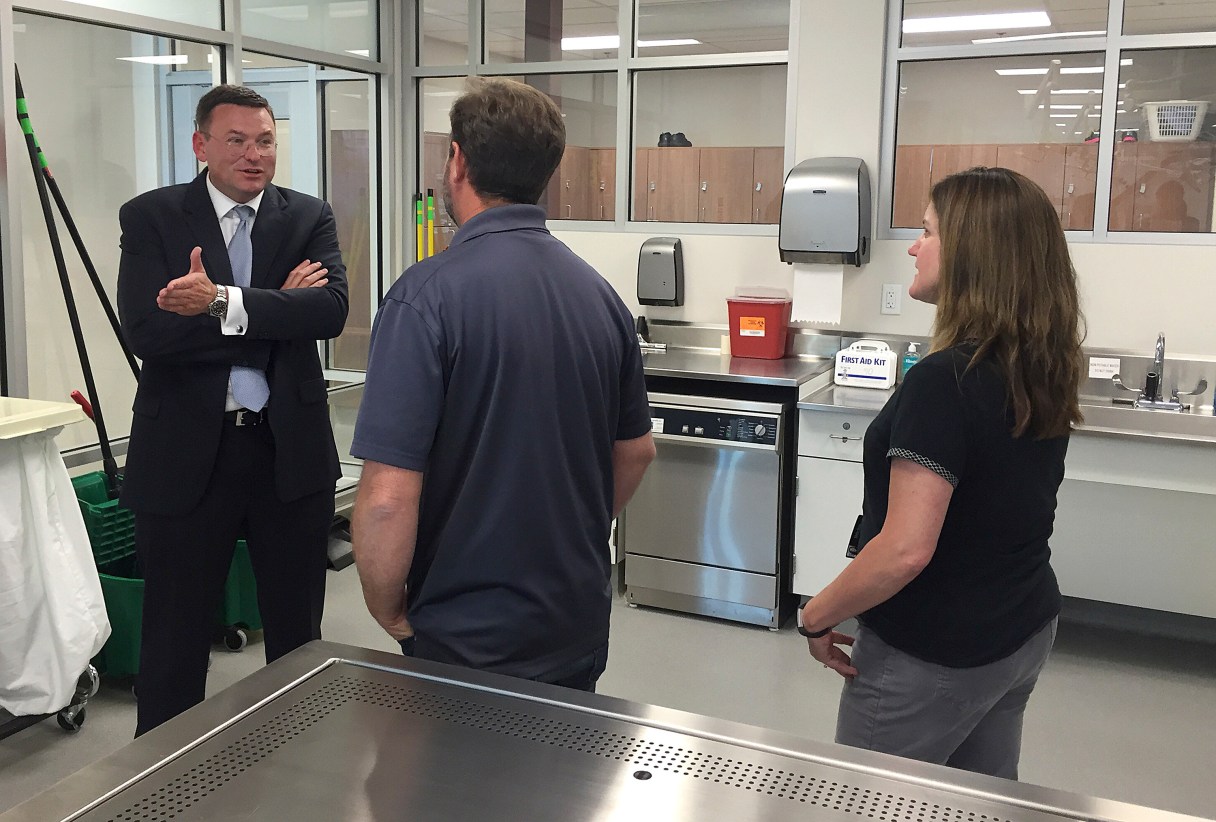
In this June 20, 2016 photo, Dr. Robert Hasty, the dean of the for-profit Idaho College of Osteopathic Medicine, talks with Idaho State University Meridian Health Science Center employees Chris Wilson, center, and Nancy Carpenter in Meridian, Idaho. ICOM and ISU have reached an agreement that will allow the for-profit school's students to use the public university's facilities when ICOM opens in 2018. (AP Photo/Rebecca Boone)
In this June 20, 2016 photo, Dr. Robert Hasty, the dean of the for-profit Idaho College of Osteopathic Medicine, talks with Idaho State University Meridian Health Science Center employees Chris Wilson, center, and Nancy Carpenter in Meridian, Idaho. ICOM and ISU have reached an agreement that will allow the for-profit school's students to use the public university's facilities when ICOM opens in 2018. (AP Photo/Rebecca Boone) In this June 20, 2016 photo, Dr. Robert Hasty, the dean of the for-profit Idaho College of Osteopathic Medicine, talks with Idaho State University Meridian Health Science Center employees Chris Wilson, center, and Nancy Carpenter in Meridian, Idaho. ICOM and ISU have reached an agreement that will allow the for-profit school's students to use the public university's facilities when ICOM opens in 2018. (AP Photo/Rebecca Boone)

BOISE, Idaho (AP) – For-profit medical schools are starting to pop up around the country, promising to create new family doctors for underserved rural regions.

Rural states like Idaho need more general practitioners, with the baby boom generation aging and expanded insurance coverage under the Affordable Care Act making health care more accessible. But critics of the new schools question whether companies can properly train the nation’s next crop of doctors.

“On face value, it looks like a pretty good deal” because for-profit schools promise to bring benefits without relying on taxpayer dollars, said Dr. Ted Epperly, who runs a family practice residency program in Boise, where a new for-profit school plans to start accepting students in 2018. “But it’s a little bit like Wal-Mart moving into a small community with mom-and-pop shops – it damages the existing workforce producers.”

Proponents contend challenges the new schools face are surmountable, and any stigma about for-profit medical training is born of fear, not fact. Dr. Robert Hasty, dean of the newly created Idaho College of Osteopathic Medicine, notes for-profit hospitals also were once stigmatized but now make up about a quarter of all U.S. hospitals.

“We have such a need for doctors, and if we have to make this investment, it’s worthwhile,” Hasty said.