
Thursday, October 29, 2026Oct 29

This story is free to read.

Senate blocks access to online data without warrant

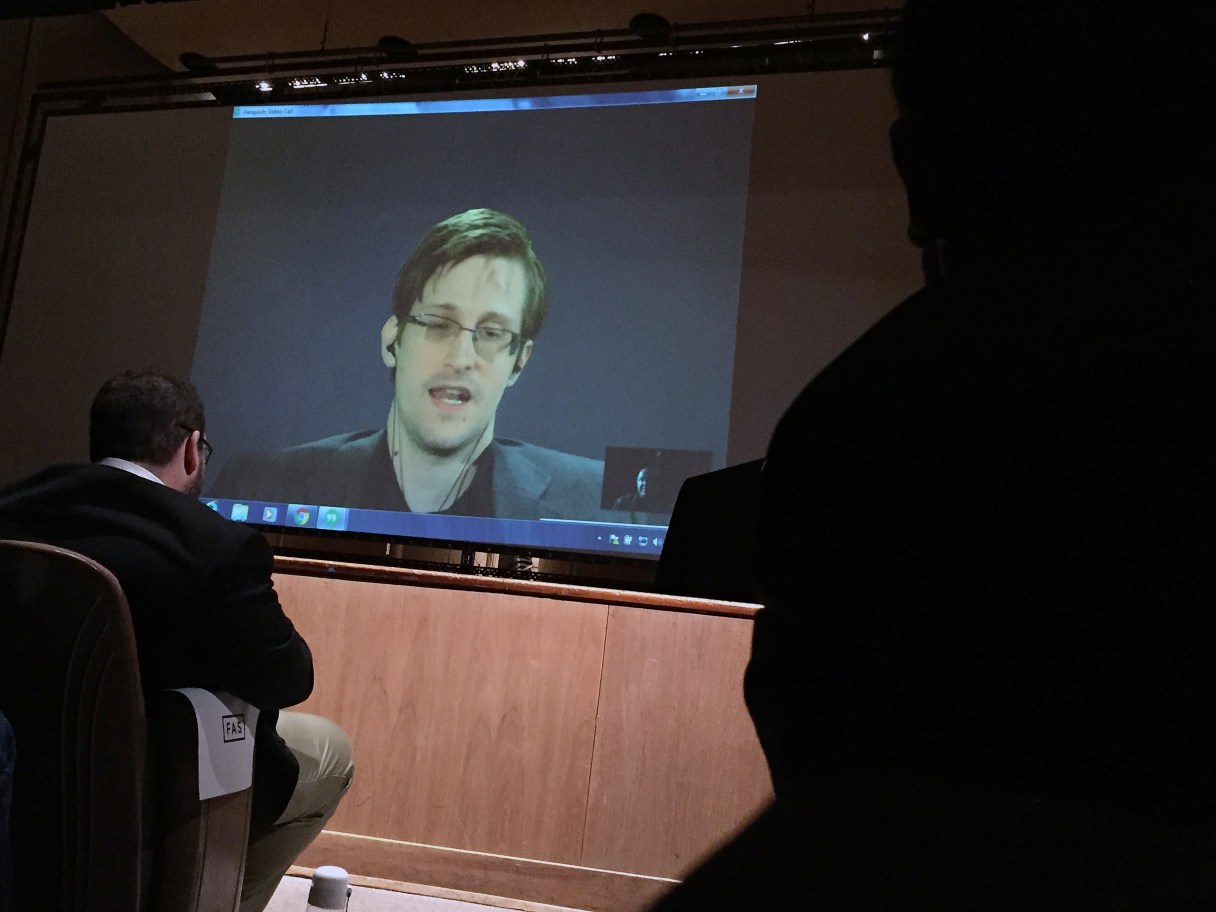
In this photo taken Feb. 17, 2016, former National Security Agency contractor Edward Snowden, center speaks via video conference to people in the Johns Hopkins University auditorium in Baltimore. The Senate on Wednesday, June 22, 2016, blocked an expansion of the government's power to investigate suspected terrorists, a victory for civil libertarians and privacy advocates emboldened after a National Security Agency contractor's revelations forced changes in how the communications of Americans are monitored.  (AP Photo/Juliet Linderman)
In this photo taken Feb. 17, 2016, former National Security Agency contractor Edward Snowden, center speaks via video conference to people in the Johns Hopkins University auditorium in Baltimore. The Senate on Wednesday, June 22, 2016, blocked an expansion of the government's power to investigate suspected terrorists, a victory for civil libertarians and privacy advocates emboldened after a National Security Agency contractor's revelations forced changes in how the communications of Americans are monitored. (AP Photo/Juliet Linderman) In this photo taken Feb. 17, 2016, former National Security Agency contractor Edward Snowden, center speaks via video conference to people in the Johns Hopkins University auditorium in Baltimore. The Senate on Wednesday, June 22, 2016, blocked an expansion of the government's power to investigate suspected terrorists, a victory for civil libertarians and privacy advocates emboldened after a National Security Agency contractor's revelations forced changes in how the communications of Americans are monitored. (AP Photo/Juliet Linderman)

WASHINGTON (AP) – The Senate on Wednesday blocked an expansion of the government’s power to investigate suspected terrorists, a victory for civil libertarians and privacy advocates emboldened after a National Security Agency contractor’s revelations forced changes in how the communications of Americans are monitored.

After the massacre at a gay nightclub in Orlando, Florida, senior Republicans had pressed for allowing the FBI to obtain a person’s digital fingerprints without first securing a judge’s permission. The mass shooting in Orlando on June 12 left 49 dead and 53 injured. The gunman had pledged allegiance to the Islamic State and other militant groups.

But the Senate rejected the amendment 58-38, two votes short of the 60 necessary to move ahead with the measure that would give federal law enforcement direct access to email and text message logs, internet browsing histories and other potentially sensitive online data.

“We aren’t asking for content, we’re asking for usage,” said Sen. John McCain, R-Ariz., in defense of the amendment that, if passed, would have been added to a Justice Department spending bill. “This is an important tool.”

Sen. Ron Wyden, D-Ore., opposed the amendment and decried what he said was the hypocrisy of defending gun rights while pushing for a measure that would undermine the constitutional prohibition against unlawful search and seizures. The Senate on Monday rejected plans to curb firearms, with many Republicans refusing to approve any legislation that would infringe on the broad right to bear arms.