
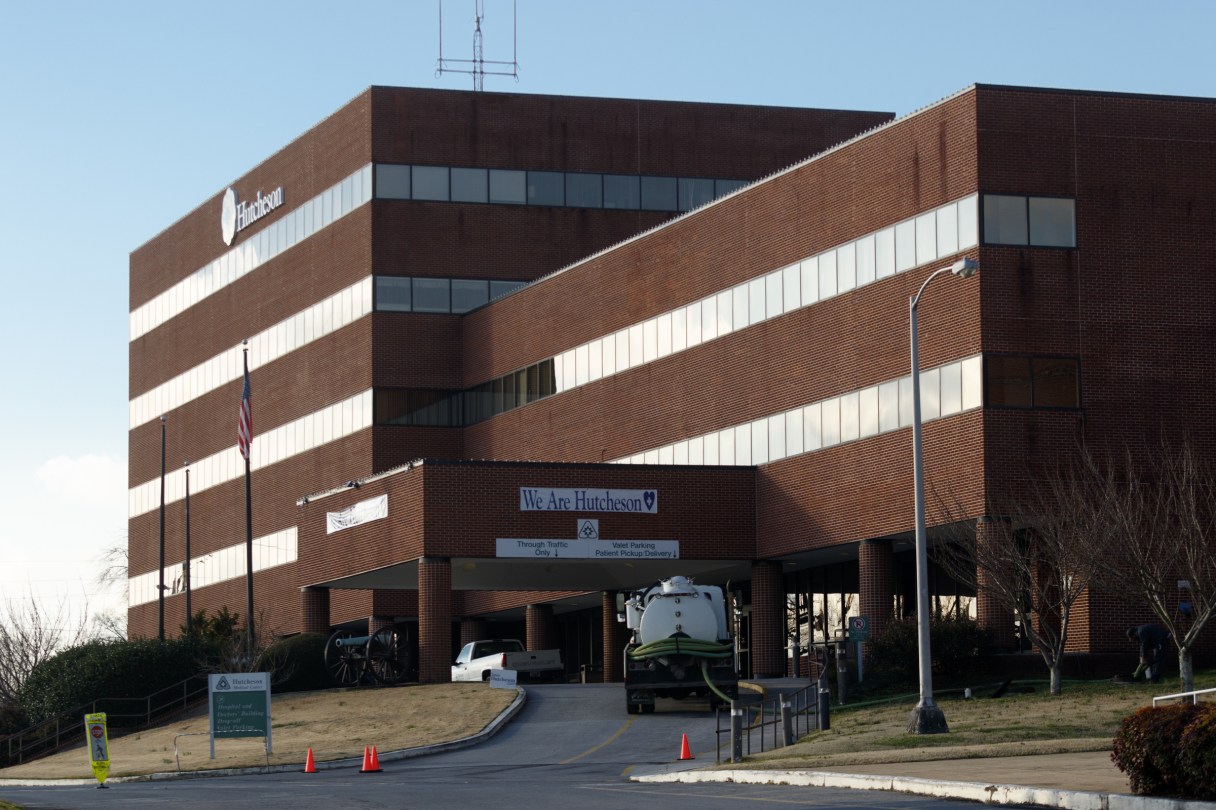
The fight between Erlanger Health System and Walker County, which began in the fall of 2013, will continue.
On Feb. 19, U.S. District Court Judge Harold Murphy denied the county’s motion to dismiss Erlanger’s $10 million suit against it, knocking down the county’s arguments that the Georgia Constitution grants local governments “sovereign immunity” from such lawsuits and that Erlanger had not given them enough advance notice that they would file this case.
“Sovereign immunity does not bar Erlanger’s claims in this action,” Murphy wrote in his ruling.
Erlanger is demanding the $10 million because the hospital’s leaders agreed to loan Hutcheson Medical Center $20 million as part of a management deal in April 2011. In an intergovernmental agreement at the time, the elected leaders of Catoosa and Walker counties each promised to guarantee half of that loan should Hutcheson fail to pay Erlanger back.
In January 2014, when Erlanger filed a lawsuit against a bankrupt Hutcheson demanding its money, Erlanger’s lawyers also told the leaders of Catoosa and Walker counties that this case was coming to court.
Though the judge paused the legal battle between Erlanger and Hutcheson when Hutcheson filed for bankruptcy in November 2014, Murphy wrote, the leaders of the counties still had plenty of time to know that Erlanger was going to ask them for their half of the $20 million loan.
Walker County’s attorneys also said Erlanger’s lawyers did not provide enough facts in their filing to support their claim that Walker County broke the terms of a contract. Likewise, they said the claims from Erlanger’s lawyers were too vague.
Murphy’s ruling also threw out those arguments, saying Walker County’s attorneys didn’t properly file them.
Stuart James, who represents Walker County, said following the ruling that he planned to respond to Murphy’s order. In particular, he said he would focus on Murphy’s rejection of Walker County’s argument that they are protected under “sovereign immunity.”
While the “sovereign immunity” clause of the Georgia Constitution protects local governments from certain lawsuits, Murphy wrote, it does not apply to broken contracts. Because Walker County signed an intergovernmental agreement to pay Erlanger $10 million if Hutcheson didn’t have the money, Murphy ruled, Walker County has to pay the $10 million.
“Walker County’s obligation to make payments under the Intergovernmental Agreement is absolute and unconditional,” Murphy wrote.
Said James: “I am going to litigate that issue more and flesh that out. Despite my respect for Judge Murphy, I think Walker County should enjoy sovereign immunity.”
Walker County had also argued that any lawsuit against it was premature. In part, this is because ApolloMD agreed in December to buy Hutcheson for $4.2 million. The final sale has not gone through yet, as ApolloMD’s leaders have to first satisfy some complicated legal requirements before they can take over a hospital.
But when the sale is final, Erlanger will get a chunk of that $4.2 million. And whatever money Erlanger gets will be counted as credit on that $20 million loan. Walker County leaders believe this will lower the total amount of money it owes Erlanger.
For their part, Erlanger leaders don’t believe this is true. Counting interest on the loan – which includes a $400,000 late fee every month – Erlanger leaders say the debt on the loan has swelled to $34 million. Walker County never promised to pay more than $10 million, so that extra money would not impact it. Still, Walker County will argue the total debt is nowhere near $34 million.
At any rate, Murphy wrote that none of this matters – at least not for this particular argument. The judge said the case between Erlanger and Walker County should not be delayed while ApolloMD dots the i’s on its purchase of Hutcheson.
“Those sales will be finalized long before this case is ripe for judgment,” Murphy wrote.
While Catoosa County also owes $10 million to Erlanger, the hospital has not pursued that money in court. Erlanger’s lawyers have hinted in filings the two sides are negotiating a settlement.
“Catoosa County appears willing to honor its obligations to Erlanger under the Intergovernmental Agreement without the necessity of litigation,” Erlanger’s lawyers wrote in their Dec. 28 filing against Walker County.