
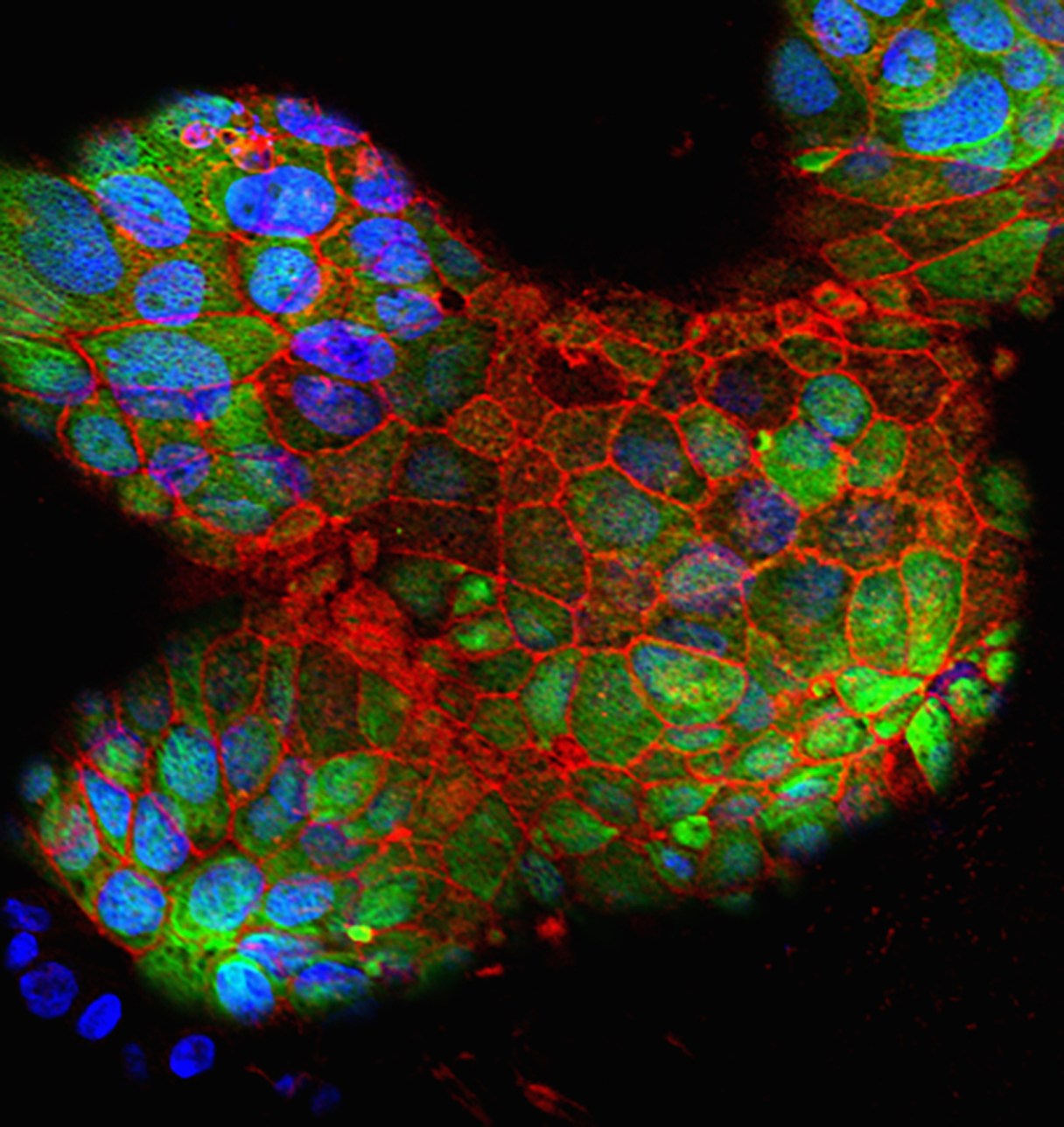
WASHINGTON (AP) – Researchers have created a cellular model of the human placenta to help uncover how infections, from toxoplasmosis to the Zika virus, may pass from a mother to her unborn child.
The placenta nourishes a growing fetus, among other critical roles, and yet it’s one of the body’s least understood organs. One of its jobs is to act as a protective barrier, but sometimes pathogens sneak past. Infections such as rubella, toxoplasmosis, syphilis and HIV are well known for harming fetuses; now the Zika virus rapidly spreading through Latin America is a strong suspect, too.
But “we still don’t understand how any of those pathogens actually reach the fetus,” or why that happens in one pregnancy but not another, said senior researcher Dr. Carolyn Coyne, a virologist at the University of Pittsburgh.
Now Coyne’s team has developed a way to test that question – growing a 3-D model of the placenta’s outer boundary, the barrier that forms in very early pregnancy.
Earlier attempts testing placental cells in lab dishes haven’t mimicked that boundary well enough to be of much use, Coyne explained. Her team succeeded in growing the cells into a 3-D structure that’s more like the real thing, the researchers reported Friday in the journal Science Advances. The trick was to grow them in a microgravity bioreactor developed by NASA, spinning the cells to mimic the forces of blood flow they’d normally experience in a mother’s body, Coyne explained.