
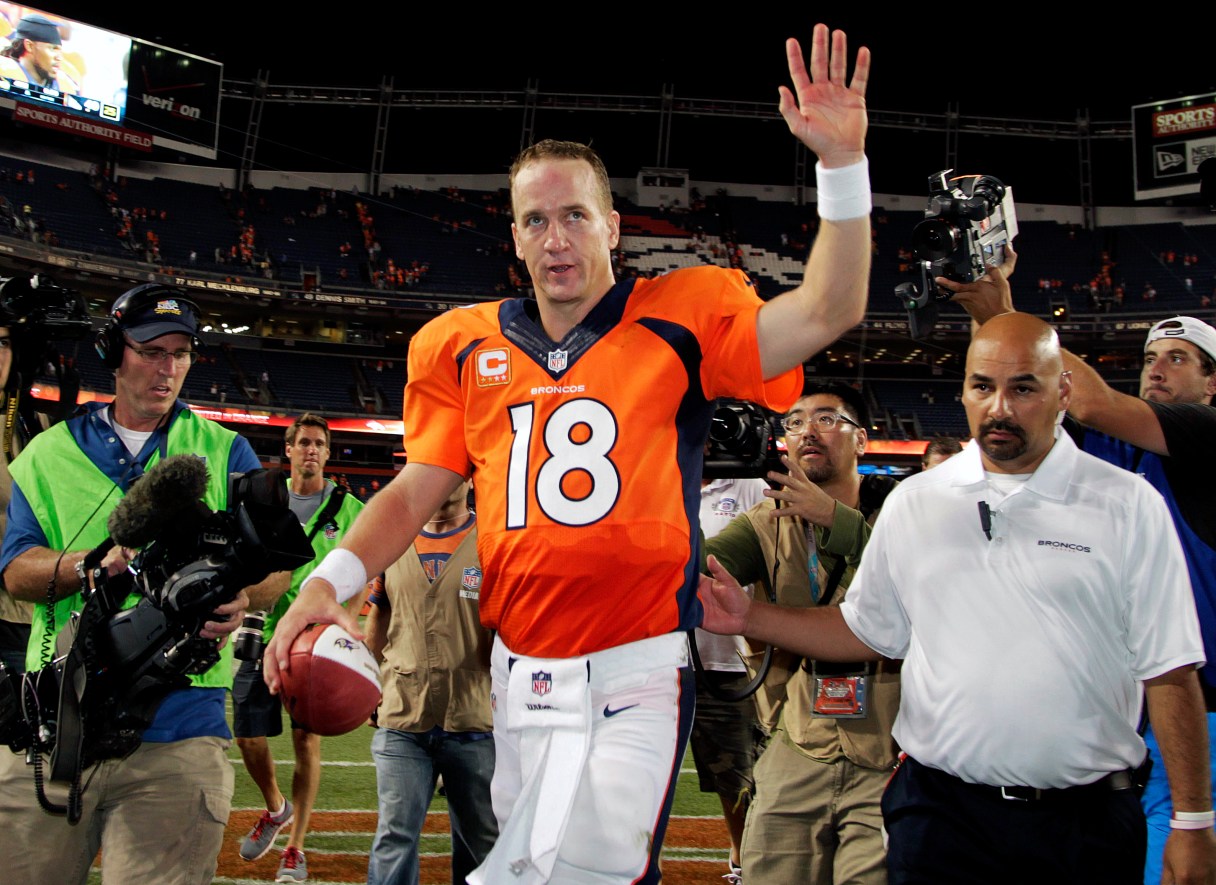
To find the true measure of what Peyton Manning meant to football, don’t bother poring over the highlights from his record 186 wins, or re-watching either of his Super Bowl victories, or looking at a single throw he made on his way to a record-setting 71,940 passing yards over 18 seasons.
Instead, simply wait ’til September. When it comes, pick any weekend, turn on any game – pro, college, high school – and watch quarterbacks lining up in the shotgun, changing plays at the line of scrimmage, dissecting defenses at will and rolling up numbers that were once deemed unthinkable.
All those quarterbacks are doing what Manning showed was possible. He created the passing game as we know it in 2016 and, in turn, forced defenses to adapt and disguise and get better. He won as much with his mind as his arm, and put as much work into Monday through Friday as he did when he suited up on Sunday.
“It’s not to say audibles didn’t exist before Peyton Manning came around, because they did,” said Tim Hasselbeck, the former NFL quarterback who is now an analyst for ESPN. “But he’d go to the line of scrimmage with the ability to get to the play that would be best for the defense out there. You look around the league at what other teams were trying to do, and they were trying to emulate what Peyton Manning was doing as a quarterback.”
Set on the notion that every defense had a weak spot, the Colts-turned-Broncos quarterback spent hours analyzing them, the way a wealth manager looks at stocks. Then, on Sundays, he tore them apart. His calls of “Omaha, Omaha” – whatever that meant – were as frustrating to the defenses as they were entertaining to those counting along at home.