
Wednesday, November 11, 2026Nov 11

From ‘welcome’ to ‘enough’ _ Europe’s migrant view shifts

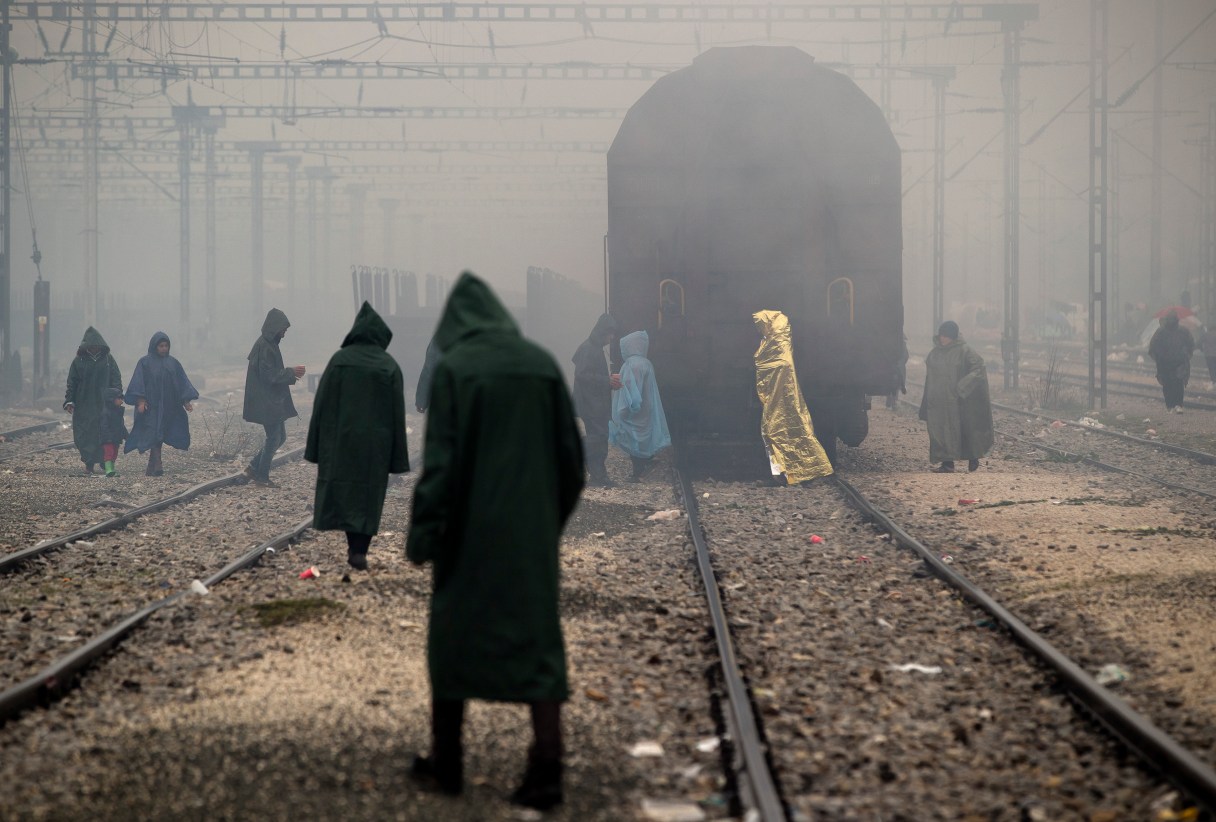
Migrants, one wearing a thermal blanket, walk on railway tracks at the northern Greek border station of Idomeni, Sunday, March 13, 2016. Bad weather returned after a brief pause and conditions in the refugee camp on the Greek-Macedonian where about 14,000 people are stranded have further deteriorated, many of its residents struggling struggling to cope with the many challenges posed by the heavy rain. (AP Photo/Vadim Ghirda)
Migrants, one wearing a thermal blanket, walk on railway tracks at the northern Greek border station of Idomeni, Sunday, March 13, 2016. Bad weather returned after a brief pause and conditions in the refugee camp on the Greek-Macedonian where about 14,000 people are stranded have further deteriorated, many of its residents struggling struggling to cope with the many challenges posed by the heavy rain. (AP Photo/Vadim Ghirda) Migrants, one wearing a thermal blanket, walk on railway tracks at the northern Greek border station of Idomeni, Sunday, March 13, 2016. Bad weather returned after a brief pause and conditions in the refugee camp on the Greek-Macedonian where about 14,000 people are stranded have further deteriorated, many of its residents struggling struggling to cope with the many challenges posed by the heavy rain. (AP Photo/Vadim Ghirda)

PARIS (AP) – Last fall, soccer fans celebrated refugee children at a legendary Munich stadium; today, European voters are boosting anti-immigrant political parties and governments are closing their gates to new arrivals. The refrain of Europe’s migrant crisis has changed from “welcome” to “enough already.”

Has Europe suddenly turned heartless? Or is it just waking up to the reality that it has failed to collectively manage this drama?

“It is not sustainable anymore that no one’s playing a common game,” said Yves Pascouau, a migration expert at the European Policy Center. “We need to fix this and really need to move ahead.”

But not all Europeans see this as a problem they must share. Worried about their own weak economies, concerned that their national values are eroding, many say war in the Middle East and poverty in Africa are someone else’s responsibility.

Compassion had the upper hand just six months ago, as the number of Syrian refugees soared and the photo of a dead 3-year-old on a Turkish beach galvanized volunteers. Border guards greeted weary travelers with a hearty “Welcome to Germany,” and Chancellor Angela Merkel inspired other nations to do the same. Players on the Munich field promoted integration, holding hands with a refugee child on one side and a German child on the other.