
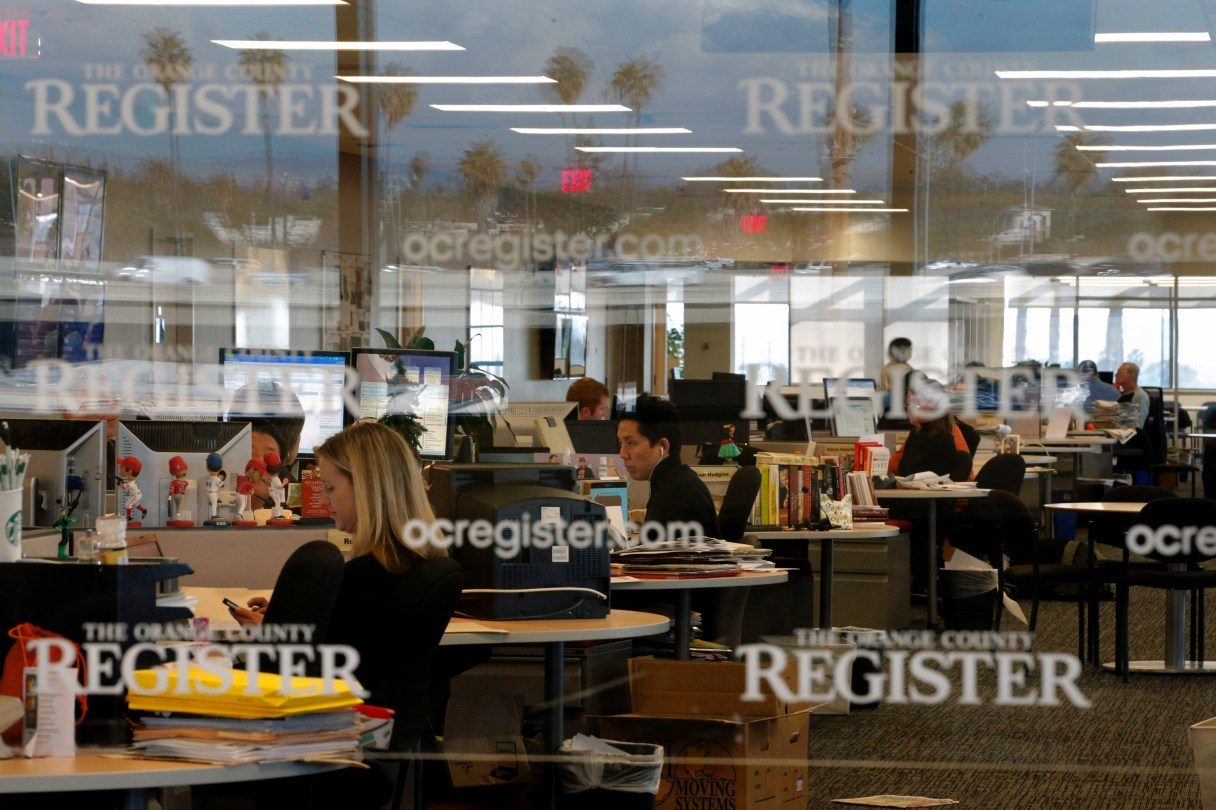
SANTA ANA, Calif. (AP) – Federal regulators who are suing to block Tribune Publishing Co. from buying the bankrupt Orange County Register and another Southern California newspaper over concerns of a news monopoly hold an “antiquated” understanding of the media market, the company said.
The media giant said Thursday it had prevailed in a bankruptcy auction for the Register and the Press-Enterprise of Riverside with an offer of $56 million,but the U.S. Department of Justice the same day moved to prevent the sale. The Tribune already operates the Los Angeles Times and San Diego Union-Tribune, which it purchased last year.
If it goes forward, it would give the company control of the four largest daily newspapers in Southern California, with as many as 1,000 journalists covering an area that stretches from Los Angeles to the Mexican border. It’s a region of 18 million people.
In court filings submitted Friday, Tribune objected to the U.S. Department of Justice’s “eleventh hour” interest in the deal, given that the media conglomerate was open about its interest as bankruptcy proceedings unfolded.
The company also complained that the government was relying on “severely outdated” notions of the media market and had cited 50- and 60-year-old legal cases from an era before digital publication in its bid to block the sale.