
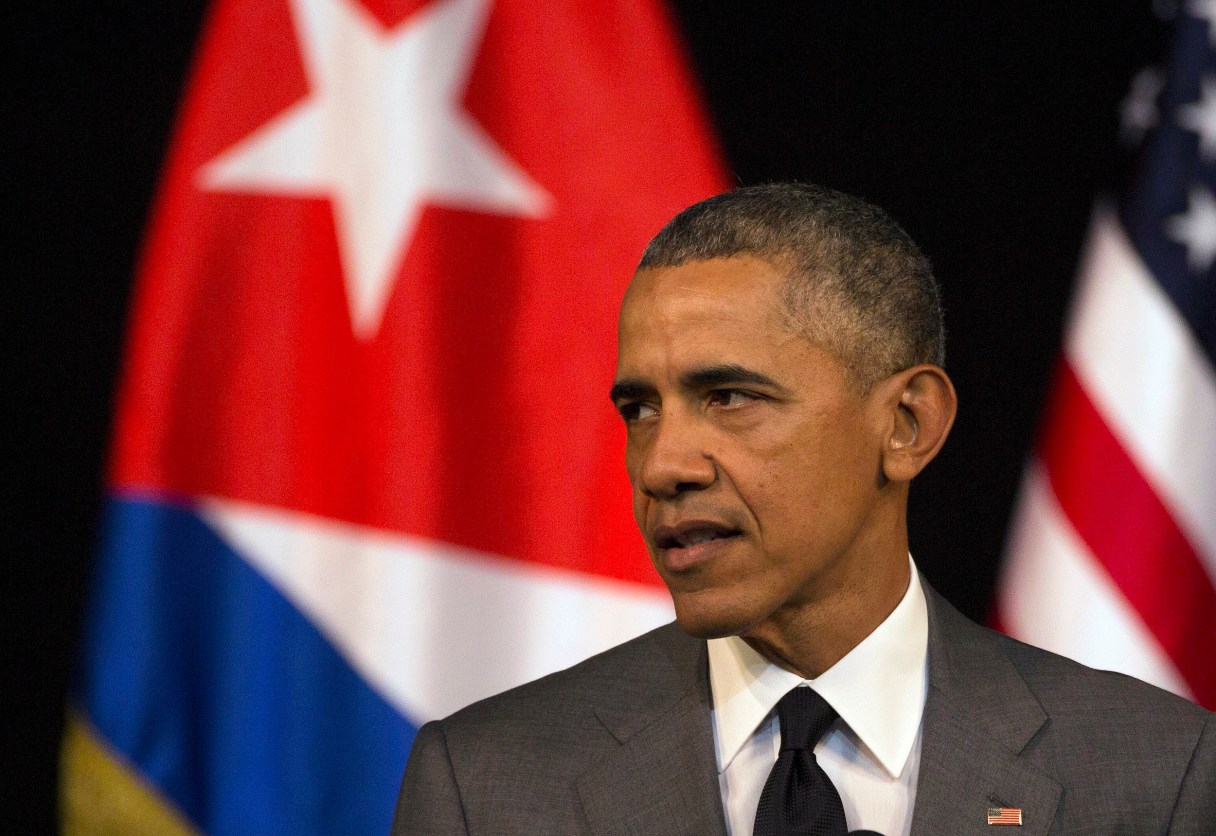
On Tuesday, America extended the hand of friendship to Cuba and its people. It was a day that has been far too long in the making.
Also read
* Chattanoogans with ties to Cuba weigh in on new era of diplomacy * Must-see TV: Cubans marvel at rare questioning of Castro* Cooper: Waiting for U.S. upside in Cuba* Obama, Castro lay bare tensions on embargo, human rights
If you weren’t born some years before 1962, this may not have much meaning for you. You may not remember the 14 days of dread that was the Cuban Missile Crisis. You won’t have the frozen faces of your teacher and your classmates etched in your mind from the seemingly endless drills of plunging beneath your desk when the school siren sounded. You won’t still feel your chest tighten when the History Channel plays old news clips from those chilling 1962 days between Oct. 14 and Oct. 28 when President John Kennedy and Soviet Premier Nikita Khrushchev did a stare-down over the installation of nuclear-armed Soviet missiles in Cuba just 90 miles from Florida.
The crisis began when an American U-2 spy plane making a high-altitude pass over Cuba on Oct. 14, 1962, photographed a Soviet SS-4 medium-range ballistic missile being assembled for installation. It escalated after Kennedy ordered a naval blockade around Cuba and threatened military force on the missile site to neutralize the weapons. The tension ended when the U.S. agreed to Khrushchev’s offer to remove the Cuban missiles in exchange for the U.S. promising not to invade Cuba. Kennedy also secretly agreed to remove U.S. missiles from Turkey.
Then for 54 years, we treated Cuba like an estranged brother. That was President Barack Obama’s analogy for the years lost to the barriers of history and ideology, pain and separation.
But Tuesday in Havana, in his speech to the Cuban people and Americans, the president made the case for celebrating our differences and our similarities: “Cuba is a one-party state, the United States is a a multi-party democracy. Cuba has a socialist economic model. The United States is an open market. Cuba has emphasized the role and rights of the state, the United States is founded upon the rights of the individual.”
On the other hand, we share religions, ethnicities, commitment to our children’s education and a sense of patriotism in our countries.
This time of reconciliation is indeed due for celebration. And democracy will likely rub off on Cuba.