
Monday, November 9, 2026Nov 9

US defense chief: NATO ponders ground force in Baltics

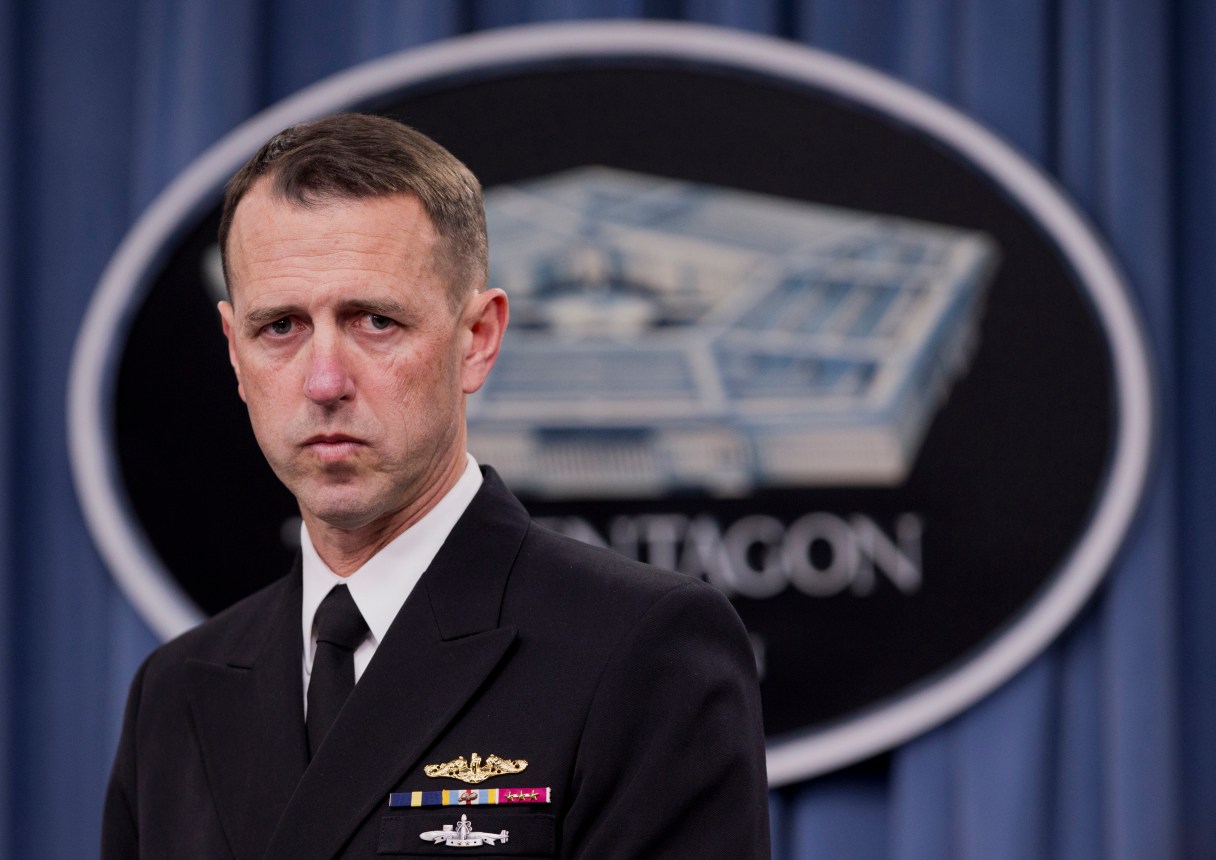
FILE - In this Feb. 4, 2014 file photo, Adm. John M. Richardson speaks during a news conference at the Pentagon. Russian jets buzzing a U.S. military ship and planes in the Baltics are escalating tension between the two nations, the chief of naval operations said Monday, May 2, 2016. “My hope is that we can stop this sort of activity,” Richardson told reporters at the Pentagon. (AP Photo/Manuel Balce Ceneta, File)
FILE - In this Feb. 4, 2014 file photo, Adm. John M. Richardson speaks during a news conference at the Pentagon. Russian jets buzzing a U.S. military ship and planes in the Baltics are escalating tension between the two nations, the chief of naval operations said Monday, May 2, 2016. “My hope is that we can stop this sort of activity,” Richardson told reporters at the Pentagon. (AP Photo/Manuel Balce Ceneta, File) FILE - In this Feb. 4, 2014 file photo, Adm. John M. Richardson speaks during a news conference at the Pentagon. Russian jets buzzing a U.S. military ship and planes in the Baltics are escalating tension between the two nations, the chief of naval operations said Monday, May 2, 2016. “My hope is that we can stop this sort of activity,” Richardson told reporters at the Pentagon. (AP Photo/Manuel Balce Ceneta, File)

STUTTGART, Germany (AP) – The NATO alliance is considering establishing a rotational ground force in the Baltic states and possibly Poland, reflecting deepening worry about Russian military assertiveness, U.S. Defense Secretary Ash Carter said Monday.

“That is one of the ideas that’s under discussion,” Carter told reporters flying with him from Washington to Stuttgart, Germany, where he is to preside Tuesday at a ceremony installing a new commander of U.S. European Command. Army Gen. Curtis Scaparrotti is to replace Air Force Gen. Philip Breedlove, who has frequently and publicly cautioned that Russia poses a potential threat to European stability.

Carter said the allies are considering a rotational ground force of four battalions, which would mean about 4,000 troops. That would be in addition to, and separate from, a recently announced unilateral U.S. decision to send a U.S. armored brigade of about 4,200 troops to Eastern Europe next February.

Carter said the idea of a separate NATO rotational ground force is likely to be further discussed at a NATO meeting in June.

Russia has accused the U.S. and NATO of returning to a Cold War mindset of mutual suspicion and military competition, even as it continues to buzz U.S. ships and planes in the Baltics.