
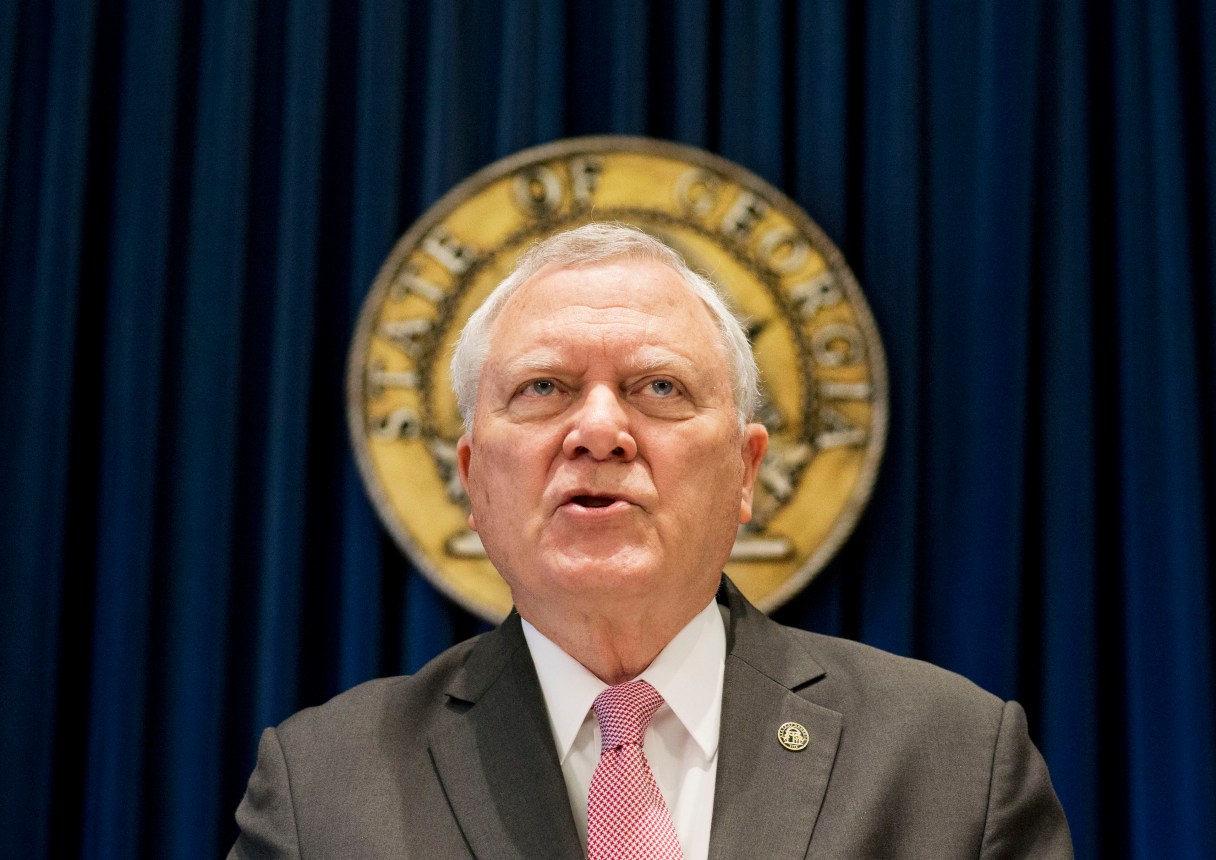
ATLANTA (AP) – Georgia’s Republican governor rejected the two top priorities of a legislature controlled by his own party this year, defying election year politics in a deep red state.
Gov. Nathan Deal, in his second and constitutionally limited final term, vetoed legislation that would have protected opponents of gay marriage just days after the close of the legislative session in March. But he waited until Tuesday, the last possible day to issue vetoes, to block another bill that would have allowed people over 21 and with state permits to carry concealed handguns on college campuses.
Both proposals were popular with the majority of Georgia’s Republican lawmakers. But opponents aggressively lobbied Deal to block the measures.
The state’s business community, with help from giants like Apple, the Walt Disney Co. and the NFL, mobilized against the religious exemption bill. The state’s powerful Board of Regents, which oversees the university system, and all 29 of its campuses’ presidents and police chiefs opposed the so-called campus carry measure.
In both cases, Deal offered lengthy, written veto messages, relying on legal precedents. And in both cases, he concluded that the bills weren’t necessary in Georgia.