
Friday, November 13, 2026Nov 13

Leopards have lost 75 percent of historic range, study shows

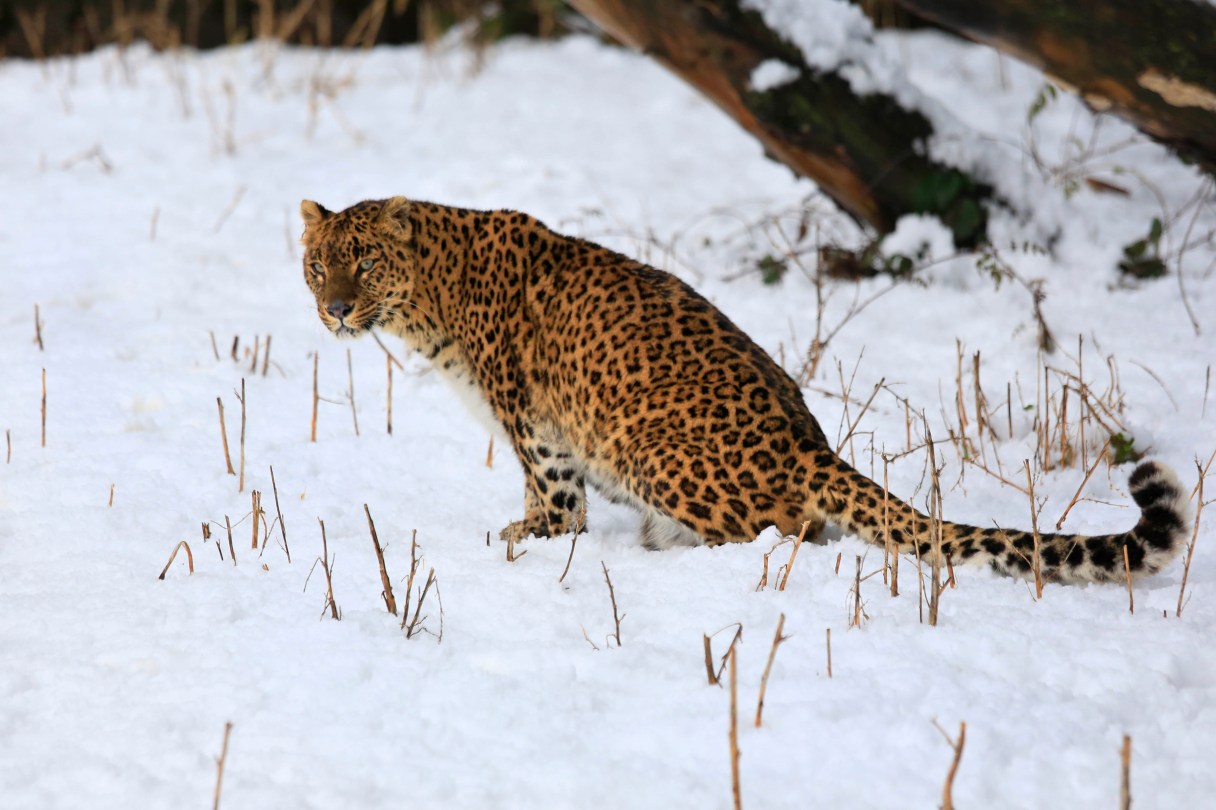
FILE - In this Thursday, Jan. 23, 2014 file photo, a female leopard sits inside a snow covered enclosure at Dachigam Wildlife Sanctuary, outskirts of Srinagar, India. A new study published Wednesday May 4, 2016 says leopards have lost 75 percent of their historic range across Africa, Asia and the Middle East, with three Asian subspecies facing eradication. (AP Photo/Dar Yasin, File)
FILE - In this Thursday, Jan. 23, 2014 file photo, a female leopard sits inside a snow covered enclosure at Dachigam Wildlife Sanctuary, outskirts of Srinagar, India. A new study published Wednesday May 4, 2016 says leopards have lost 75 percent of their historic range across Africa, Asia and the Middle East, with three Asian subspecies facing eradication. (AP Photo/Dar Yasin, File) FILE - In this Thursday, Jan. 23, 2014 file photo, a female leopard sits inside a snow covered enclosure at Dachigam Wildlife Sanctuary, outskirts of Srinagar, India. A new study published Wednesday May 4, 2016 says leopards have lost 75 percent of their historic range across Africa, Asia and the Middle East, with three Asian subspecies facing eradication. (AP Photo/Dar Yasin, File)

LAGOS, Nigeria (AP) – Leopards have lost 75 percent of their historic range across Africa, Asia and the Middle East, with three Asian subspecies in danger of eradication, a new study says.

A three-year review of data published in the scientific journal PeerJ this week challenges the conventional assumption that the iconic and famously elusive spotted cats are thriving in the wild.

It finds leopards have almost disappeared from vast ranges in China, Southeast Asia and the Arabian peninsula while African leopards confront mounting challenges in the north and west.

The big cats are threatened by spreading farmlands, declining prey, conflict with livestock owners, trophy hunting and illegal trade in their skins and teeth. Their skins are sometimes worn as a symbol of power by African chiefs, including South Africa’s President Jacob Zuma.

Their rangelands have shrunk from 35 million square kilometers (13.5 million square miles) in 1750 – before the colonization of Africa and the spread of firearms – to about 8.5 million square kilometers (3.3 million square miles) now, the study estimates.