
Tuesday, November 10, 2026Nov 10

Harvest season for biggest US producer of baby eels wraps up

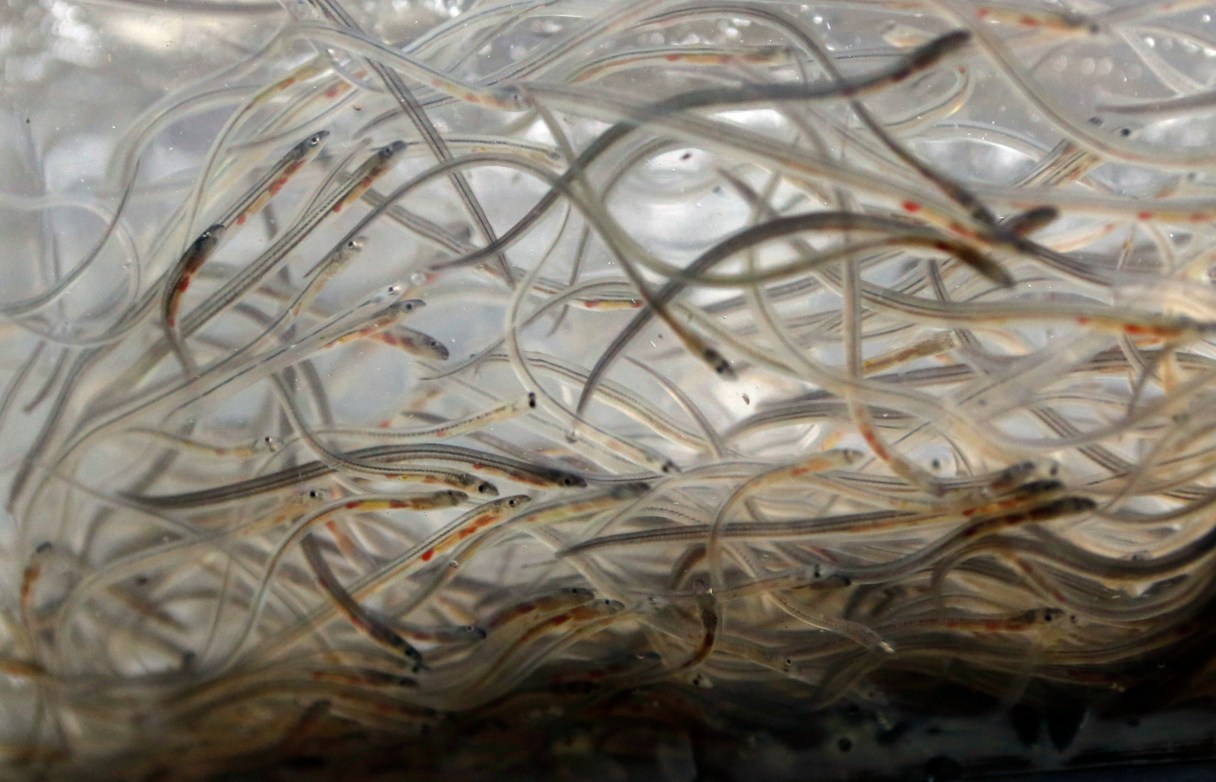
FILE - In this May 19, 2015, file photo, baby eels, known as elvers, swim in a plastic bag at a buyer's holding facility in Portland, Maine. The nation’s biggest producer of valuable baby eels is nearing the close of a much more productive harvesting season. The state’s baby eels are a major fishery because they are prized by aquaculture companies and demand for them is high. Fishermen in Maine, the only state with a significant elver fishery, are allowed to catch about 9,700 pounds of the elvers every spring. (AP Photo/Robert F. Bukaty, File)
FILE - In this May 19, 2015, file photo, baby eels, known as elvers, swim in a plastic bag at a buyer's holding facility in Portland, Maine. The nation’s biggest producer of valuable baby eels is nearing the close of a much more productive harvesting season. The state’s baby eels are a major fishery because they are prized by aquaculture companies and demand for them is high. Fishermen in Maine, the only state with a significant elver fishery, are allowed to catch about 9,700 pounds of the elvers every spring. (AP Photo/Robert F. Bukaty, File) FILE - In this May 19, 2015, file photo, baby eels, known as elvers, swim in a plastic bag at a buyer's holding facility in Portland, Maine. The nation’s biggest producer of valuable baby eels is nearing the close of a much more productive harvesting season. The state’s baby eels are a major fishery because they are prized by aquaculture companies and demand for them is high. Fishermen in Maine, the only state with a significant elver fishery, are allowed to catch about 9,700 pounds of the elvers every spring. (AP Photo/Robert F. Bukaty, File)

PORTLAND, Maine (AP) – The nation’s biggest producer of valuable baby eels is nearing the close of a much more productive harvesting season.

The state’s baby eels, called elvers or glass eels, are a major fishery because they are prized by aquaculture companies and demand for them is high. Fishermen in Maine, the only state with a significant elver fishery, are allowed to catch about 9,700 pounds of the elvers every spring.

Fishermen are within 900 pounds of the quota, and the elvers have sold for about $1,450 per pound this year – less than last year’s record of nearly $2,200, but easily enough for a greater total value.

Asian aquaculture companies buy the elvers to use as seed stock so they can be raised to maturity and used as food, including sushi, some of which comes back to America.

Fishermen fell well short of their quota last year, when they only caught about 5,300 pounds, in part because of a long and harsh winter. This year’s winter was much milder, which allowed fishermen to get started earlier.